






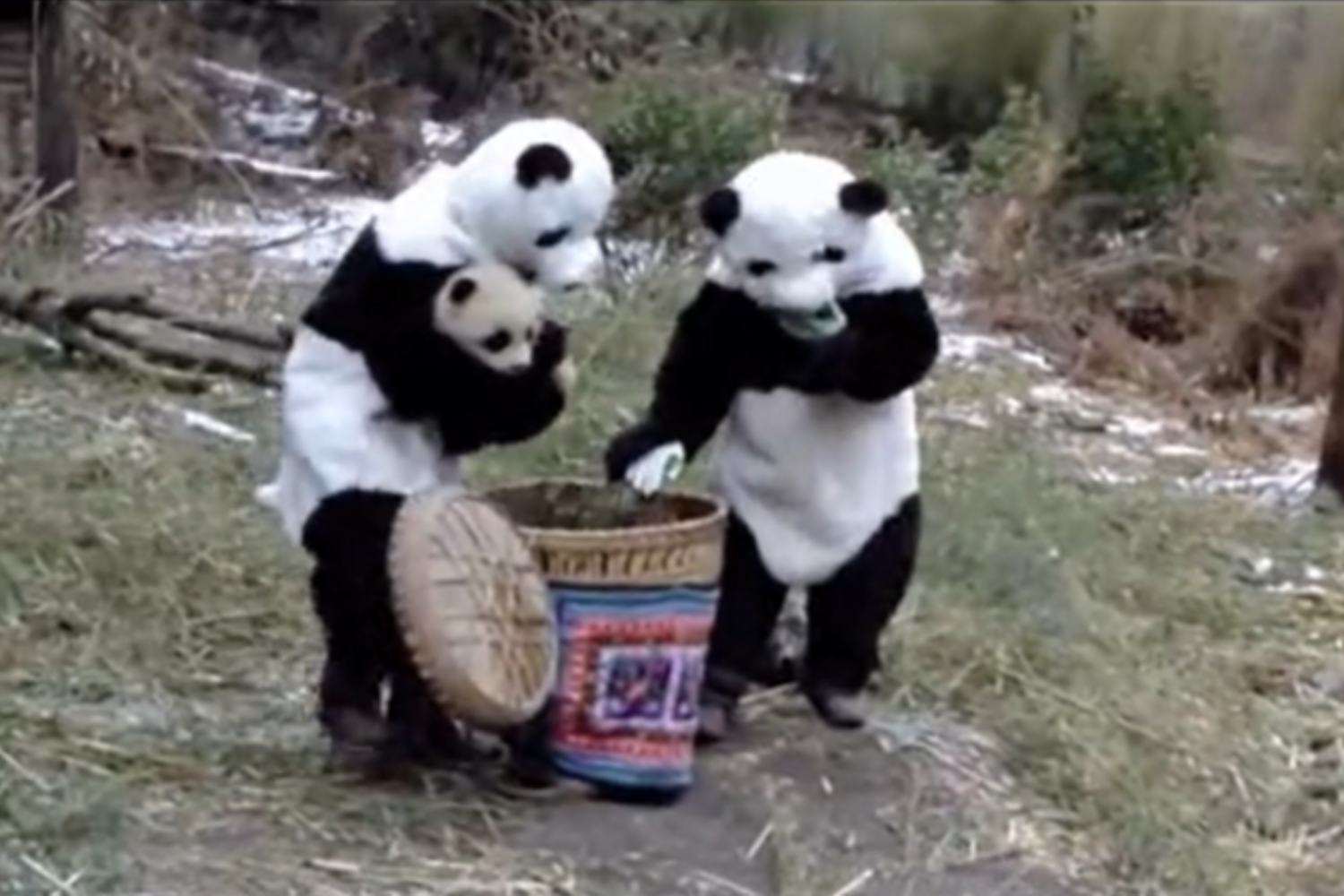
Why do operators dress up in giant panda costumes? This guide explains the behind-the-scenes strategy of conservation centers, how they protect the puppies and what it means for the future of the species, with helpful advice for those who want to support giant pandas.
They dress up as pandas to save the cubs: the goal
Scientists caring for giant panda cubs in China wear black and white suits, masks, and hoods that make them look like real pandas. The goal isn't to put on a show, but to prevent the cubs from becoming attached to humans and maintaining as wild a behavior as possible. This unique technique has become one of the most effective tools in reintroduction programs, and illustrates the delicate balance between conservation, ethics, and animal welfare.
Why operators dress up as pandas
In the centers of giant panda conservation, such as Wolong and other parks in China, Operators regularly enter the enclosures to feed the cubs, monitor their growth, perform medical checks, and prepare the animals for release into the wild. If they did so without their faces exposed, the cubs would learn to recognize humans as friendly figures, losing the natural distrust that protects them from danger. Wearing panda costumes, often impregnated with natural scents, reduces the cubs' ability to associate food, safety, and care with humans, helping them develop. behaviors more similar to those of their wild conspecifics.
The risk of imprinting on humans
Imprinting is the process by which a young animal forms a deep bond with the first living being it recognizes as a parent or role model. In giant pandas, excessive imprinting toward humans can result in less suspicious adults, more inclined to approach villages, roads, or tourist facilities. This increases the risk of accidents, stress, disease, and human-wildlife conflict, making coexistence more difficult and jeopardizing years of conservation investment. Therefore, in release programs, all human contact is minimized and disguised as the presence of the animals.
Behind the scenes at conservation centers in China
In reserves and research centers Dedicated to the giant panda, the management of the cubs follows rigorous protocols. Caretakers monitor their weight, diet, and health, building enclosures that closely mimic the mountain bamboo habitat. The panda suits are part of a package of measures that includes surveillance cameras, semi-wild enclosures at high altitude, and training programs for local teams. The ultimate goal is to produce physically healthy pandas, capable of climbing, foraging independently, and recognizing potential dangers in the natural environment.
You may also be interested in:
Why do keepers pat giant panda cubs?
Benefits for puppies and the ecosystem
Keeping cubs "wild" is not only an ethical choice, but also an investment in biodiversity. More independent pandas have a better chance of surviving after release, reproducing, and contributing to the genetic stability of the population. Every panda that successfully reintroduces itself into the bamboo forests strengthens the entire mountain ecosystem, helping to protect many other species living in the same habitats. For the reader, understanding these strategies means understanding how donations, symbolic adoptions, and responsible tourism can truly make a difference.
How the public can help giant pandas
Understanding why operators dress up as pandas also allows us to distinguish virtuous practices from purely commercial ones. Supporting centers that adhere to scientific guidelines, visiting reserves that limit direct contact with cubs, and learning about reintroduction projects are concrete steps for panda lovers.
Sharing accurate and up-to-date content on social media, like this article, also helps raise awareness of how much work goes into every puppy we see in viral photos or videos.