






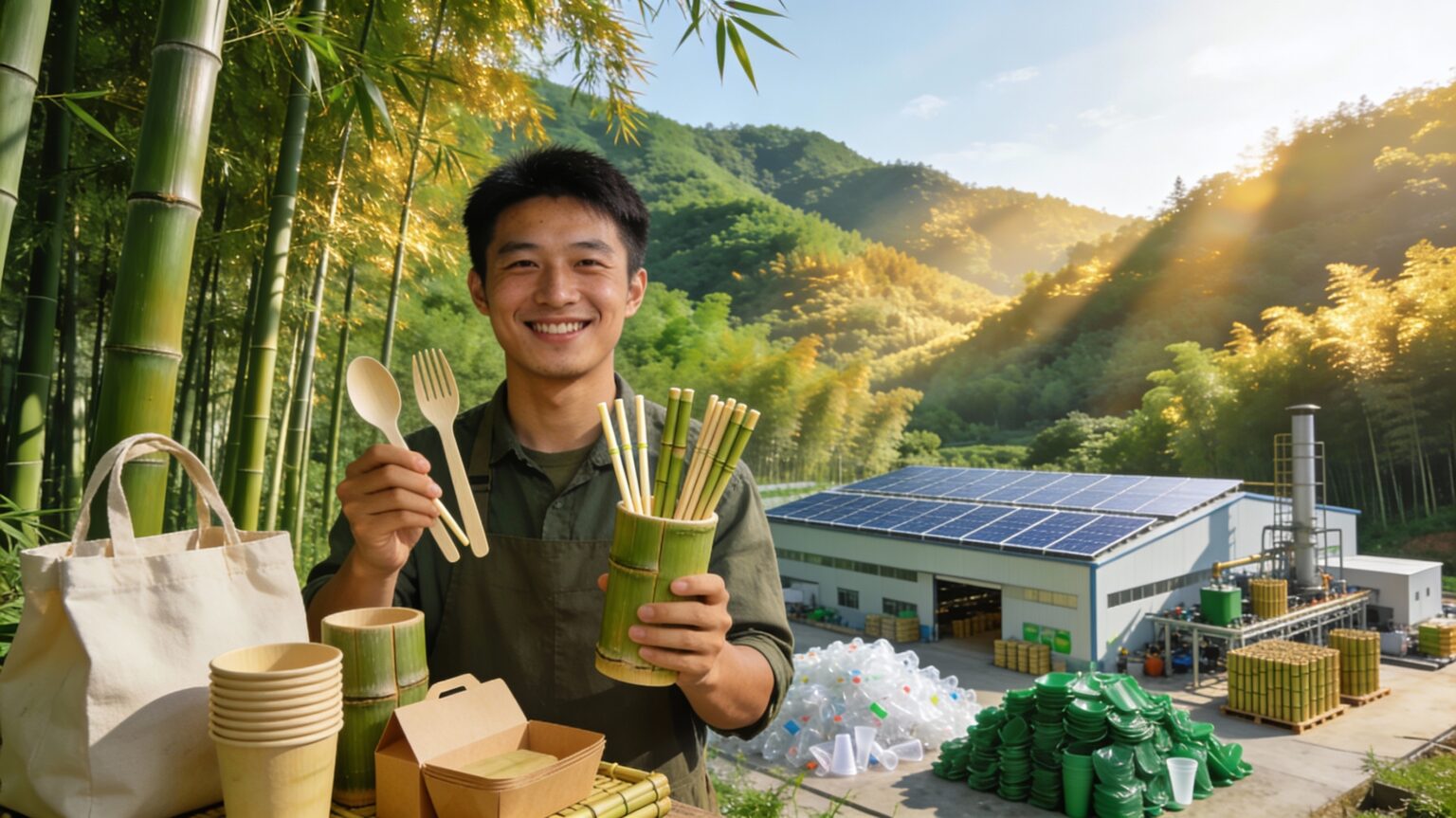
Anji, famous for its bamboo forests covering over 70% of land, launched the "Bamboo Instead of Plastic" campaign in 2018, turning a local resource into a weapon against plastic pollution. Today, after years of aggressive promotion, the county has significantly reduced single-use plastic consumption: -70% in supermarkets, -50% in restaurants, and almost zero in public areas. Products such as bamboo cutlery, straws, bags, and packaging have flooded the market, biodegrading naturally without leaving a trace.This initiative is not only environmentally friendly: it has generated 20,000 jobs and billions of yuan in related industries, making Anji a beacon for China and the world.
Anji, bamboo versus plastic: innovative products
Anji bamboo is no longer just for furniture or paper. Today, it's used for reusable cutlery, bottles, food packaging, and even disposable tableware that decomposes in 90 days.
- Cutlery and straws: used in the county's 1,500 restaurants, they have eliminated 500 tons of plastic per year.
- Shopping bags: 100% biodegradable, distributed free of charge in supermarkets.
- Food packaging: for take-away and delivery, reducing waste of the 60%.
These innovations, supported by local high-tech factories, keep bamboo antibacterial and durable, surpassing plastic in durability and safety.
Circular economy and environmental benefits
The campaign has created a virtuous cycle. Bamboo grows rapidly (up to 1 meter per day), absorbs five times more CO2 than trees, and regenerates the soil. Anji has planted 200 million plants, covering 278,000 hectares, and recycles waste into biochar and fertilizer. The result? A 40% reduction in methane emissions from waste and cleaner air. Economically, bamboo product exports reached 10 billion yuan in 2025, with markets in Europe and the USA.
Lessons for Italy and the world
Anji proves that replacing plastic is feasible. Local policies (bans + incentives), industrial innovation, and public education have worked. In Italy, municipalities like Milan could adopt similar models using olive trees or hemp. The county has won UN sustainability awards and is the inspiration for the national "China Green Belt.".