






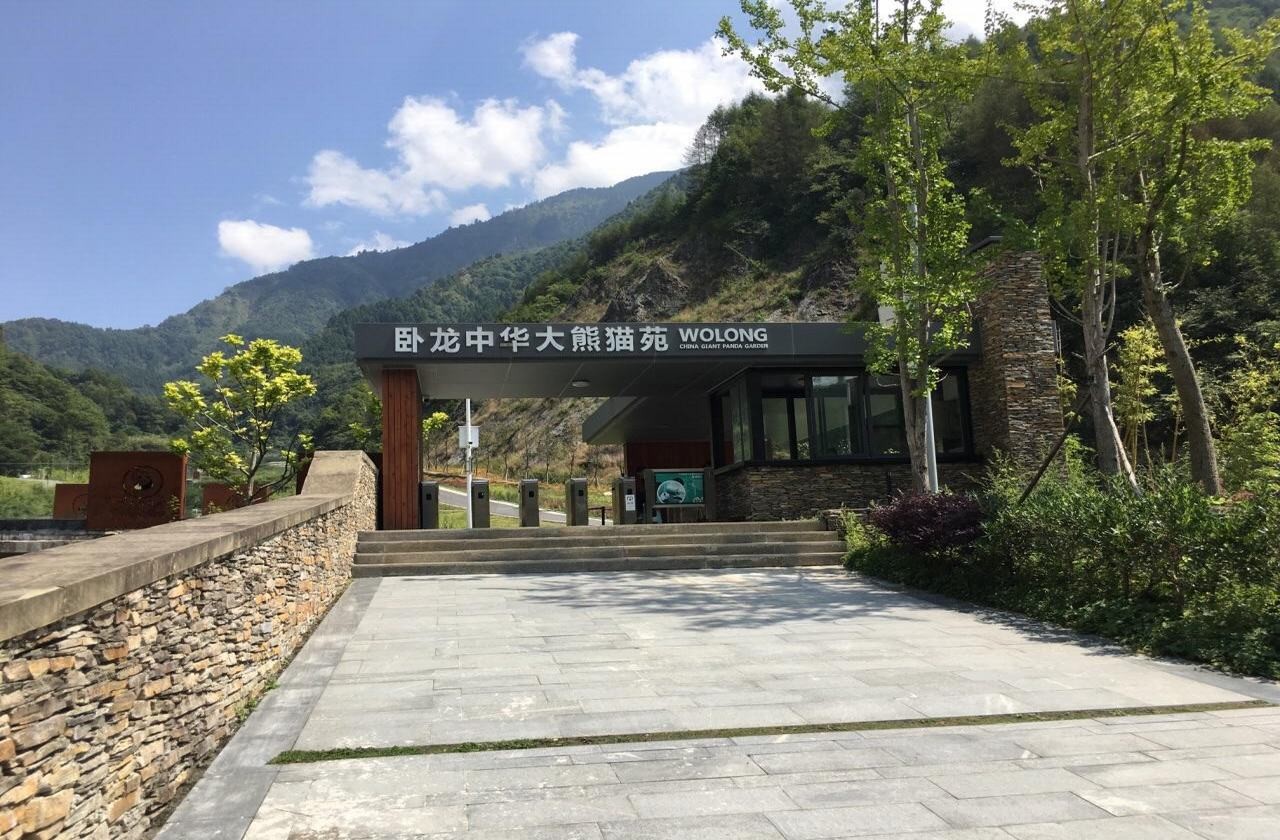
There Wolong Nature Reserve, and in particular the Shenshuping Panda Base, is the beating heart of giant panda conservation in China. Its history is incredible! You don't come here just to take photos. You enter a strategic ecosystem that has changed the fate of one of the planet's most iconic and vulnerable species.
What is Wolong Nature Reserve?: the story
The history of Wolong Nature Reserve began in the 1960s and is located in the province of Sichuan, about 130 km from Chengdu, and is one of the China's largest and most important nature reserves. It was established in 1963 and is today part of the UNESCO World Heritage. Covers over 200,000 hectares of mountain forests, an ideal habitat not only for giant pandas, but also for snow leopards, takin, golden monkeys, and hundreds of rare plant species. Its history is the result of an environmental crisis, a courageous political choice, and decades of scientific work that have rewritten the future of the giant panda. Understanding Wolong means understanding How an iconic species went from the brink of extinction to a global model for conservation. Inside the Wolong Nature Reserve, they are also part of the CCRCGP Wolong Geng Da Base and the CCRCGP Wolong He Tao Ping Base. But they have slightly different roles and structures within the conservation complex. Let's clarify this in a structured way.
CCRCGP Wolong Geng Da Base
- It is one of the main research and captive breeding centers of the reserve.
- It mainly focuses on:
- controlled breeding of pandas
- genetic monitoring
- preparing animals for reintroduction into the wild
- Structurally it is more oriented towards pure scientific research than to welcome visitors.
- It collaborates closely with international universities and centers.
CCRCGP Wolong He Tao Ping Base
- Also part of the Wolong Nature Reserve, it is often referred to as secondary operating base or research “satellite”.
- It has complementary functions:
- study of panda behavior
- support breeding
- management of some complementary species or young pandas before transfer to Shenshuping Base
- Less known to visitors, but strategically fundamental for distributing risk and increasing conservation capacity.
How do they fit into the Wolong Nature Reserve?
- Both are internal structures of the reserve, coordinated by China Conservation and Research Center for the Giant Panda (CCRCGP).
- Shenshuping Base → visitors and education + main breeding
- Geng Da Base → scientific research and reproduction
- He Tao Ping Base → operational support, complementary breeding
In other words, Wolong is not a single “park”, but a network of interconnected structures who together protect the pandas and manage the reserve sustainably.
Before Wolong: When Pandas Were Invisible
For centuries, giant pandas inhabited the mountains of Sichuan in relative isolation. Bamboo forests, steep slopes, and few human settlements—a natural balance that held until the mid-twentieth century.
Then comes:
- deforestation
- agricultural expansion
- infrastructure
- poaching
In the 1950s, the first scientific investigations showed a critical fact. Panda populations are collapsing. The panda isn't yet a global icon, but it's already a seriously endangered species. This is where the problem lies. And, consequently, the solution.
1963: The story of the birth of Wolong Nature Reserve
To understand the history of the Wolong Nature Reserve, we must start from the 1960s. In 1963, the Chinese government officially establishes the Wolong Nature Reserve, one of the first nature reserves in modern China.
The choice of the area is not accidental:
- high density of wild pandas
- vast bamboo forests
- remote, therefore defensible, location
At first, Wolong is basic, almost spartan. There are no advanced facilities, nor visitors. There's only one goal: protect the natural habitat of the giant panda. In terms of strategy, it is a long-term investment, when no one was talking about sustainability yet.
1970s: Research enters the field
In the 70s, Wolong changes gear. From a simple protected area it becomes an open-air scientific laboratory. Scientists begin to systematically observe pandas:
- behavior
- diet
- reproduction
Crucial challenges emerge. Pandas reproduce poorly, are extremely selective in their diet, and react poorly to stress. Translated: saving him is much more complex than expected. But knowledge grows. And with it, the ability to intervene.
The 1980s: First successes and international cooperation
In the 1980, Wolong inaugurates one of the first giant panda breeding and research centers. It is an experimental phase, also made of errors, but fundamental. In 1983, the reserve becomes the seat of the China Conservation and Research Center for the Giant Panda (CCRCGP). From this moment, Wolong becomes:
- the panda conservation decision-making center
- a global scientific reference point
- an international collaboration platform
The panda begins to emerge from anonymity and becomes a global symbol.
1989: UNESCO recognition
In the 1989, Wolong is listed among the UNESCO Biosphere Reserves. It's not just a reputation badge: it's a certification of the method. From here on:
- funding increases
- international attention is growing
- conservation becomes structured
Wolong is no longer a local project. It is a global benchmark.
2008: the earthquake and the most critical moment
The May 12, 2008, A devastating earthquake hits Sichuan. Wolong is severely damaged.
- destroyed roads
- compromised structures
- pandas urgently evacuated
It's the lowest point in its history. For a moment, the project's continuity is at risk. But here something decisive happens.
Giornata Mondiale degli Animali 2026
Rebirth: Shenshuping Panda Base is born
After the earthquake, China chooses not to limit itself to reconstruction. It decides to completely rethink the model. Thus was born the Shenshuping Panda Base:
- modern structures
- semi-natural environments
- more space and animal welfare
Shenshuping is not just a visitor center: it is a new generation of conservation, designed with advanced scientific criteria. A true strategic upgrade.
2010s: the historic result
Thanks also to the work carried out in Wolong, in 2016 an epochal result was achieved: The giant panda is reclassified from “endangered” to “vulnerable”.
This achievement is the result of:
- habitat protection
- controlled reproduction
- reintroduction into nature
- environmental education
Wolong is one of the pillars of this success.
Wolong today: much more than a reserve
Today Wolong Nature Reserve:
- hosts about 150 giant pandas
- trains researchers from all over the world
- manages reintroduction programs
- welcomes visitors in a controlled manner
It's not a zoo. It's not a theme park. It's a advanced conservation ecosystem, where every choice is oriented towards the long term.
Why Wolong's story is still relevant
The history of Wolong proves that:
- conservation works, if it is planned
- science can reverse negative trends
- protecting a species means protecting an entire ecosystem
In a world that often arrives late, Wolong is proof that intervening in time changes the ending. And, not least, it changes it for the better.
How many pandas are there in Wolong?
Wolong Nature Reserve currently hosts about 150 giant pandas, making it one of the areas with the highest concentration in the world. Globally:
- Beyond 60% of wild pandas lives in Sichuan;
- Wolong is one of the pillars that allowed the panda to move from the “endangered” category to “vulnerable”.
A result which, without mincing words, is a successful case studies in environmental conservation global.
Why is Wolong so important??
Wolong is not just a reserve, but it is a open-air scientific laboratoryoe collaborates with international universities and research centers; it is a replicable model for the protection of other endangered species. The future of pandas, and indirectly that of Asia's biodiversity, is being decided here.
Practical information for your visit
Opening hours
- Everyday: 8:30 – 17:00
- Last recommended entry: 15:30
(Hours may vary depending on the season)
Ticket price
- Standard ticket: about 90–100 RMB
- Reduced (students/children): about 50 RMB
- Very young children: often free
Affordable prices, especially considering the direct impact on conservation.
How to get there
- From Chengdu: tourist buses or private car
- Travel time: 3–4 hours, but the landscape repays every minute
When to visit Wolong
The best time is:
- spring (April–June)
- fall (September–October)
During these seasons, pandas are most active and the climate is ideal. Summer is hot, while winter is picturesque but more challenging.
Why visit Wolong (beyond the pandas)
Visiting Wolong means:
- actively support environmental protection
- live an authentic experience, not a theme park
- understand how science and nature can work together
It's conscious tourism, not fast consumption. And today, let's face it, it's a competitive value. Wolong Nature Reserve (Shenshuping Base) It's much more than a tourist destination. It's a global symbol of environmental rebirth. If pandas have a future today, it's also thanks to places like this. In a world that's running fast, Wolong teaches a simple yet powerful lesson: Protecting nature is not a cost, it's a duty for the well-being of the protected species!