






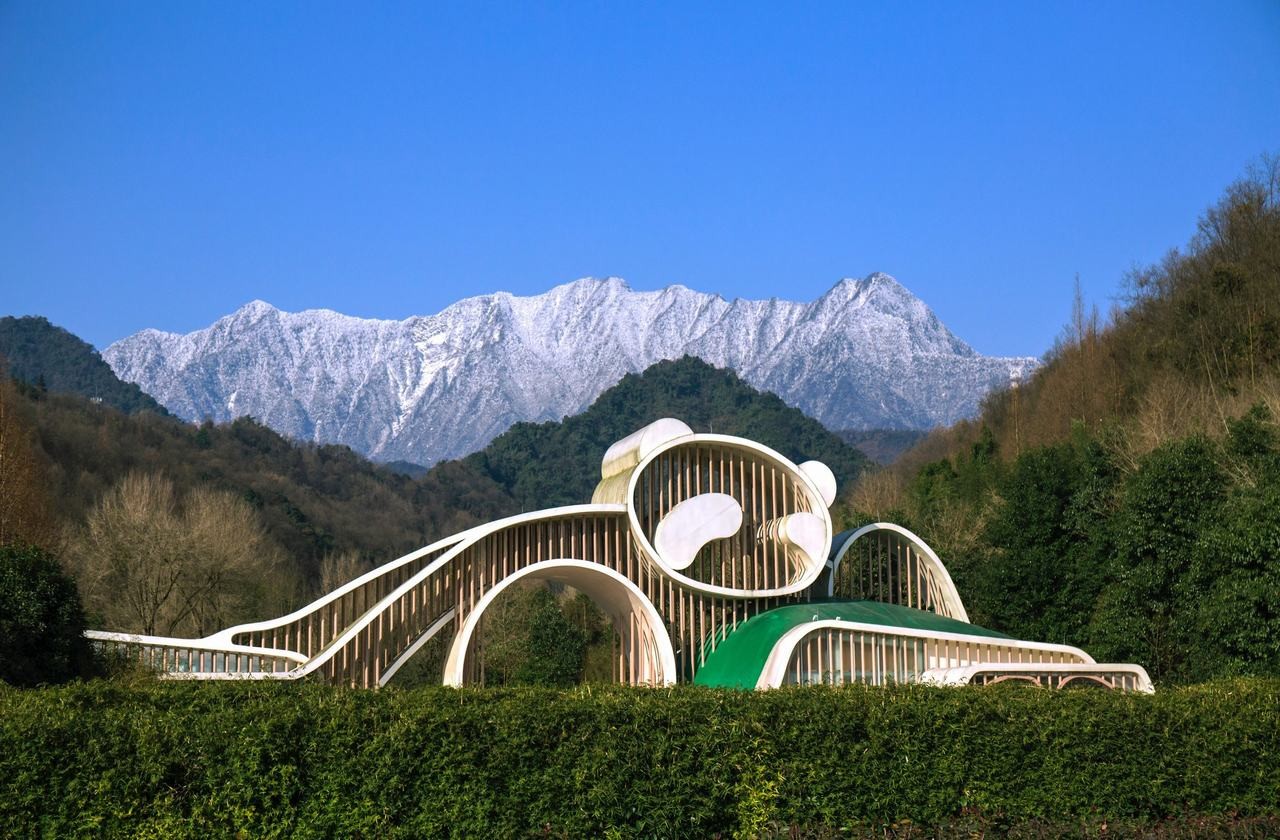
Explore and learn about the history of the Dujiangyan Panda Base, one of the most important giant panda centers in China. Over 40 giant pandas, accessible volunteer programs, post-earthquake history, and everything you need to know to plan your visit near Chengdu. The definitive guide for panda enthusiasts!
Sichuan, Dujiangyan Panda Base: Why it is crucial for conservation
The Dujiangyan Panda Base is a cornerstone of giant panda conservation in China, housing over 40 giant pandas in a natural oasis nestled in the bamboo forests of Sichuan. Located just 50 kilometers from Chengdu, this base of the China Conservation and Research Center for the Giant Panda (CCRCGP) combines advanced research, rehabilitation, and public education, making it a must-see destination for those seeking an authentic experience with these iconic endangered animals. Founded after the devastating 2008 earthquake, it is now synonymous with successful breeding and reinwilding, with a cub survival rate exceeding 971 tp3T.
History and the earthquake in 2008
The history of the Dujiangyan Panda Base is intertwined with China's ongoing efforts to protect giant pandas following natural disasters. The Sichuan earthquake of May 12, 2008, destroyed much of Wolong's infrastructure, including enclosures and research centers, causing the death of several pandas and the displacement of hundreds of them. In response, the Chinese government, with financial support from the Hong Kong government (approximately HKD 100 million), began reconstruction in Shiqiao Village, Qingchengshan Town, Dujiangyan City. Officially inaugurated in 2014 on an area of 51 hectares (760 mu), the base began as an emergency center for rescue, quarantine, and disease control, essential for orphaned and injured pandas.
Negli anni successivi, si è evoluta in un hub multifunzionale. Dal 2015 ha introdotto programmi di semi-selvatico training, preparando i panda per il reinswildering nel Parco Nazionale del Panda Gigante. Oggi, fa parte del network CCRCGP, che gestisce oltre 200 panda in cattività in tutta la Cina, contribuendo all’aumento della popolazione globale da 1.114 (2014) a circa 808 in cattività nel 2025. La base ha celebrato nascite record, come i gemelli del 2023, simboleggiando il trionfo della conservazione ex-situ. Oggi però c’è una novità: la Base si rinnova e da ieri, 23 aprile 2026, chiuderà per iniziare i lavori di ristrutturazione.
Where is Dujiangyan Panda Base and how to get there?
Located 1,700 meters above sea level at the foot of Mount Qingcheng (a UNESCO World Heritage Site), the Dujiangyan Panda Base enjoys an ideal microclimate: mild temperatures (10-25°C) and an abundance of fresh bamboo. The exact coordinates are Majiagou, Yutang Town, 18 km from Dujiangyan city center and 55 km from Chengdu Shuangliu Airport. It's a 1-hour drive or bus ride from Chengdu (K3 line or dedicated shuttles), with admission costs CNY 58-65 (online tickets recommended to avoid queues). Open 8:00-17:00 year-round, excluding extreme holidays.
How many pandas are there? And who are they?
The base is home to approximately 40-50 adult giant pandas and cubs, plus five red pandas, distributed across distinct zones. It is an experimental area (medical research), a semi-wild area (training), and a reinwilding area (preparation for release). Famous specimens include "Cheng Cheng" (born in 2016, the first post-earthquake giant panda) and annual cubs from breeding pairs. The pandas live in spacious enclosures (up to 1 hectare each), fed 20-40 kg of bamboo per day, and monitored 24/7 by cameras. In 2025, six new births were recorded, contributing to China's total of 808 pandas in captivity.
You may also be interested in:
Giant panda steals tourist's phone: video goes viral on social media
Volunteer programs and visitor activities
The flagship program is the Panda Loving Care Program, the most accessible volunteer program in China. For 1,200-2,000 CNY/day, you'll clean enclosures, prepare food, and observe up close (ages 13+, book online). Guided tours (2-4 hours) include feeding demonstrations and conservation talks. Ideal for families and photographers. Scenic trails, a gift shop, and interactive exhibits on habitats and threats (deforestation, climate change) are available. Average visit duration: 3-4 hours.
Importance for the conservation of giant pandas
The Dujiangyan Panda Base is crucial to China's "three circles" strategy (wild, semi-wild, and captive), reducing the extinction of giant pandas (from "endangered" to "vulnerable" IUCN 2016). Research here on fertility, genetics, and disease has increased the breeding success rate from 30% to 70%. It collaborates with global zoos (e.g., loans to the San Diego Zoo) and trains rangers for the National Park (27,134 km²). By visiting, you directly support the protection of 1,800 wild pandas.