






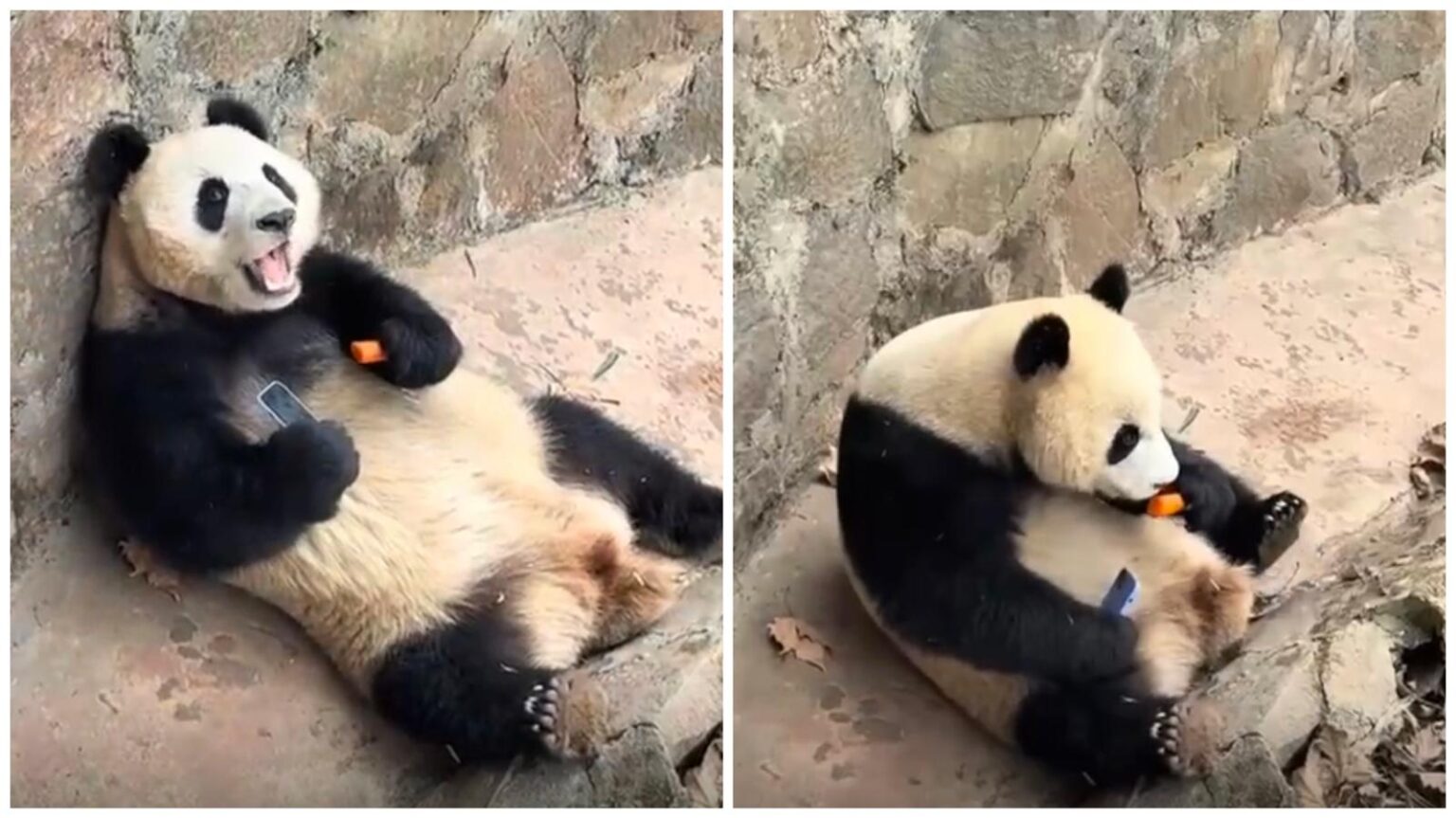
On February 22, 2026, a tourist at Dujiangyan Panda Base in Sichuan He accidentally dropped his cell phone while filming the giant panda. The 3-year-old cub grabbed it and used it as a selfie stick, even resisting the calls of his keepers.
Panda steals tourist's cell phone: the incredible story went viral.
It was an ordinary day at the Dujiangyan Panda Base, one of Sichuan's most beloved giant panda conservation centers. A tourist, eager to capture baby Qingling up close, made a fatal mistake. His phone slipped from his hand and landed right in the enclosure where the giant panda was lying. What happened next is a mix of cuteness and hilarity that has taken the internet by storm, but it holds important lessons about how pandas interact with humans and objects. Let's proceed in order, reconstructing the scene moment by moment, as if we were there in the crowd. The tourist leans slightly over the railing with his phone in hand, zooming in on the blissfully dozing panda. Suddenly, a clumsy movement and the device goes flying. The cuddly little bear, with his big, curious eyes, doesn't let it go. He catches it with one paw, twists it between his fingers as if it were a high-tech bamboo stick, and holds it in a selfie pose, screen up, almost as if he were looking at his own reflection.
The keepers' reaction
The keepers, trained for such situations, spring into action immediately. They first try tasty bait: fresh carrots, a panda's favorite treat. The giant panda sniffs, but doesn't let go—he grips the phone tighter, pushes it away with his other paw, and makes funny noises, a kind of "playful protest." They move on to plan B: a telescopic grabber, that stick with a clamp we all use in the garage. The panda resists, dodging it with surprising agility for a three-year-old cub, and for a moment it seems the phone has become his. The crowd laughs; it seems like a tragicomic scene. Meanwhile, the others present film the scene, and the video immediately goes viral on Weibo and TikTok even before the tug-of-war is over.
Eventually, the panda's nature takes over. The panda gets distracted, loses interest, and drops the phone. The keepers retrieve it intact—the screen polished by its paws, but still working—and return it to its owner, who can only smile at the absurdity of the situation. But why does a panda behave this way? Giant pandas are curious creatures by instinct, inherited from a wild life where they explore environments with deft paws. Shiny, colorful, and new objects attract them like toys. It's not malice, but pure enjoyment. The young and lively bear has treated the phone as an extension of his world—he has sniffed it, turned it over, "used" it. The keepers know this well. They never force it, to avoid stressing the animal, and use positive distractions like food or patience. It's a classic dynamic in base camps. Pandas always win in cuteness, but human safety remains the priority.
The context: Dujiangyan Panda Base and its strict rules
To fully understand, let's get to know the place. The Dujiangyan Panda Base, just 10 kilometers from Chengdu, is a conservation jewel. It houses hundreds of pandas in semi-natural habitats, with breeding programs that have saved the species from extinction. It attracts over 2 million visitors a year, fascinated by cubs like Qingling and educational tours on feeding and reproduction. It's not the largest—that's the Chengdu Research Base—but it offers an intimate atmosphere, ideal for close-up photos.
The rules are clear and inflexible, designed to protect pandas and tourists: no food thrown, minimum distance from barriers, no leaning. Incidents like this remind us why a phone isn't just an object, but a potential nuisance. At Chinese bases, serious violations lead to lifetime bans, as happened to 12 tourists in 2024 for inappropriate behavior. Here, fortunately, it ended with a laugh.
Lessons learned: How can you avoid this from happening to you?
This episode is a funny but useful wake-up call. Tourists often underestimate the panda's curiosity. Keep your phone on a lanyard, turn on airplane mode near the enclosures, and never lean out. If you decide to visit, book morning tours—the pandas are more active—and use apps like WeChat for contactless tickets. Travel insurance covers accidental theft, and a spare power bank saves the day.