






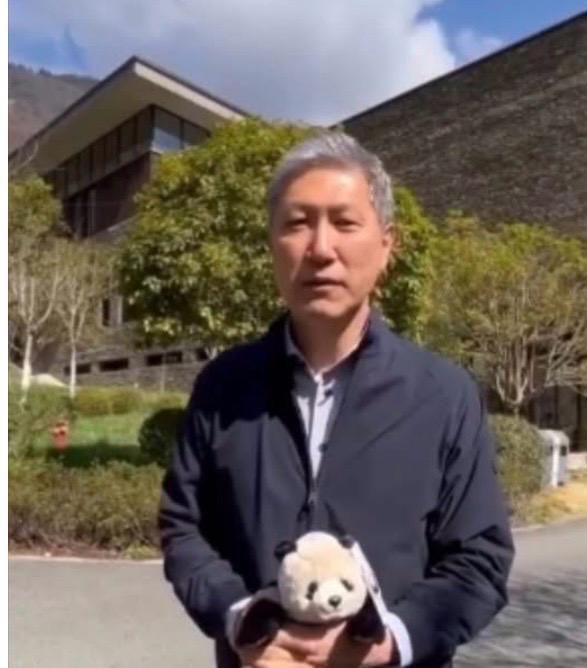
South Korea's new ambassador, Noh Jae-Heon, visited the famous panda Fu Bao in China (the princess returned to her homeland in April 2024), in a meeting that went far beyond simple media curiosity. A strategic gesture of cultural diplomacy capable of strengthening relations between two Asian powers.
New Korean Ambassador Noh Jae-Heon Meets Fu Bao: The Long-Awaited Meeting
The visit of the new Korean ambassador, Noh Jae-Heon, took place in the city of Hangzhou, where Fu Bao has become a truly popular symbol in recent months. The panda, beloved in both South Korea and China, today represents a powerful lever of "soft power," capable of generating empathy and connection between the citizens of the two countries. Noh Jae-Heon, in his new institutional role, has chosen a modern communication approach: building and strengthening relationships starting from shared and easily recognizable symbols. And Fu Bao is precisely this: an emotional bridge between cultures. The video posted on Instagram has immediately attracted comments of appreciation and emotion.
“Fu Bao, how are you? You've gotten better looking! I think he's doing well, he's even gained weight.”.
These were the first words of the new Korean ambassador when he saw Fu Bao after a year and a half, recalling that the famous panda is also the symbol of Hangzhou.
Fu Bao: From Zoological Attraction to Global Cultural Icon
She's not just an animal. A simple panda. Fu Bao has become a global media phenomenon. The princess was born in Korea and later transferred to China, as agreed. The panda has captivated millions, becoming a strategic asset for tourism and international communication. During the meeting, the ambassador expressed his appreciation for the well-being of the famous panda, emphasizing that its well-being is also a shared responsibility between the nations involved.
Soft Diplomacy: When Animals Become Ambassadors
In the current geopolitical context, episodes like this clearly demonstrate how diplomacy is no longer constructed solely in official rooms or at institutional summits, but also through simple gestures that speak directly to people. The visit to Fu Bao fits precisely this logic. A seemingly informal moment, it actually carries a strong symbolic and emotional value. This is where what is called "panda diplomacy" comes into play, a practice now consolidated over time. For China, the panda is not just an iconic animal, but a true ambassador of friendship, a universal symbol capable of bridging different cultures and strengthening international relations in a natural and immediate way.