






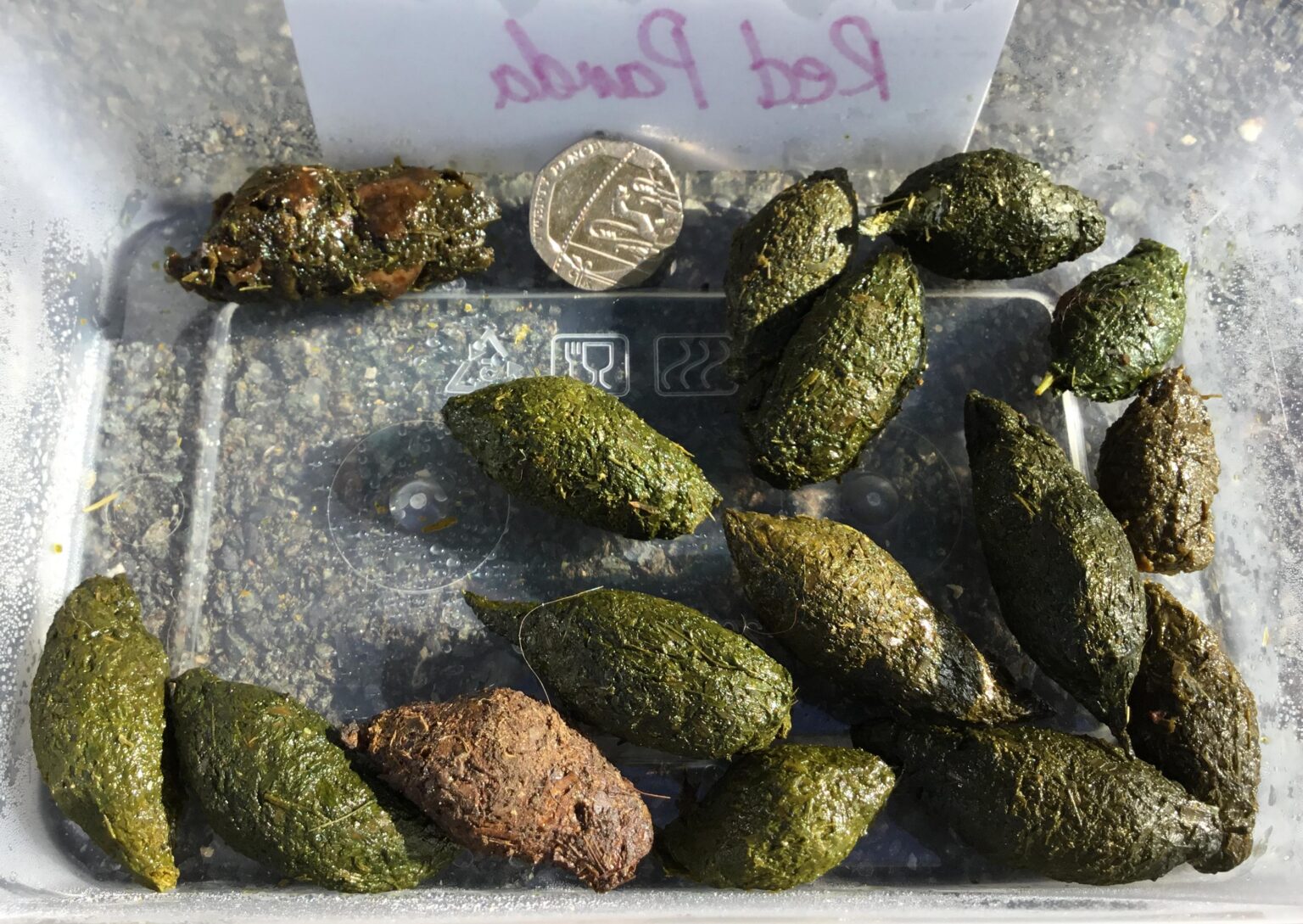
Behind the green balls that fall daily from the bamboo, lies the nutritional and physiological history of the giant panda. What many consider just "dirt" is actually a biological thermometer Perfect. Giant panda feces changes color, shape, and even smell. based on what he eats, revealing his diet and health status in real time.
Giant Panda Poop: Their Color Reveals Their Diet
Panda feces are fusiform (spindle-shaped) and faithfully reflect its meals. When it eats mainly bamboo stems, appear to have a characteristic yellow. However, if the diet is rich in bamboo leaves, they become dark green. I bamboo shoots, with their high water content, produce softer stools with a slightly stronger odor. But there's more: fresh stools always have a delicate bamboo scent, perceptible even from close up. This light aroma is typical of an almost exclusively plant-based diet — bamboo represents the 99% of the Panda's daily menu.
Why do they produce so much feces per day?
An adult panda consumes between 10 and 18 kg of bamboo every day to satisfy its energy needs. It seems like a lot, but it is a physiological necessity: despite belonging to the order Carnivora, the giant panda has a short and simple digestive tract, unable to efficiently digest the raw bamboo fibers. The nutrient absorption rate is only 17%. This means that the 83% from ingested bamboo passes through the body virtually intact, forming the famous green balls which fall frequently during the day.
The mysterious "mucous stool": an ingenious adaptation
One of the most fascinating phenomena is that of mucous stools. The panda's intestines secrete mucus to coat the feces and protect the intestinal mucosa from abrasion by the rough bamboo fibers. When bamboo is consumed regularly, this mucus is naturally consumed during digestion. However, if the diet changes—for example, with the addition of fruits like apples—the mucus accumulates and is expelled. During this period, the panda may appear less active or have a reduced appetite, but it fully recovers once the excess is eliminated.
AttentionFeeding pandas supplemental foods without veterinary supervision can be counterproductive.
Scientific uses of feces: a treasure trove for research
Giant panda feces are gold for conservation biologists.
- Analysis of the intestinal microbiota to monitor individual health
- Population estimate in field censuses
- Study of food patterns through the analysis of the undigested content
- Genetic monitoring non-invasive of individuals
Every green ball fall is a mine of valuable data to protect this vulnerable species.
Sustainable recycling: paper, fertilizer, and soil
But panda feces don't end up in oblivion. Once processed, they become valuable resources:
- Eco-friendly paper high quality
- Organic fertilizer rich in nutrients
- Permeable soil for growing flowers
This recycling closes the sustainability circle: from ingested bamboo to feces transformed into new resources for humans and nature.
A mirror of survival
Giant panda feces are much more than just biological waste. They are a living diary which tells the daily diet, reveals the state of intestinal health and bears witness to the incredible evolutionary adaptation of an animal that transformed an inefficient diet into a successful survival strategy. Watching these little green balls fall from Chinese bamboo groves is like reading the silent story of Ailuropoda melanoleuca—a mammal that learned to thrive by eating virtually everything it can't digest.