






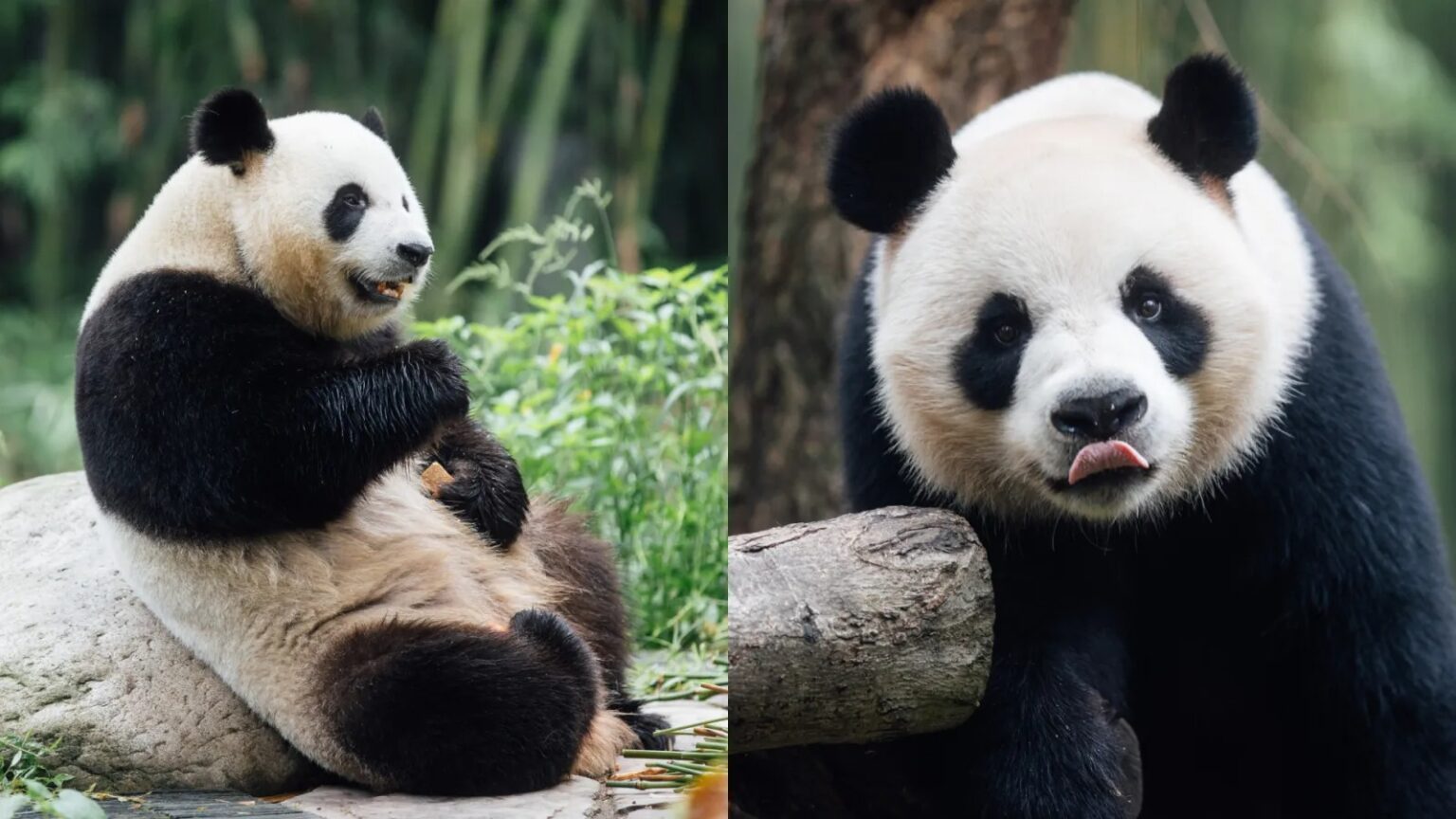
The giant panda Ke Ke is entering a delicate phase: pseudo-pregnancy. This is a special and natural time that requires more rest, a quiet environment, and careful management by her keepers.
Ke Ke, the giant panda housed at Hong Kong's Ocean Park, is about to enter his retirement period. pseudo-pregnancy. This is a well-known physiological phase in pandas, during which the animal may rest more, be less interactive, and have a smaller appetite than usual. The park's announcement urges the public to observe this delicate moment with respect, allowing Ke Ke the tranquility she needs. According to social media reports, the keepers will continue to carefully monitor her condition and provide her with appropriate care, maintaining a calm and relaxing environment. This is a natural transition that shouldn't cause concern, but it does require constant attention and careful management from the staff.
Panda Ke Ke in pseudo-pregnancy: what is it?
Pseudopregnancy in giant pandas is a completely natural condition that can occur after the reproductive period. It is not a true pregnancy, but rather a phase in which the animal's body undergoes changes very similar to those of gestation. This means that the panda's body can react as if it were pregnant, even when there is no developed embryo. For this reason, pseudopregnancy is considered a very specific biological phenomenon, requiring attention but not cause for alarm.
During this period, the panda often tends to noticeably change its behavior. It may sleep more, move less, be less inclined to interact, and become generally calmer. Its appetite may also decrease, as the animal goes through a phase in which its usual rhythm changes and its need for rest becomes greater. These are signs that, for those who know pandas well, are part of their natural cycle and simply indicate that the body is undergoing a well-defined physiological phase.
In Ke Ke's case, the signs described by the park seem to fit precisely this context. The fact that she may rest more, interact less, and exhibit more reserved behavior is therefore not unusual, but rather consistent with what commonly occurs in giant pandas at this stage of their reproductive cycle. This is also why staff limit themselves to careful observation, providing a calm environment and protecting the animal from unnecessary stimuli. At a stage like this, the panda's well-being depends greatly on the ability to live calmly, free of stress and external pressure.
Ke Ke's Conditions
The message released by Ocean Park highlights that Ke Ke may need more rest than usual, be less interested in interaction, and have a reduced appetite. These changes are entirely consistent with the phase she is going through and, therefore, are not interpreted as abnormal signs, but as part of the panda's normal physiological behavior during this period. When an animal enters a pseudo-pregnancy, her behavior can change noticeably, and any changes are carefully observed to determine if everything is proceeding as expected.
For this reason, the keepers monitor Ke Ke constantly, without invading her space or disrupting her natural rhythm. Their task is not only to feed her or monitor her physical condition, but also to ensure a stable, quiet, and reassuring environment where the panda can navigate this phase with minimal stress. The staff's presence must be discreet but constant: alert enough to pick up any useful cues, but also gentle enough not to interfere with her balance.
This is precisely the most important aspect of caring for a pseudo-pregnant panda: finding the right balance between observation and respect. Each animal has different timing, and during such a sensitive phase, the priority is to accompany her without forcing her, offering constant support but without creating unnecessary pressure. In this sense, the keepers' work is fundamental because it allows Ke Ke to experience this time in a state of serenity, safety, and well-being.
The role of keepers
One of the most important aspects concerns the daily work of the keepers. They observe the animal's signals, evaluate its changes, and ensure that each phase is addressed as appropriately as possible. In the case of giant pandas, well-being depends not only on physical health, but also on the quality of the environment and perceived stress levels. For this reason, Ocean Park staff continues to ensure Ke Ke has a calm, controlled environment suitable for her rest period.
Why silence is needed
The park's press release also includes a specific reminder to visitors. When observing Ke Ke or one of the other animals, it's important to keep your voice low and allow the panda to rest undisturbed. Silence, during this phase, isn't just a good habit, but a concrete gesture of respect toward the animal. A quiet environment helps Ke Ke feel safer and experience this transition peacefully. This is especially crucial in centers where there's intense contact with the public, because visitors' behavior can directly impact the well-being of the animals housed there.
A message of attention
Ocean Park's communication also has an educational value. It reminds visitors that observing a panda means respecting its time, avoiding unnecessary noise, and allowing the animal to experience its natural cycle without external pressure. In this sense, Ke Ke becomes the face of a delicate yet completely normal stage in the life of giant pandas. Her pseudo-pregnancy demonstrates the importance of a balance between care, observation, and respect, especially when it comes to such beloved and publically followed species.