






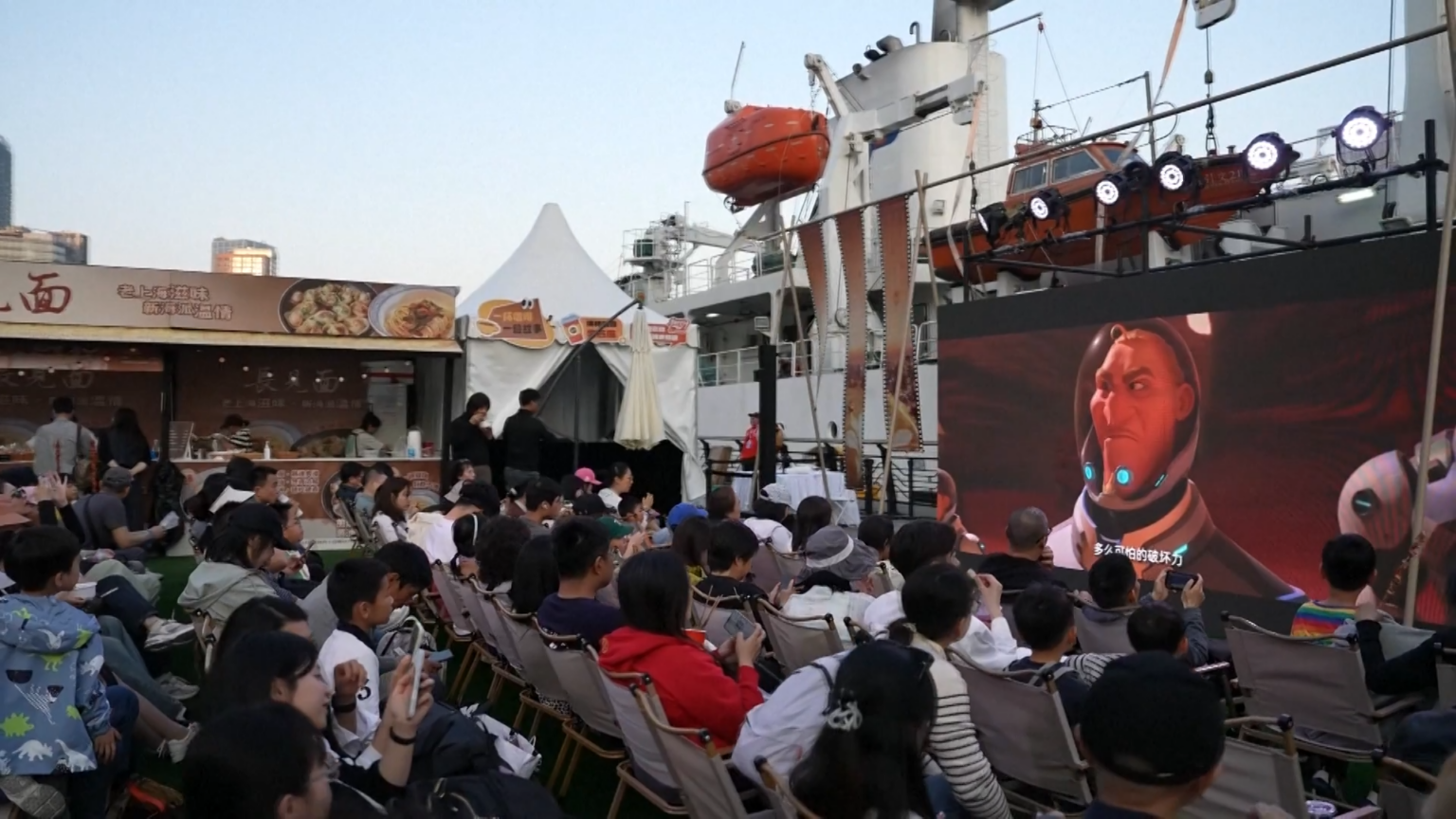
The festival brings 17 films to 10 French cities and revitalizes the cultural dialogue between China and France through cinema, memory, and new perspectives.
The Chinese Film Festival in France has opened its 11th edition in Paris, confirming itself as one of the most important events for the diffusion of Chinese cinema in Europe. Until June 30th, the films will be screened 17 films in ten French cities and territories. From Paris to Lyon, from Marseille to Strasbourg, in a program that mixes great classics, new releases, and documentaries.
Chinese Film Festival in France: the event
The 2026 edition of the Chinese Film Festival in France stands out for its ability to transcend the confines of Paris and become a truly widespread initiative, capable of reaching diverse cities, audiences, and cultural contexts. The decision to bring screenings not only to the capital, but also to other French cities and overseas territories, gives the festival a broader and more inclusive dimension. This isn't an organizational detail. Rather, it's a deliberate choice, making Chinese cinema more accessible and bringing it closer to viewers who might not otherwise naturally encounter this type of programming. This geographical spread also changes the way the festival is perceived. It doesn't appear as an event reserved for a niche audience, but as a more open opportunity for encounters, capable of capturing very different curiosities, sensibilities, and levels of knowledge. It is precisely this diversity that gives the initiative its strength. Cinema is not confined to a single theater or cultural center, but becomes an experience that moves, adapts and reaches different places, bringing with it stories, images and perspectives that would otherwise remain further away.
The program of the Chinese Film Festival in Paris
The program's construction should also be interpreted in this direction. The idea of presenting recent films, classic works, and documentaries is not merely a matter of variety, but rather a specific cultural vision. Chinese cinema is presented as a complex, multilayered, and constantly evolving whole. Contemporary productions narrate the present and its changes. Classics evoke the memory, tradition, and roots of a rich cinematic language; documentaries, finally, offer a more direct look at reality, people, and social contexts. This balance between past and present lies one of the festival's most interesting aspects. The aim is not to present a simplified or univocal version of Chinese cinema, but to showcase its depth.
It's a way of saying that there's no single face of China's cinematic landscape, just as there's no single way to tell its story. Each film adds a piece, each section of the program opens a different window, and together they construct a more complete and authentic image. This is precisely why the festival also functions as a learning experience. Those who attend don't simply watch a series of screenings. They come into contact with a broader narrative universe, made up of artistic sensibilities, social transformations, and shared memories. The strength of the 2026 edition lies in its balance: on the one hand, its regional reach, on the other, the quality and variety of the offering. And from this balance comes the festival's deepest value, which goes beyond simply showing films, but invites us to look at China with greater attention, greater nuance, and greater awareness.
You may also be interested in:
Chinese Illustration Exhibition in Turin: "Chinese Excellence in Children's Illustration" Opens“
The meaning of the initiative
In the opening speech, the festival's value was reiterated as a tool for mutual understanding and cultural exchange between China and France. It's not just an event for film buffs, but a cultural bridge capable of bringing two countries together through stories, emotions, and worldviews. This dimension is also crucial because cinema today remains one of the most immediate languages for describing a society beyond stereotypes. At a time when the international narrative of China is often filtered through geopolitical or economic considerations, a festival like this offers a different, more intimate, and more human space.
A showcase for Chinese cinema
The works presented include titles spanning a wide range of genres, a testament to a vibrant and constantly evolving cinema. The festival's structure, encompassing new releases, classics, and documentaries, allows audiences to experience a viewing experience that is not only informative, but also emotional and cultural. The Paris opening also reinforces the city's role as a symbolic capital of international cinematic dialogue. The presence of prestigious theaters and a diverse audience contributes to the festival's high profile, yet accessible.
Why it is also of interest in Italy
An event like this also speaks to Italian audiences, demonstrating how cinema can become a concrete instrument of cultural diplomacy. In a European context increasingly attentive to issues of identity, exchange, and representation, the Chinese Film Festival in France offers an effective example of international cultural cooperation. The festival's strength lies precisely here: it doesn't just celebrate films, but builds a relationship. And in an era where distance between countries is often measured in rigid words or simplified narratives, this relationship is as important, if not more so, than a simple film program.