






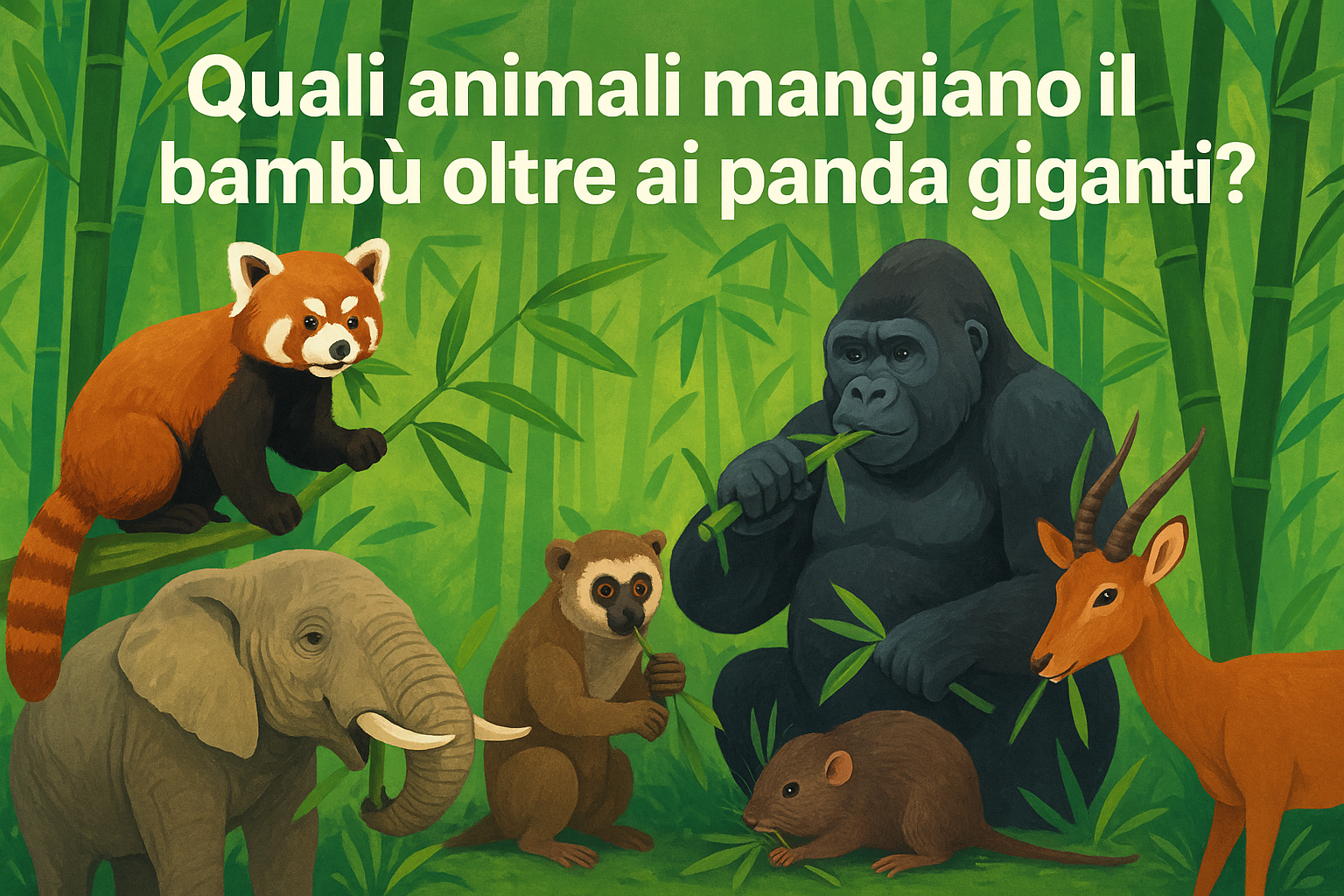
The bamboo, Often considered a symbol of strength and resilience in nature, bamboo is much more than just an ornamental plant for the giant panda and other animals. Thanks to its rapid growth and the extraordinary strength of its fibers, bamboo is a vital resource not only for humans but also for a surprising number of animals. The giant panda It is certainly the most iconic bamboo eater, but it's not the only one. In fact, there are several species, scattered across Asia, Africa, and even Madagascar, that depend on this plant for survival. Here's an overview of the animals that feed on bamboo and the incredible evolutionary strategies that help them do so.
Giant Pandas, Animals That Eat Bamboo: Red Pandas
Often confused with the giant panda, the red panda (Ailurus fulgens) is an agile, arboreal animal native to the Himalayas and the forests of southwestern China. Although they belong to a different family, they share a love of bamboo with their giant "cousins.".
Diet: Red pandas feed primarily on bamboo shoots and leaves, but when supplies are limited they supplement their diet with fruit, berries, acorns, and even small birds or eggs.
Adaptations: have a pseudo-thumb —a bony extension used for grasping branches—and prefer to feed while climbing trees, taking advantage of their agility. Their flexible diet makes them more adaptable than giant pandas.
Mountain Gorillas: The Vegetarian Giants Who Love Bamboo
I mountain gorilla (Gorilla beringei beringei), which inhabit the humid forests of Central Africa, are known for their predominantly herbivorous diet. And yes, they also enjoy bamboo.
Diet: Bamboo is an important seasonal food source, especially the nutrient-rich tender shoots and young stems.
Adaptations: Powerful jaws and robust teeth enable gorillas to crush tough bamboo fibers. Their digestive systems, evolved to process tough vegetation, make them masters of forest foraging.
Bamboo lemurs: the gourmets of Madagascar
In the rainforests of Madagascar live the bamboo lemurs, among the animals most specialized in the digestion of this plant.
Diet: species like the greater bamboo lemur (Prolemur simus) feed almost exclusively on young bamboo shoots and leaves, carefully selecting the least toxic varieties.
Adaptations: These lemurs have evolved sharp teeth and a metabolism capable of neutralizing bamboo's toxic substances. They are true experts at distinguishing the most nutritious species, a unique competitive advantage in their ecosystem.
Elephants: The Giants That Don't Disdain Bamboo
Both the Asian elephants (Elephas maximus) that those Africans (African loxodonta) consume bamboo when they have access to it, although it is not the mainstay of their diet.
Diet: They eat bamboo leaves and shoots during the wet season or times of food scarcity.
Adaptations: Their powerful proboscises allow them to tear and manipulate the stems, while their large, strong molars are perfect for grinding the tough bamboo fibres.
You may also be interested in:
Where Giant Pandas Sleep: Trees, Nests, and Survival Strategies
Bamboo rats: small but tireless nibblers
Widespread in Southeast Asia, the bamboo rats (Rhizomys spp.) are specialized rodents that live almost exclusively in bamboo environments.
Diet: They feed on roots, stems and tender shoots, preferring the young parts rich in nutrients.
Adaptations: Thanks to their sharp incisors and a highly efficient digestive system, they are able to process fibrous plant material that many other animals cannot digest.
Turtles and antelopes: "occasional" consumers of bamboo
Someone tropical turtles include bamboo in their diet, especially in areas where it grows spontaneously. Some species of African antelope, like the mountain redunca (Redunca fulvorufula), feed on bamboo during the rainy season.
Diet: For both species, bamboo represents a temporary but valuable nutritional supplement.
Adaptations: Turtles use their beak-like jaws to crack open shoots, while antelopes have teeth and digestive systems capable of processing tough plant fibers.
Bamboo: A Vital Resource for Global Biodiversity
In short, besides the giant panda, other animals also consume bamboo. Whether it's giant pandas or bamboo rats, one thing is clear. bamboo is a fundamental ecological pillar for many species. Its versatility, combined with its rapid growth, makes it a renewable and sustainable food source. Protecting bamboo forests means not only safeguarding a unique habitat, but also ensuring the survival of entire animal communities that depend on it.