






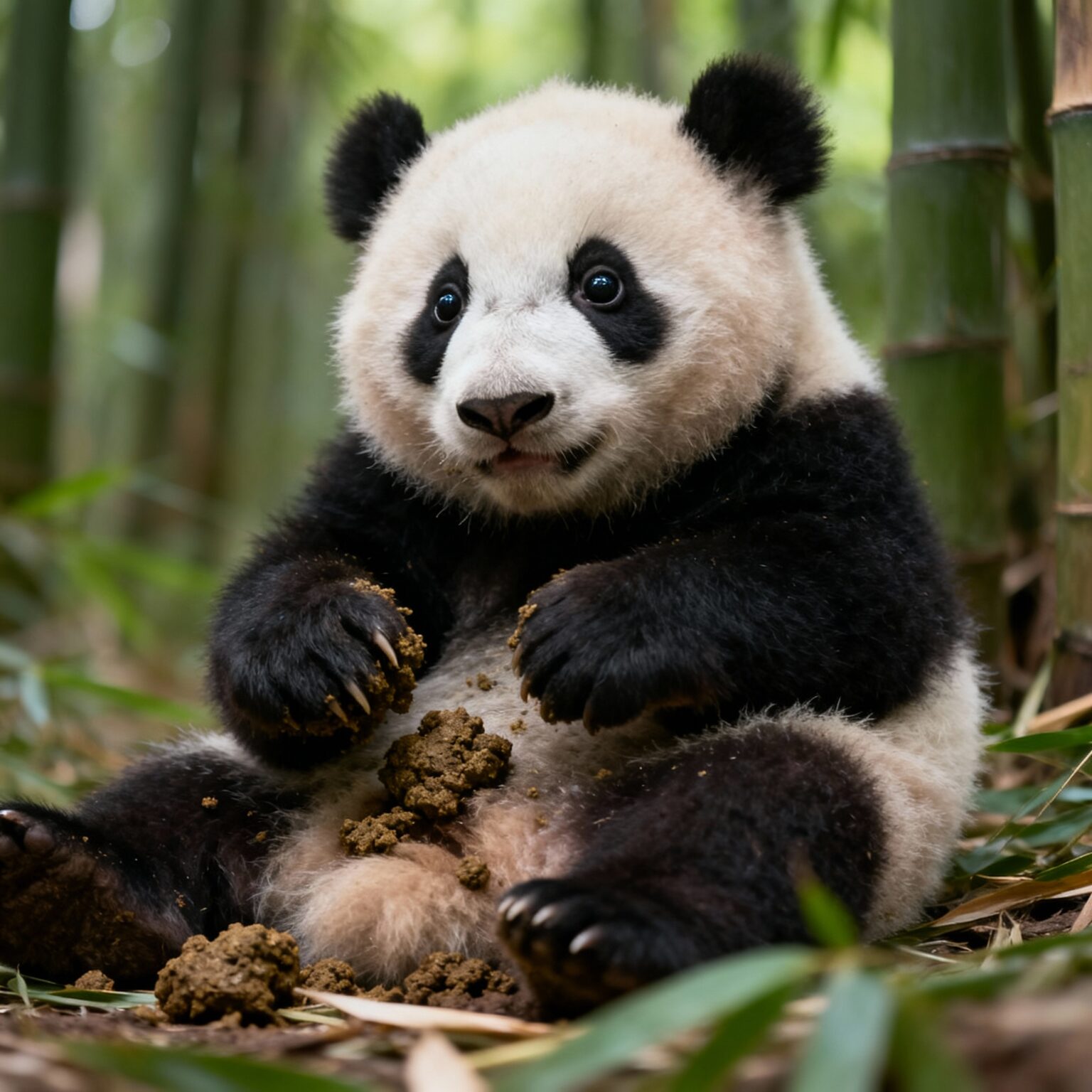
The question of whether giant panda cubs eat poop may seem curious or disturbing, but in the animal world, coprophagy (fecal ingestion) can play important biological roles. In the case of giant pandas, however, the answer is clear. Cubs do not eat adult feces, especially not their mother's. Let's find out what scientific research says about the physiology, nutrition, and behavior panda cubs to dispel false myths and better understand this aspect of their development.
Giant panda cubs eat poop: their fragile physiology
Panda cubs are born extremely small and vulnerable, weighing around 100 grams, equivalent to a stick of butter. Their digestive systems are immature and delicate, capable of digesting only their mother's milk in the first few weeks of life. Adult feces, rich in undigested bamboo fiber and particularly difficult to metabolize, would be harmful to such a fragile and underdeveloped digestive system. Furthermore, newborns' limited mobility makes them unable to reach or ingest feces, which are typically expelled far from their resting and feeding area.
Nutrition and the gut microbiome in puppies
Unlike some animal species that practice coprophagy to transfer beneficial microbes to their gut, panda cubs receive the lactic acid bacteria needed to develop a healthy microbiome from their mother's milk. As they grow and begin to eat bamboo, their gut flora naturally adapts to digest cellulose. In captivity, keepers sometimes provide probiotics to aid this process, but without the need to feed them adult feces. This demonstrates that baby pandas independently develop an efficient digestive system without resorting to coprophagy.
Natural behavior and absence of coprophagia
Behavioral studies of panda cubs, both in the wild and in captivity, confirm that there are no documented cases of coprophagy of adult feces. On the contrary, cubs display other behaviors related to their mother's feces that serve social and recognition functions.
What shape does giant panda poop have? Characteristics and scientific curiosities
Giant Panda Poop: What It Means to the Species' Diet and Health
The use of feces for olfactory identification
A unique and surprising behavior of panda cubs is smearing their mother's feces on their bodies. This seemingly strange gesture is a natural mechanism to help the mother identify her cub during prolonged absences, using scent as a unique cue. In captivity, keepers imitate this practice to facilitate the reintegration of cubs after medical checkups or other temporary separations.
The maternal role in stool management
Panda mothers play a fundamental role in caring for their young, including their physiological needs. Newborns do not control their bowel movements, so the mother stimulates this process by gently licking the cub's anus and cleaning up the feces to maintain hygiene and health until the cub develops intestinal autonomy, generally around four or five months. Giant panda cubs do not eat, nor do they need to eat, adult feces for their development. The growth of the intestinal microbiome, their delicate physiology, and their social behavior point to practices completely different from coprophagy. Understanding these aspects helps dispel myths and raise awareness of the complexity and fragility of this beloved yet endangered species.