






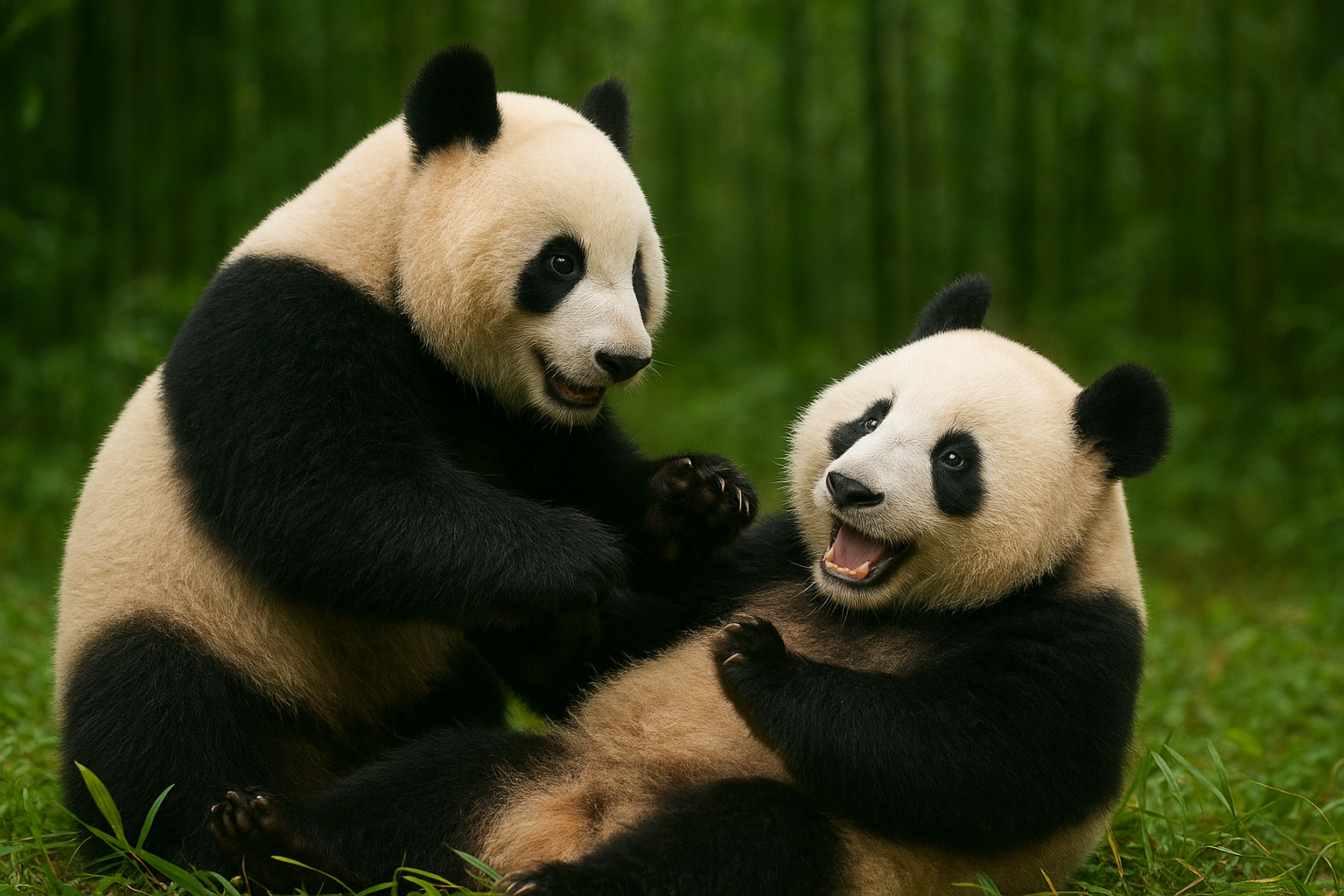
Have you ever wondered whether giant pandas are docile or not? With their cute appearance and funny gait, the giant pandas have always been the symbol of the Chinese fauna and of the environmental conservation. However, behind their “living stuffed animal” image hides an animal with a independent and unpredictable character. Originating from the mountain ranges of central China, pandas lead a life lonely and quiet, preferring to avoid direct conflict. Unlike other bears, they are not overly territorial and communicate through scent markings, vocalizations and body language.
Giant pandas are truly docile, the secret of their tranquility: diet and lifestyle
There apparent docility of giant pandas derives from their slow and peaceful lifestyle. They feed almost exclusively on bamboo, una pianta abbondante nel loro habitat naturale, che non richiede competizione per essere reperita. Questa dieta monotona, unita a un very slow metabolism, leads them to spend most of the day eating or sleeping. The lack of natural predators contributes to making them animals peaceful and relaxed, far from the frenzy of other species.
Pandas in captivity: between calm, curiosity, and controlled interactions
In the research centers and in the zoo, pandas show an even more peaceful nature. In protected environments, where food and shelter are plentiful, pandas spend their days eating, resting and playing. I panda cubs They are known for their curiosity and playful behavior with their keepers, but this does not make them pets. It is rather a sign of adaptation to the human environment, not of domestication. I adult pandas, instead, are generally more reserved and solitary, limiting interactions with people and reacting cautiously when stressed.
When Pandas Aren't Docile: Situations That Trigger Aggression
Although the giant pandas are among the most peaceful animals in the world, they can show defensive behaviors o aggressive under certain circumstances. Here are the three main moments when their calm can vanish.
During the mating season
During the reproductive period, the male pandas They become more competitive and territorial, fighting for a female. Females also show greater distrust, especially if disturbed.
When they defend the puppies
The panda mothers They are extremely protective. If they perceive danger to their young, they can react with growls, scratches, or sudden charges. It is an instinctive behavior and fundamental for the survival of the offspring.
Food competition
In captivity, the coexistence between several specimens can generate episodes of food-related aggression, even if these are rare and short-lived events.
Giant pandas are not pets
Despite their reputation as “friendly teddy bears”, the giant pandas remain wild animals. They are not trainable nor intended to cohabit with humans. Even if they appear calm in captivity, they always maintain natural instincts and unpredictable behavior. Pandas housed in the zoos and conservation programs are part of international projects of protection of the species, where human contact is strictly regulated to ensure well-being, safety and scientific research.
Strength, balance and independence
I giant pandas are the emblem of a perfect balance between strength and serenity. Their apparent docility is not a sign of weakness, but of evolutionary adaptation to a stable and resource-rich environment. Understanding the true behavior of pandas means recognizing that behind every peaceful look lies a wild, intelligent and instinctive animal, silent protagonist of the bamboo forests of China.