






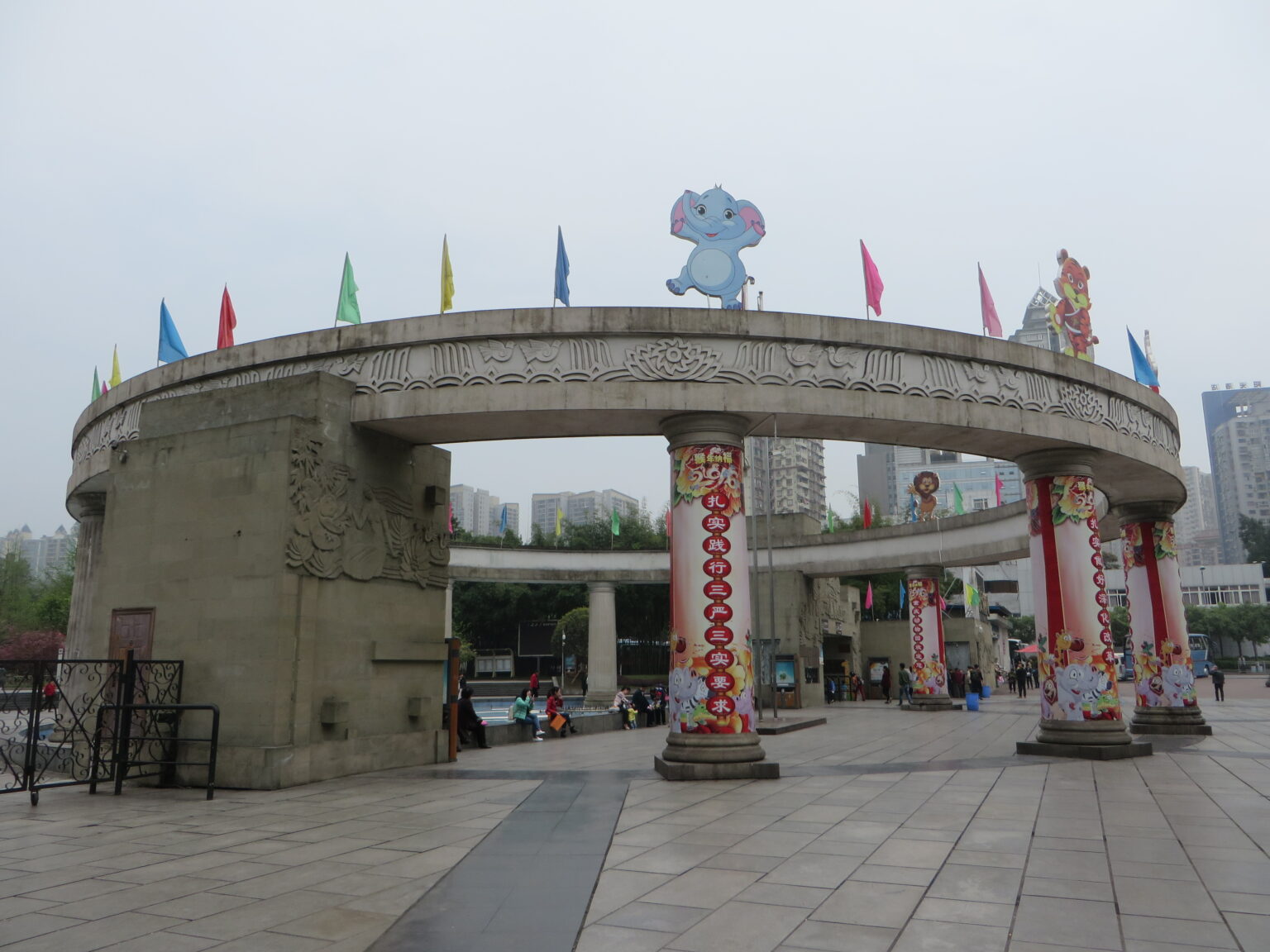
Chongqing Zoo boasts the largest population of giant pandas among Chinese zoos, with over 22 adults and cubs, making it a must-see for giant panda lovers in the heart of Sichuan-Chongqing. Covering 45 hectares in the Jiulongpo District, this mid-sized zoo is a key center for the protection of rare species such as giant pandas, South China tigers, and African elephants, attracting millions of visitors annually with its iconic Panda House.
The History of Chongqing Zoo
Chongqing Zoo was founded in 1953 as a small park in the Western District with just 60 animals. The facility officially opened to the public in 1955, quickly evolving into a hub for wildlife research. Breeding giant pandas began in the 1960s; the first successful breeding operations occurred in the 1980s, with surviving cubs—a pioneering feat when breeding rates were low. Today, it has produced 32-35 litters (13 twins, 1 triplet), including famous ones such as "Liang Liang," "Mang Zai," and the "Four Happy Meatballs" (Chongchong, Shuangshuang, Xixi, Qingqing). Renovated in the 2000s, it integrates conservation with education, collaborating with CCRCGP on loans and genetic studies.
Where is the zoo located and how to get there?
Chongqing Zoo is located at No. 25 Xijiao Road, Yangjiaping Subdistrict, Jiulongpo District, Chongqing (coordinates: 29.52°N 106.49°E). The zoo is easily accessible: 30 minutes from the city center by subway (Line 2, Chongqing Zoo Station) or taxi (CNY 20 from the airport). It covers 45 hectares of hilly terrain with shaded paths; admission CNY 25 (December 20), open 8:00–18:00 (last admission 17:00). Best time to visit: spring/autumn; plan for 3–5 hours, prioritizing Panda House (9:00–15:00 for feedings).
How many giant pandas are there?
Over 22 pandas (2024-2026 data, including Yuke, Yu'ai, and Er Shun), plus red pandas, in a two-level Panda House with bamboo forests, rocks, and ponds. Observe "Mang Zai" (a mother of record-breaking cubs). The zoo is among the world's top panda breeding centers (second only to dedicated panda bases). Other useful information: South China Tiger breeding center, Asian elephants, Bird Language Forest, Tropical Rainforest Pavilion, and children's play areas. Tea house and restaurants for breaks.
Educational programs and conservation
Chongqing Zoo is a research base. Studies on panda fertility (rate >97%), genetics, and diet have boosted the global population (808 captive pandas, between 1,800 and 1,900 wild pandas). Interactive exhibits educate on threats (climate change, habitat loss); volunteers and guided tours raise awareness about the importance of species conservation and biodiversity.