






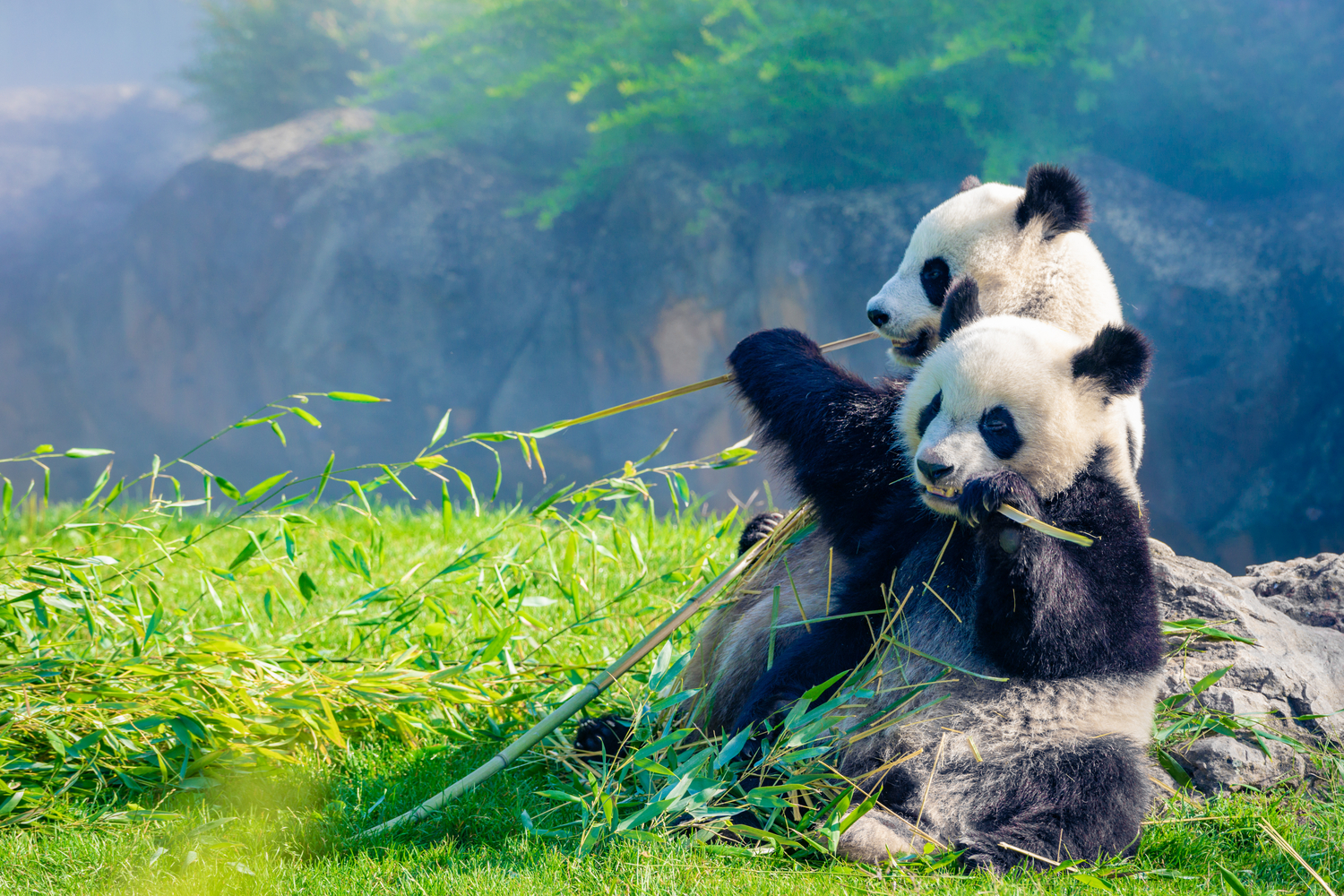
The population of the giant pandas In the wild, it numbers between 1,800 and 1,900 individuals, confined to Sichuan, Shaanxi, and Gansu, China. Its status on the IUCN Red List of Protected Species has been changed from “endangered” to “vulnerable” since 2016. This has been possible thanks to continuous studies and conservation efforts, with growth from 1,100 in the 1980s thanks to reserves (67 total, covering a 67% population).
Where giant pandas live in the wild, 1,800-1,900 specimens: Monitoring with advanced technology
China deploys thousands of infrared cameras in the Sichuan Forest Bureau, collecting millions of data points: 178 to 185 sightings annually. A "space-air-ground" system integrates satellites, drones, and ground-based sensors to track movements and health. Giant Panda National Park (22,000 km², as of 2021) connects 13 populations via ecological corridors, home to 1,340 pandas.
Care and protection of the wild giant panda
The care and protection of the giant panda in the wild is based on integrated strategies by the Chinese government, WWF and IUCN, with data from the fourth national census (2015, updated 2025).
Monitoring with Advanced Tech
- Over 7,800 infrared cameras in the Sichuan Forestry Bureau capture 7.3 million images, detecting 185 pandas/year (up from 178 in 2023).
- Space-air-ground system: satellites, drones, and GPS collars track movements, health, and habitat use in real time.
- “Panda Home” app and AI analyze data to indicate threats.
Habitat and reserve management
- Giant Panda National Park (2021, 22,600 km²) unites 67 reserves, protecting 1,340 pandas (91% population).
- Restoration: +280,000 hectares of bamboo (2005-2020); ecological corridors connect fragmented populations.
- Ranger patrols: 5,000+ km² checked annually for poaching and illegal logging.
Health and genetic interventions
- Vaccinations and check-ups using soft-capture traps for parasites and diseases.
- Gene bank: DNA samples monitor diversity (low, index 0.82); natural hybridization programs via translocations.
- Nutrition: bamboo protection (99% diet), with forest rotations for regeneration.