






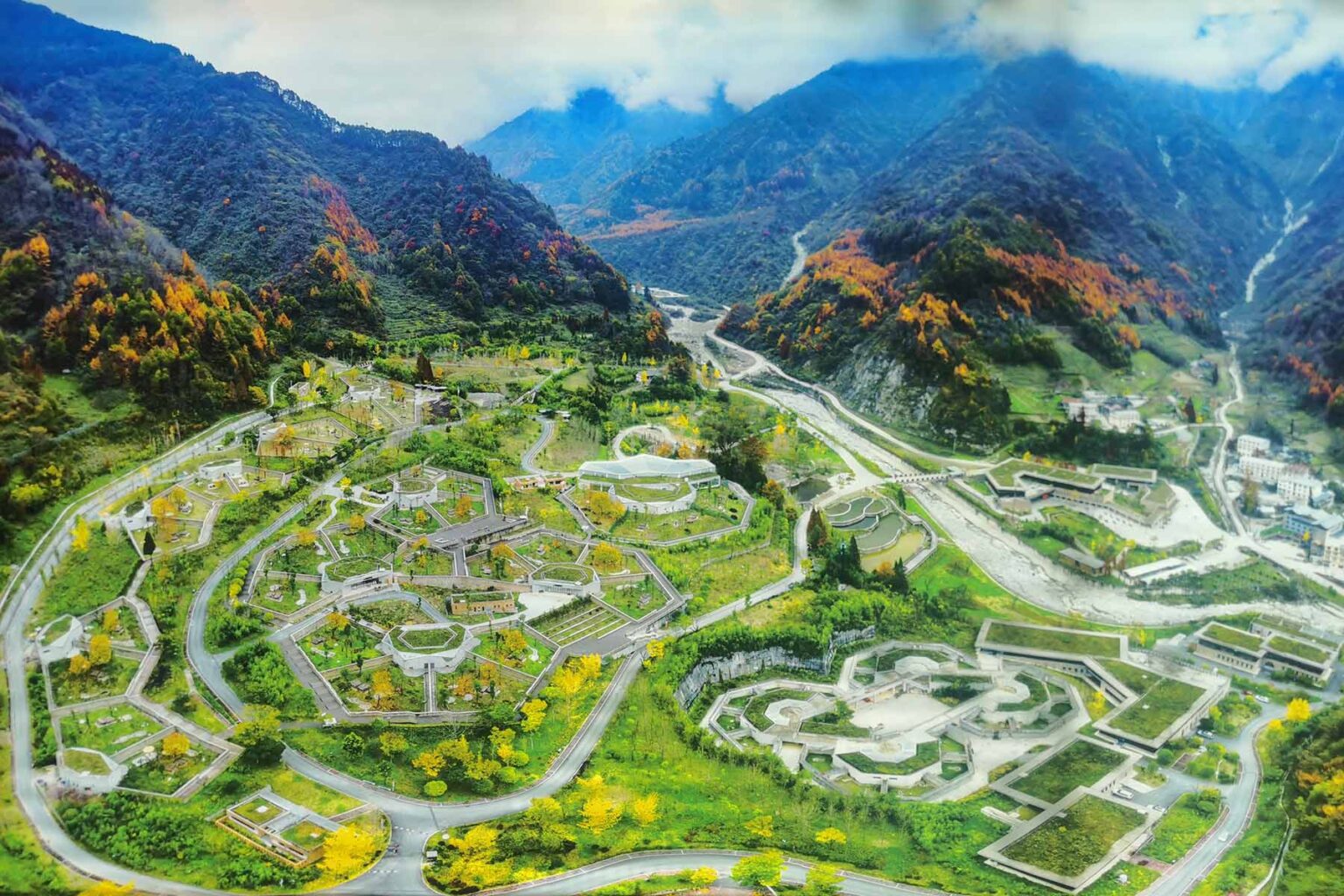
The history of the Wolong Hetaoping Panda Center represents an important piece in the history of the conservation of this protected species. It is the beating heart of giant panda conservation in China, located in the historic Wolong Nature Reserve. It is the oldest and largest in the world – and represents a symbol of resilience after the devastation of the 2008 earthquake. Established in 1981 by the China Conservation and Research Center for the Giant Panda (CCRCGP), it housed 63 giant pandas in an idyllic bamboo valley before the disaster, raising the cub survival rate from 30% to 90% thanks to pioneering research.
Wolong Hetaoping Panda Center: the story
The Wolong Hetaoping Panda Center was established in 1963 as a protected reserve covering 200,000 hectares in the Minshan Range, at the foot of the Tibetan Plateau (ABA Tibetan Autonomous Region, Sichuan). Wolong was the Chinese government's first response to the crisis of the giant pandas, an endangered national treasure. In 1980, it became part of the UNESCO Man and Biosphere Network, and the following year, the CCRCGP opened the Hetaoping Center for breeding and research. Located between 1,555 and 4,600 meters above sea level, between Mount Siguniang (Four Girls Mountain) and lush forests, it became the world's largest hub: a staff of 85 lived on-site, bamboo forests nourished pandas and local communities, and generated 100,000 yuan in tourism annually.
The local Qiang legend amplifies the charm. "Wolong" means "sleeping dragon." It is said, in fact, of a giant dragon that wandered the valley, fell in love with the mountains, and fell asleep forever, symbolizing the eternal protection of nature. Before 2008, it was a serene valley with 63 pandas, laboratories, enclosures, and educational programs that transformed captive breeding from failure to global success.
Devastation of the 2008 earthquake and relocations
On May 12, 2008, the Sichuan earthquake (magnitude 8.0) devastated Hetaoping: landslides, collapses, and mudslides destroyed enclosures, killed two wild pandas, and injured dozens, forcing the evacuation of 240 individuals to Chengdu and Bifengxia. The center, a flagship with a survival rate of 90%, was reduced to rubble; staff and the Qiang community lost everything. In response, the government relocated pandas: many to Shenshuping/Gengda (a new center completed in 2014) and Dujiangyan, preserving the CCRCGP network that today manages 808 pandas in captivity.
Reconstruction, reinswildering and how to get there
Post-earthquake, Hetaoping was reborn as the Wolong Hetaoping Reintroduction Center, focusing on rehabilitation and reintroduction: semi-wild pandas are trained for release into Giant Panda National Park (27,134 km²). Coordinates: Wenchuan County, Sichuan (31.48°N 103.20°E), reachable via G317 from Chengdu (3-4 hours by car). Today, it houses 20-30 pandas in natural enclosures, with an emphasis on genetics and satellite monitoring. It contributes to the population boom: from an estimated 1,114 (2014) to 1,864 wild pandas, moving the IUCN classification from "endangered" to "vulnerable."
The reserve integrates sustainable ecotourism: trekking, wildlife observation (takin, snow leopard), and exhibits on Minshan biodiversity. Admission ~100 CNY; open seasonally (spring/autumn is ideal). It collaborates with UNESCO for habitat restoration, planting millions of bamboo trees to combat mass flowering (threatened by the 2030s). Hetaoping symbolizes China's triumph: from ruins to a model for reinwilding.