






The history of the Shaanxi Rare Wild Animal Breeding & Research Center in Louguantai, located in Xi'an, in Qinling Giant Panda Research Center, represents a fundamental step in the conservation of giant pandas. In fact, it is the pioneer of Chinese rescue centers, established in 1987 at the foot of the Qinling Mountains, a UNESCO Biosphere Reserve. Covering 140 hectares of subtropical forest, it protects the "Four Qinling Treasures": giant pandas of the Qinling subspecies, crested ibises, golden monkeys, and takins, with over 300 rescues and 400 captive births, attesting to its strategic importance for local biodiversity.
Shaanxi Rare Wild Animal Breeding Center Louguantai: The History
Located in Zhouzhi County, 76 kilometers from Xi'an, the Shaanxi Rare Wild Animal Breeding Center Louguantai was established in the 1980s to combat poaching and deforestation that threatened the endemic Qinling panda species. It quickly became a state-run base for Qinling pandas, a unique subspecies smaller and with reddish-brown fur than the classic black-and-white panda. It has partnered with the WWF and the Shaanxi provincial government on reintroduction programs, extending its efforts to the rescue of giant salamanders and snow leopards.
Breeding Successes: From Panda Twins to Qizai, the Brown Panda
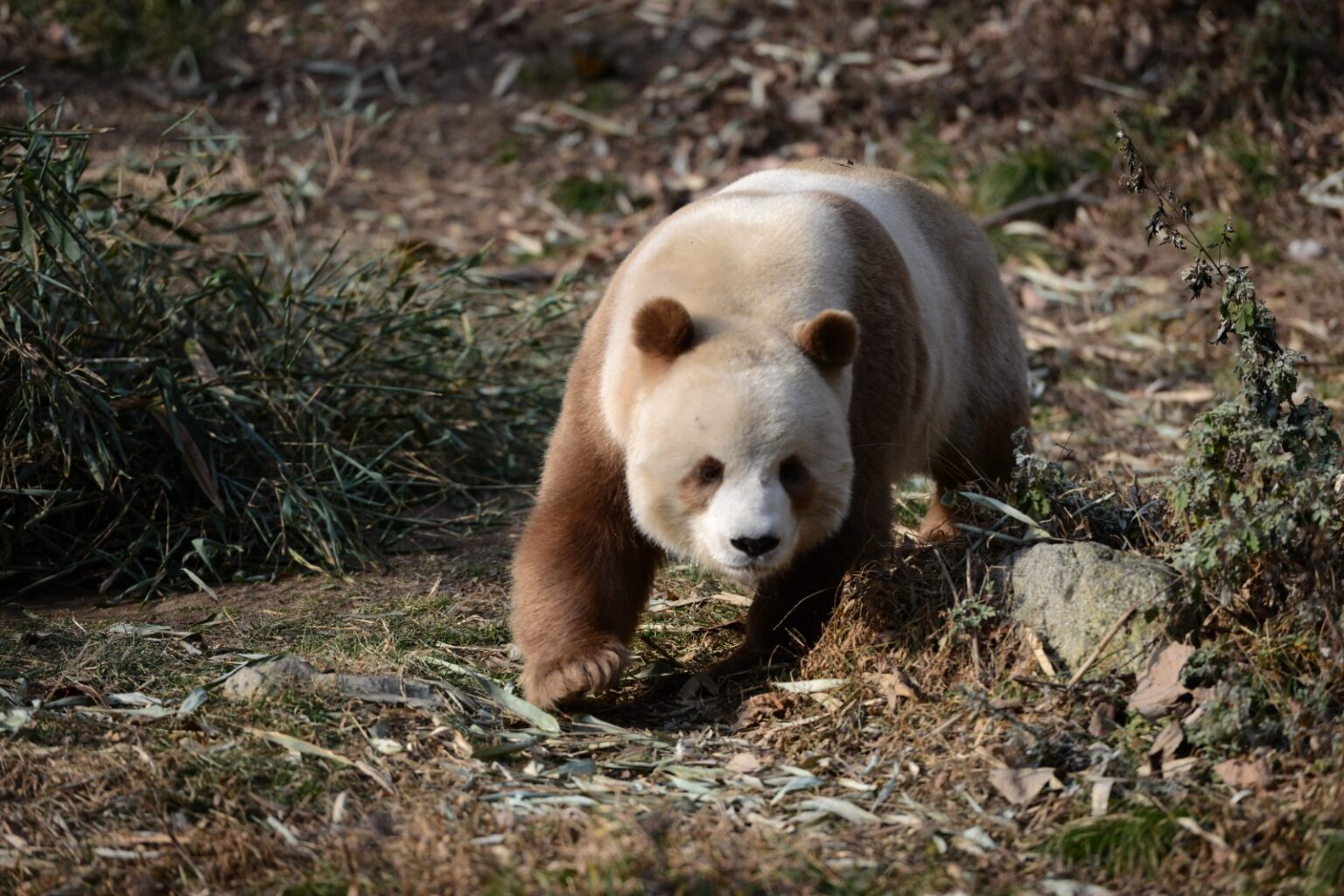
The center achieved its first panda breeding in 2009 with the birth of twins from mother Lucian, a pioneering achievement for the Qinling subspecies that consolidated its expertise. It currently houses between 10 and 20 giant pandas in semi-wild conditions. But the true global icon is Qizai, the world's only natural brown panda due to a rare recessive genetic mutation. Artificially bred since 2015 after being abandoned by his mother, Qizai lives in a dedicated enclosure that serves as an educational hub for advanced genetic research. Another panda present within the oasis is Hi-Mo, adopted by the Chinese company Longi Solar. It also runs the largest ex-situ breeding farm for crested ibises (Nipponia nippon), which has grown from seven individuals to over 2,000 in the wild thanks to its state-run programs. It also hosts golden monkeys (Rhinopithecus roxellana) and takins (Budorcas taxicolor) destined for release.
Structure, attractions and opening hours
The center is divided into specialized areas that offer an immersive experience: the Panda Research Center allows observation of feedings from 10:00 to 11:00 a.m., the Crested Ibis Aviary features synchronized flight demonstrations, Golden Monkey Island hosts acrobatic monkey displays, and the Takin Pasture extends across vast grasslands. Meanwhile, the rescue areas house bears and orphans undergoing rehabilitation. A 3-kilometer walking trail connects the sections, complemented by internal shuttles for a complete 2-3-hour visit. Detailed information panels illustrate Qizai's genetics and anti-poaching strategies. The Center is open year-round, but spring or fall are recommended for ideal mild weather.
Shaanxi Rare Wild Animal Breeding Center Louguantai: History, Tickets, How to Get There, and Prices
The basic admission fee is 30 CNY (about €4) from March to November and 20 CNY during the winter, with discounts of 50% for children and seniors. Private guided tours from Xi'an start from 200-500 CNY, including transfers. Reachable by bus 327 from Xi'an train station in about 2 hours or by taxi for 200 CNY, the center is open from 9:00 am to 5:30 pm in summer and 9:30 am to 4:30 pm in winter. Closed on Mondays and public holidays, booking online through Trip.com allows you to combine your visit with the Terracotta Warriors for the best itinerary.
Future and global significance for conservation
The center is expanding its activities with artificial intelligence monitoring and hybrid breeding programs, aiming for new reintroductions by 2030 to support the wild population of Qinling pandas, estimated at just 300 individuals. As an authentic alternative to large complexes like the one in Chengdu, it represents an essential model for regional conservation, ideal for naturalists and families seeking authentic experiences.