






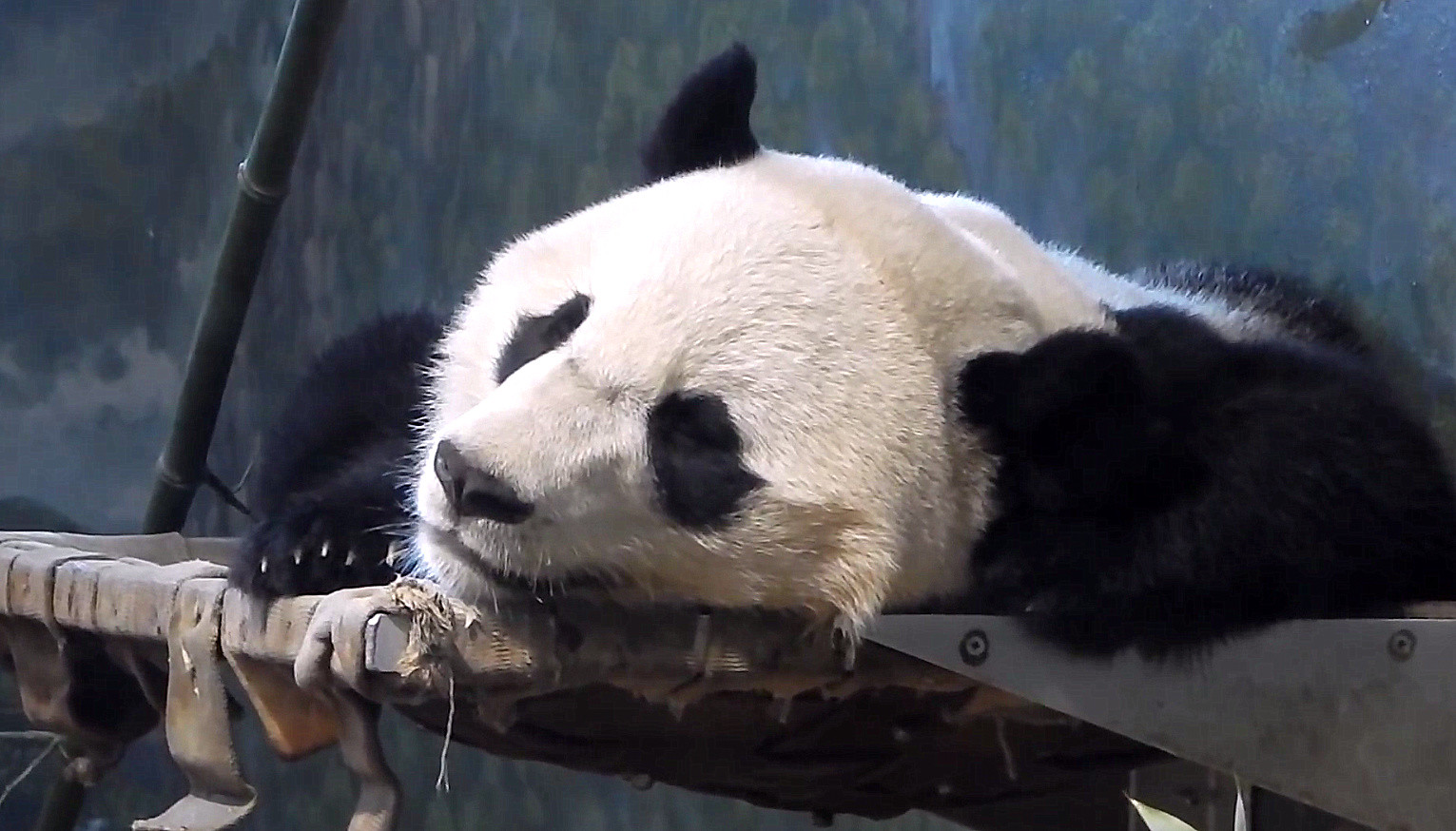
Among the many doubts and curiosities of the protected species' fan base, there's a recurring question: Where do they sleep? giant pandasThe cuddly bears dedicate a large part of their day to sleep, an evolutionary adaptation necessary to compensate for the scarce energy provided by bamboo, which constitutes 99% of their diet. Only the 1% of their diet, consists of other very specific foods, suited to their digestive system. Each sleeping position is the result of instincts refined over millennia, designed to maximize survival in harsh mountain environments. Wild specimens, which live in the Sichuan forests at altitudes between 1,500 and 3,400 meters, display clear preferences. Their choice of sleeping location directly influences their ability to defend themselves, maintain ideal body temperature, and digest copious daily meals, which can amount to up to 38 kilograms of bamboo.
Where giant pandas sleep, trees: the elevated shelter for safety and coolness
The favorite sleeping position for giant pandas is on the branches of the trees, At a height of 6-15 meters, pandas curl up in a ball, using their tails as a natural cushion. This offers dual protection. Ground predators such as leopards and golden jackals struggle to reach them, while the canopy provides natural shade that reduces body temperature during hot summer days. Preferred species are fir, magnolia, and oak trees, whose sturdy branches can support the weight of an adult, which can reach 120 kilograms. From the summit, pandas also enjoy a panoramic view of their territory, allowing them to spot new food sources or potential threats effortlessly.
You may also be interested in:
Bamboo nests: warmth and camouflage for puppies
Pregnant females and mothers with newborns opt for nests constructed from fresh, broken and woven bamboo stalks. These structures, about one meter wide and 50 centimeters deep, are located in rocky crevices or under dense bushes. The interior maintains a constant temperature of around 22 degrees Celsius, ideal for the cubs, who are born blind, naked, and weighing just 100 grams. The green leaves covering the entrance serve as natural camouflage, deterring olfactory predators. This meticulous preparation drastically reduces the risk of abandonment or predation, ensuring that at least one in two cubs achieves independence.
Still ground and damp leaves: digestive rest
After meals, male pandas prefer to lie down on carpets of dry leaves or damp soil near streams. Lying on their left side, they aid the slow digestive process, which lasts up to 15 hours, thanks to an intestine not evolved for bamboo cellulose. The coolness of the soil prevents overheating., maintaining basal metabolism at optimal levels. This position minimizes energy expenditure. Standing or climbing, in fact, requires twice as many calories as simply lying down, a luxury they can't afford with such a low-nutrient diet.
The vital importance for conservation and evolution
Understanding the giant panda's resting habits goes beyond mere naturalistic curiosity: it informs habitat protection strategies. Sichuan's UNESCO World Heritage reserves preserve forest corridors that connect climbing trees to nesting areas, preventing genetic isolation of populations. With climate change altering bamboo blooms, these resting sites are becoming increasingly crucial. Drone monitoring and artificial intelligence are mapping their preferred locations, guiding targeted interventions to counter ecosystem fragmentation. Every hour of panda sleep is a crucial step in their fight for survival, making them perfect ambassadors for global biodiversity.