






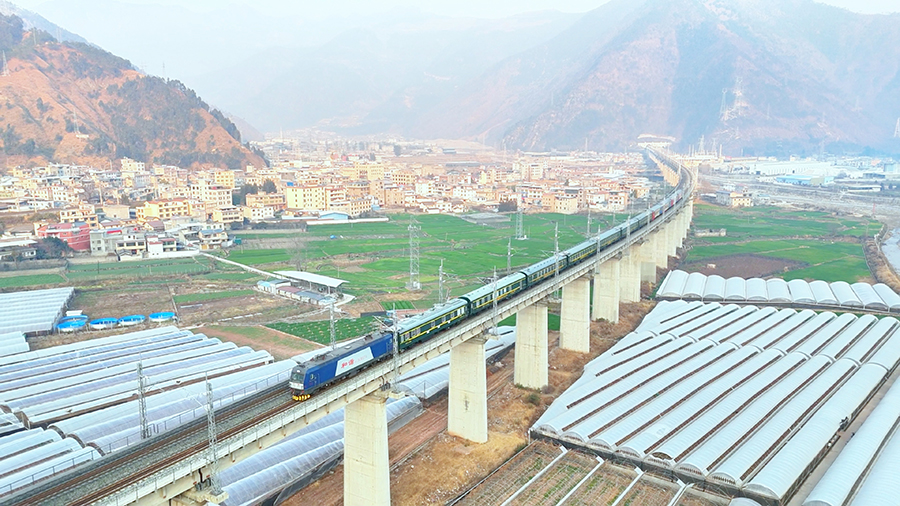
The Panda Health Train in China is a truly commendable initiative, uniting railways and doctors from Sichuan University to bring free medical care to isolated mountain areas, with concrete results for 18,000 people.
China: What is the Panda Health Train and why is it so important?
The Panda Health Train, decorated with iconic giant pandas, speeds through the mountains of Sichuan to deliver free medical care to isolated communities. It's not science fiction, but this well-known means of transport is in operation in the Liangshan Yi Autonomous Prefecture. This three-day mission treated hundreds of locals and railway workers with specialist visits, hospital training, and personalized advice. Since 2021, it has already helped over 18,000 people, its real-world impact on rural revitalization, and why it could inspire global solutions for healthcare access in remote areas. Departing from Chengdu, the thematic convoy—led by over 70 volunteers from the West China Hospital of Sichuan University under the direction of Luo Fengming—stopped at various train stations to offer visits, consultations, and targeted healthcare support.
The mission in Liangshan Yi Prefecture: operational details
Liangshan Yi Autonomous Prefecture, inhabited primarily by the Yi ethnic minority, is a mountainous and isolated area in southern Sichuan, with limited infrastructure and often poor healthcare access. The train, in collaboration with China Railway Chengdu Group, functioned as a "mobile hospital on rails": teams of expert doctors visited local patients directly at the stations, diagnosing common ailments related to manual labor and harsh environmental conditions.
A highlight of the mission was a visit to the First People's Hospital in Liangshan, where nurses and doctors conducted practical training sessions. They shared advanced protocols on emergency management, chronic disease prevention, and modern diagnostic techniques adapted to the rural context. A railway worker named Li testified:
“"The doctors thoroughly examined my health issues, taking into account my profession, and gave me helpful advice. This service truly touches our hearts.".
Luo Fengming's role and strategic vision
Luo Fengming, president of West China Hospital, emphasized the importance of this partnership with China Railways:
“Providing high-quality medical resources to remote mountain areas through the Panda Health Train is essential to our commitment to local communities and rural revitalization,” he said.
The initiative doesn't stop at providing just-in-time care. The parties plan to expand the model with regular mobile medical services, creating a sustainable mechanism for long-term health monitoring. The "panda" theme is no coincidence. It recalls the icon of Sichuan (the giant panda's home region), symbolizing protection and care. The train, decorated with panda images, makes the operation instantly recognizable and appealing to locals, increasing participation.
Social impact: over 18,000 beneficiaries since 2021
Launched in 2021, the Panda Health Train has already provided free services to more than 18,000 people in the Liangshan region, covering preventive screenings, infectious disease treatment, respiratory care, and nutritional support. This impressive volume is the result of repeated missions. Each journey covers multiple stations, reaching villages otherwise inaccessible by road.
In numerical terms:
- Volunteers involved: over 70 per mission, including doctors, nurses and logistics workers.
- Clinical Focus: chronic diseases (hypertension, diabetes), work-related injuries and maternal and child health.
- Training output: Hands-on sessions for local hospitals, transferring know-how from Sichuan University.
Why it works: The unique Panda Health Train model
This hybrid project uses railways as a logistical backbone—ideal for difficult terrain—combined with university medical expertise. It differs from traditional mobile clinics because:
- Scalability: high-capacity trains carry heavy equipment (ultrasound scanners, portable laboratories).
- Regularity: Partnership with China Railway ensures scheduled access.
- Social impact: Strengthens “rural revitalization,” a priority of the Chinese government to reduce urban-rural disparities.
For Italian and global audiences, it is a case study, similar to historic medical trains (e.g., the Magic Bus in India or MSF on rails), but with a modern and branded twist to maximize awareness.
Future prospects and global inspiration
Luo Fengming announced plans for regular service mechanisms, potentially expanding to other remote provinces. This could include integrated telemedicine and follow-up apps, making the Panda Health Train a prototype for healthcare 4.0 in disadvantaged areas.
In a world where 3 billion people live in remote rural areas, initiatives like this demonstrate that low-tech innovation (trains) and high-skill (university doctors) can bridge enormous healthcare gaps. The Panda Health Train doesn't just heal bodies, it weaves networks of hope in the mountains of Sichuan—a model replicable anywhere, from Nepal to the Andes.