






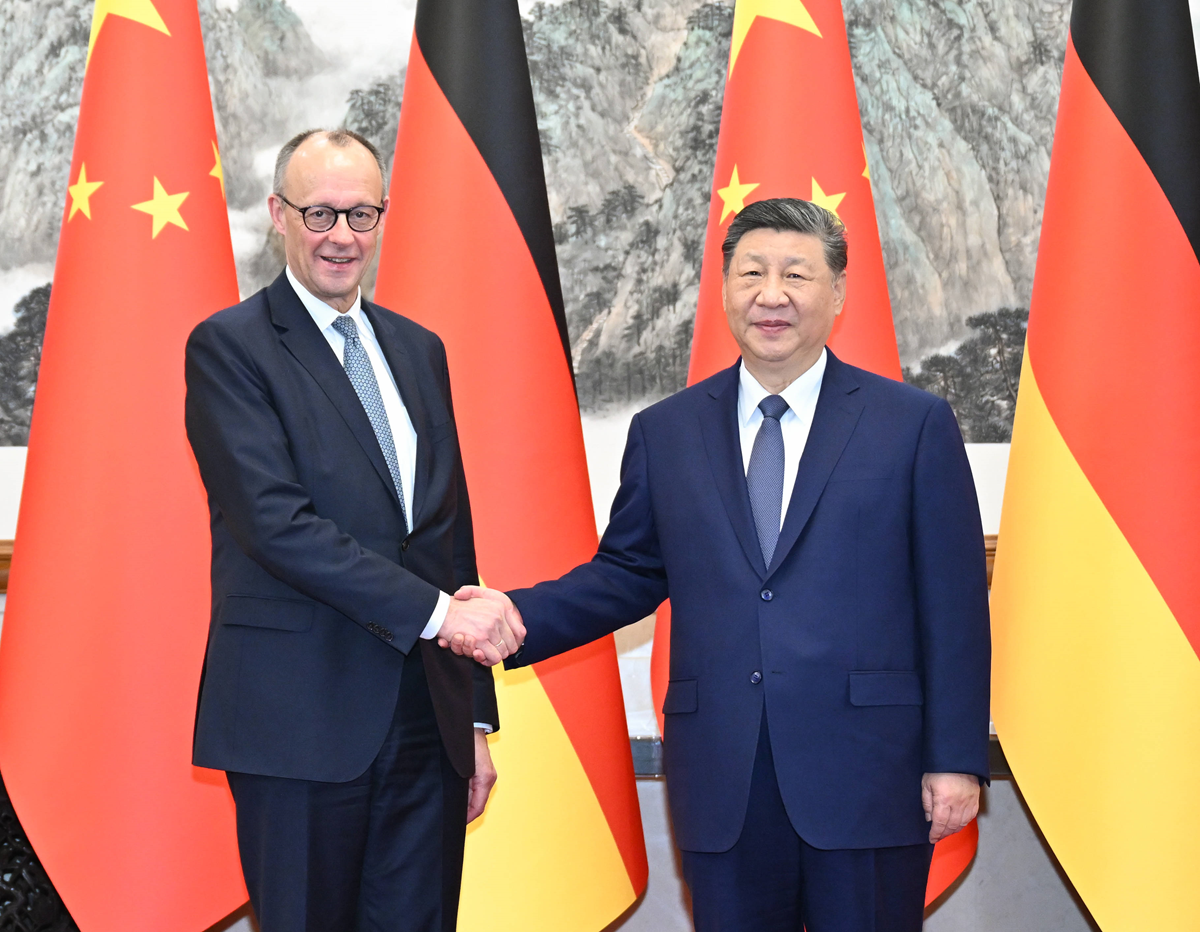
A visit that rewrites the balance between Beijing, Berlin and Brussels
Xi Jinping met with German Chancellor Friedrich Merz in Beijing, marking a new chapter in the China-Germany global strategic partnership. This has direct implications for the European Union and global economic balance. The state visit, accompanied by a high-level economic delegation, concluded with a joint declaration aimed at strengthening cooperation, free trade, and dialogue on all major global crises, starting with Ukraine.
Xi Jinping meets with Merz: the three pillars of the new China-Germany partnership
During the bilateral meeting, Xi Jinping put forward three key proposals for the future development of Sino-German relations: becoming reliable, mutually supportive partners, open and mutually beneficial innovation partners, and cultural partners capable of mutual understanding and appreciation. These pillars aim to strengthen not only trade, but also technological cooperation and civil society exchanges, with the goal of making the relationship more stable and resilient in a turbulent international environment. China views Germany as its main European partner, the world's second- and third-largest economies, called upon to play a central role in global growth and the green transition. Berlin, for its part, aims to transform the partnership with Beijing into a driver of industrial and digital innovation, while maintaining its commitment to market diversification and reducing critical dependencies.
Merz's position: one China, open trade, and the role of the EU
Merz reiterated that Germany firmly adheres to the One China policy and considers relations with Beijing an essential component of its foreign and economic strategy. The Chancellor emphasized that, since the establishment of diplomatic relations, the two countries have maintained friendly exchanges and close cooperation, bringing concrete benefits to the peoples of both nations. Berlin aims to strengthen coordination with China to defend free trade, oppose protectionism, and develop reliable and lasting economic and trade relations between Beijing and the European Union. According to Merz, a stable and orderly relationship with China is crucial for the competitiveness of German industry, but also for global stability and prosperity, provided that frank discussions are maintained on the most sensitive issues, from security to state aid.
Joint Declaration: What it entails for the EU, businesses and markets
The joint declaration between the People's Republic of China and the Federal Republic of Germany reaffirms that mutual respect, mutual benefits, open dialogue, and cooperation on global challenges are the fundamental principles for developing bilateral relations. The two sides recognize the central role of economics and trade in Sino-German relations and express their willingness to deepen cooperation with a long-term, balanced, and sustainable perspective. The agreement emphasizes the need for reliable economic and trade relations between the European Union and China, aligned with both sides' interests and capable of supporting global stability and prosperity. For German companies, particularly those present in the Chinese market, the message is clear: Beijing and Berlin intend to maintain open channels of trade, addressing differences on competition, industrial standards, and industrial policies through dialogue.
The Ukrainian crisis, multilateralism, and the architecture of lasting peace
During the talks, Xi Jinping outlined China's principled position on the Ukrainian crisis, reiterating that the key remains the search for a solution through dialogue and negotiations, with the equal participation of all parties involved. Beijing calls for the reasonable concerns of all stakeholders to be taken into consideration, in order to strengthen the will for peace and build a common security architecture geared towards lasting peace. China and Germany expressed their readiness to defend the central role of the United Nations, revitalize its leadership function, and support multilateralism, international law, and free trade. In a historical moment marked by epochal changes and growing geopolitical tensions, the two countries aim to present themselves as promoters of cooperation and stability, seeking a balance between national interests, global solidarity, and responsibility toward European and international partners.
Why this visit could change Europe's perception of China
Merz's mission to Beijing contributes to renewing Europe's perception of China, presenting it not only as a systemic competitor but also as a necessary partner in addressing the climate crisis, the energy transition, and global governance reform. The opening of a new phase of strategic dialogue, with the resumption of government consultations and the commitment to resolving differences through direct dialogue, offers the EU the opportunity to define a more cohesive policy toward Beijing. For European readers, this visit is a crucial test: from export management to value chains to technological security, Sino-German cooperation will profoundly influence the continent's economic future. Understanding the content and implications of the joint declaration allows us to anticipate how trade, regulatory, and geopolitical relations between China, Germany, and the European Union will change in the coming years.