






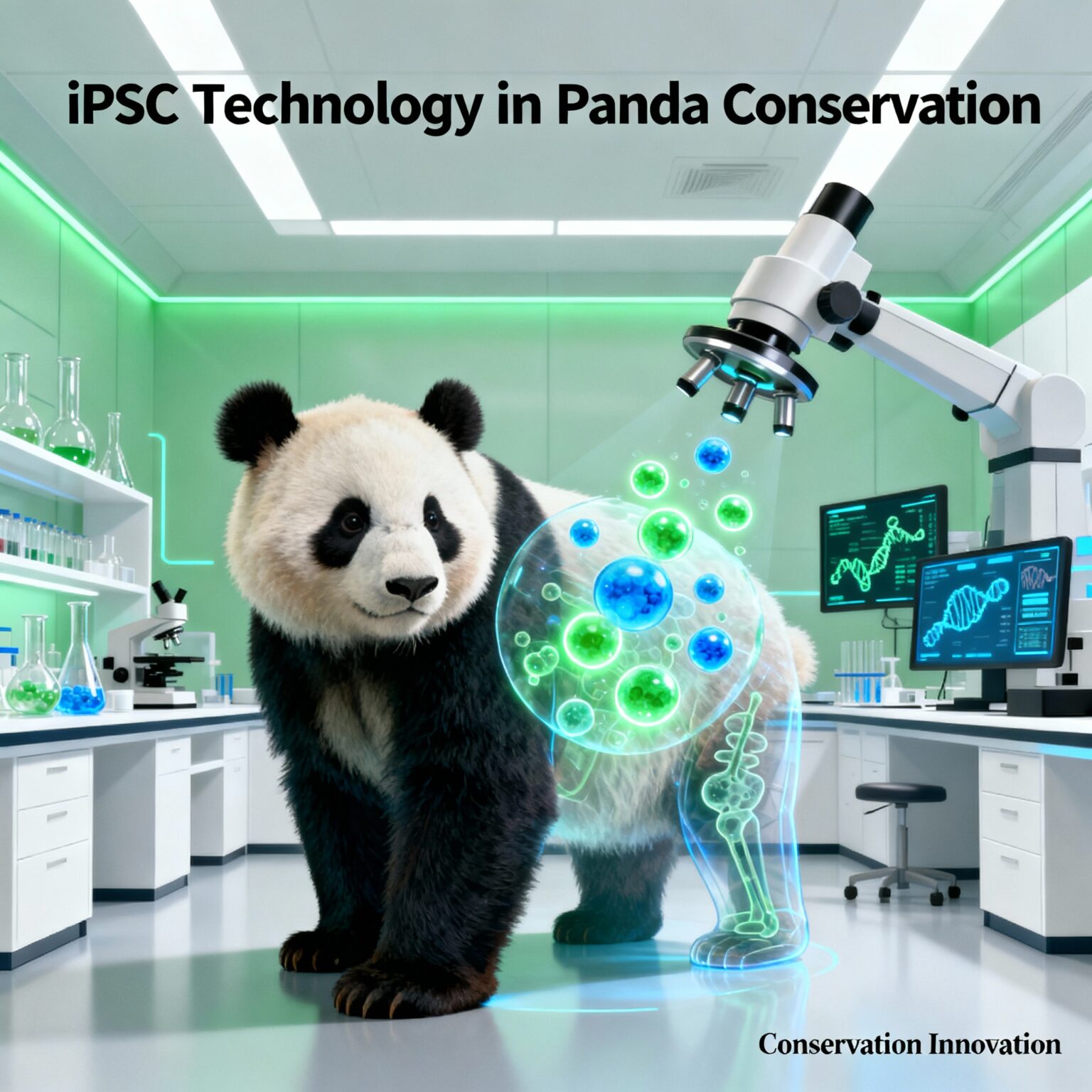
A fundamental and historic breakthrough comes from the biotechnological research front. An international team of scientists has transformed giant panda skin cells into induced pluripotent stem cells (iPSCs), opening up extraordinary prospects for the survival of the species.
Giant Panda: What are iPSC stem cells?
iPSCs are cells obtained by reprogramming an adult somatic cell – in this case, a skin cell – to a state similar to that of the embryonic. This extraordinary feature allows them to differentiate into any cell type and potentially replicate itself infinitely. The technology, which was worth the Nobel Prize in Medicine in 2006, is already applied in regeneration projects and conservation of animals at risk of extinction.
Thanks to them, it is possible to create an inexhaustible source of rare cellular material, capable of generating tissues and organs according to the needs of a species. In the case of the giant panda, this means a strategic step towards genetic engineering techniques. assisted reproduction with potential global impact.
An unprecedented scientific challenge
Making iPSCs from the giant panda has proven more complex than with other species, such as the northern white rhinoceros. Jing Liu, lead author of the study published in Science Advances, he explained how the team initially attempted effective approaches on mice and human cells, without success. Only after numerous experimental modifications were the optimal conditions, culminating in success: “The iPSC clones were beautiful”, Liu said.
Read also:
Giant Panda Conservation in China: Innovation and Global Cooperation
Towards the creation of giant panda gametes and embryos
The next step could be the production of sperm and eggs from stem cells of giant pandas. This goal, however, faces ethical and technical limitations: superovulation and egg collection procedures are prohibited, while the limited availability of deceased specimens in good physical condition further complicates the collection of reproductive material. iPSCs could circumvent these obstacles, allowing for the creation of viable embryos which, through programs of repopulation and reintroduction into nature, would strengthen wild and captive populations.
A possible future for the species
While we remain far from the possibility of "growing" giant pandas in the laboratory, this research marks a turning point in genetics applied to wildlife conservation. The implications are not just for the giant panda, but for entire global strategies to save threatened species from extinction. The discovery offers new hope: using the biotechnology and stem cells as concrete tools to ensure a future for the black and white giants who have enchanted humanity for centuries.