






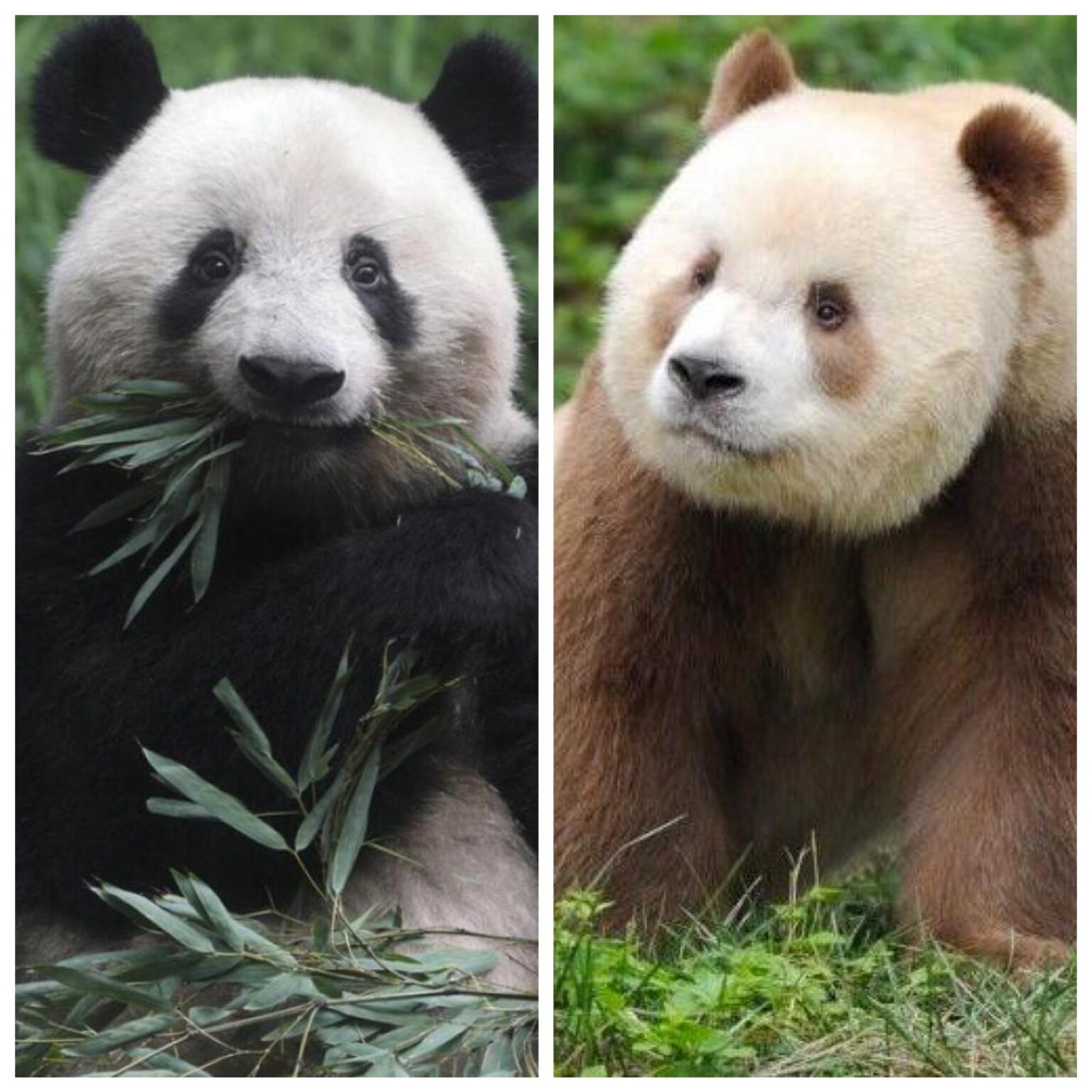
Sichuan pandas and Qinling pandas have their differences. They represent two fascinating subspecies of the giant panda, separated by approximately 300,000 years of evolution, which has made them so different: the former, iconic with their black and white fur, versus the latter, often brown and with smaller skulls. This in-depth guide reveals their genetic, morphological, and behavioral differences, helping you truly understand their uniqueness.
Differences between the Sichuan panda and the Qinling panda: evolution and scientific classification
Giant pandas (Ailuropoda melanoleuca) are divided into two main subspecies: A. m. melanoleuca (Sichuan) and A. m. qinlingensis (Qinling), officially recognized in 2005 after being discovered in the 1960s. Genetic divergence dates back approximately 300,000 years, caused by mountain barriers that isolated populations, reducing gene flow. Studies by Zhejiang University confirm that the Qinling have less genetic diversity, making them more vulnerable to disease and inbreeding.
Physical and morphological differences
Sichuan pandas are distinguished by their robust, oval, typically bear-like heads. They reach impressive dimensions, reaching 120-190 cm in length and weighing between 80 and 200 kg, and are wrapped in the classic black and white coat that makes them global icons. In contrast, Qinling pandas appear smaller and more delicate, with a small skull and surprisingly large molars adapted to their diet. Their fur takes on a light brown-on-white hue thanks to recessive mutations preserved through genetic isolation. The spots under their eyes, instead of sharp circles, form teardrop-shaped streaks that make them unique and fascinating.
Famous examples: Qizai, the only brown Qinling in captivity.
Habitat and geographical distribution
Sichuan pandas range across six mountain ranges between Sichuan and Gansu provinces, including the Minshan and Qionglai Mountains, living at altitudes between 1,500 and 3,500 meters in dense, bright bamboo forests, perfect for their solitary lifestyle. In contrast, Qinling pandas are endemic to the Qinling Mountains in Shaanxi province, with a restricted range of just five counties and altitudes between 1,300 and 3,000 meters, isolated from the rest of the population by the Yellow River, which has created a natural barrier. In terms of numbers, there are approximately 1,100 Sichuan pandas in the wild, while the Qinling pandas—only 200-300 individuals—are much more endangered due to their limited genetic diversity and fragmented habitat.
Behavior, diet and reproduction
Both giant panda subspecies rely almost exclusively on bamboo—about 20–38 kg per day, which accounts for 99% of their energy needs—but the Qinling have adapted by preferring hardier local species from their mountain habitat, a key difference for their survival. They are solitary animals by nature, do not hibernate, and reach sexual maturity between 4 and 6 years of age, with an incredibly short female fertility window of just 24 hours a year, complicating reproduction. The Qinling, however, pay a higher price for their genetic isolation: they suffer more from inbreeding, with cubs at risk, such as Dan-Dan, who died shortly after birth in 2000, and suffer from critical dental problems—excessive attrition and fractures reduce their life expectancy to just 5–20 years.
Threats and conservation
Both giant panda subspecies are classified as endangered, but the Qinling are in an even more critical condition due to pollution—particularly heavy metals accumulating in their bamboo—habitat fragmentation, and the limited genetic variability that makes them fragile. To protect them, China has established nature reserves in the Qinling Mountains and ecological corridors to facilitate their movement, while "panda diplomacy" continues to export them to foreign zoos to raise global awareness. Since 2016, the species' overall status has improved thanks to centers like Wolong, which have strengthened conservation and reintroduction programs.