






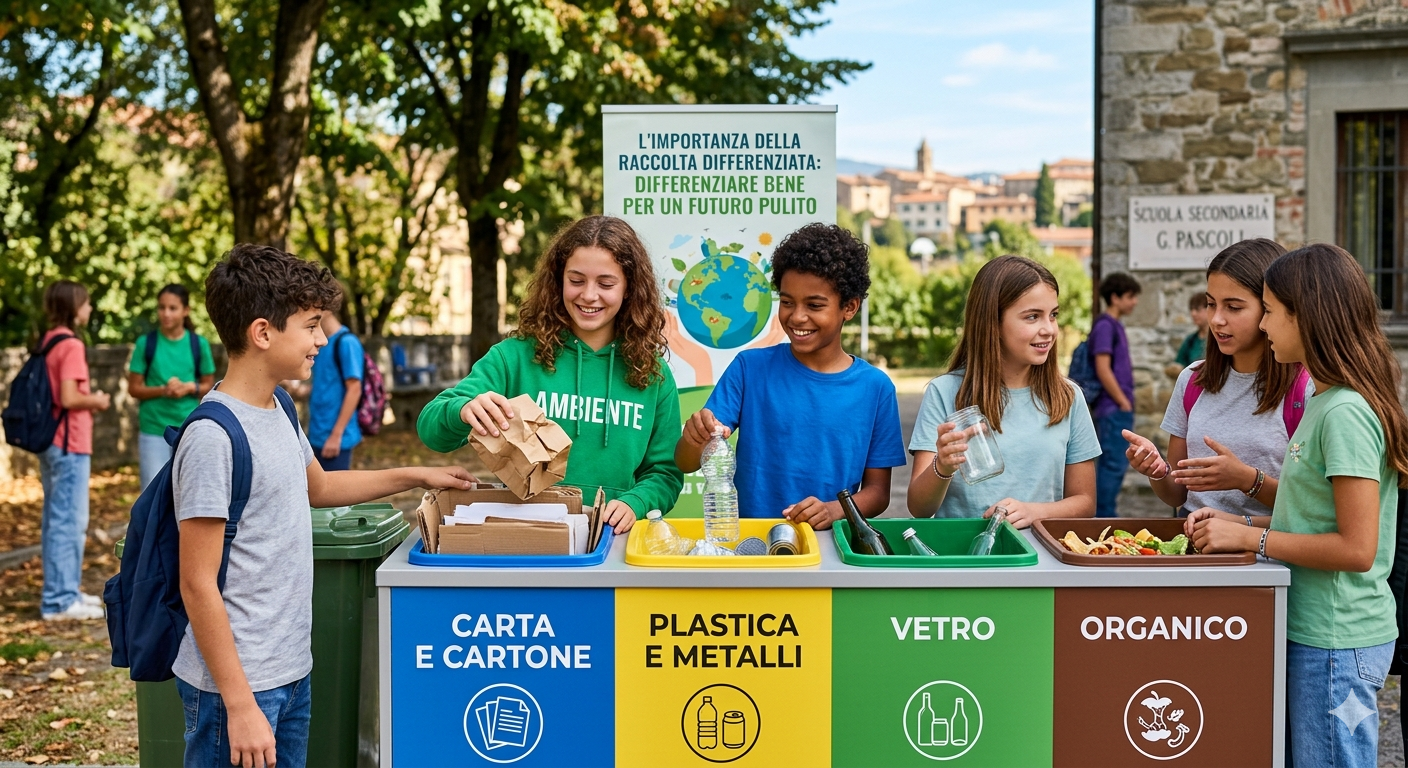
Separate waste collection is fundamental and is one of the simplest actions that a citizen can carry out, but also one of the most important for the future of the planet and for the biodiversity. Properly separating paper, plastic, glass, organic waste, and general waste means starting a virtuous cycle that reduces waste, limits pollution, and allows us to recover valuable materials instead of dispersing them into the environment. In other words, it's not just about "disposing of waste properly," but about actively participating in a more responsible and sustainable economic model.
Separate waste collection, why it's essential: the reasons
Separating waste is essential and, first and foremost, diverts large quantities of waste from landfills and incinerators, reducing pressure on the environment and local communities. When materials are separated properly, they become easier to treat and more suitable for recycling, with immediate benefits for the waste management system. This means less abandoned waste, less land use, and less dispersion of potentially polluting substances. A second benefit is the saving of raw materials. Recycling paper, glass, aluminum, and plastic allows materials already used to be reintroduced into the production cycle, reducing the need to extract, cultivate, or process new resources. This is a crucial step, because many raw materials require energy, water, and complex industrial processes to be transformed. Every time waste is transformed back into a resource, unnecessary waste is avoided.
Environmental benefits
From an environmental perspective, waste sorting helps reduce air, soil, and water pollution. Overcrowded or poorly managed landfills can cause problems related to leachate, unpleasant odors, and climate-altering emissions. Properly separating waste reduces these problems and makes the entire disposal system more efficient. There's another often overlooked factor: recycling generally requires less energy than producing materials from scratch. This translates into reduced greenhouse gas emissions and a lower climate impact. At a time when ecological transition is increasingly urgent, waste sorting represents a concrete and immediate lever, accessible to all.
Economic benefits
Separate waste collection is not only beneficial to the environment, it also produces positive economic benefits. An efficient waste management system reduces disposal costs for municipalities and, in many cases, can help reduce the pressure on rates paid by residents. The more materials are recovered, the less unsorted waste must be treated at a costly rate. Furthermore, the recycling sector generates jobs along the entire supply chain: collection, sorting, treatment, transformation, and marketing of recovered materials. It is a sector that generates value, fosters innovation, and supports the circular economy. Therefore, it is not only a good environmental practice, but also a driver of development for businesses and local communities.
Impact on daily life
Effective waste sorting also improves the quality of life in cities. Cleaner neighborhoods, less litter, and more orderly waste management contribute to making urban spaces more livable. When the system works, there's also a greater sense of collective concern for the common good, with positive effects on civic duty and citizen participation. There's also a very important educational aspect. Getting children and adults used to separating waste fosters a culture of responsibility, in which every daily action counts. Waste sorting teaches us that resources are finite and that individual behavior can make a difference on a collective scale.
How to do it well
Separate waste collection yields the best results only if done carefully. Each municipality may have slightly different regulations, so it's essential to follow local guidelines and dispose of each material in the correct container. Even small errors, such as placing dirty or incompatible materials, can compromise the recovery of entire loads. A simple example illustrates this point: a clean plastic bottle can enter the recycling circuit, while packaging contaminated with organic residues risks becoming non-recoverable waste. Therefore, separating waste is not just a matter of goodwill, but also of precision.
Quick table: how to separate waste
The indications in this table are general guidelines, valid in most Italian municipalities and designed to help young people, in particular, to orient themselves when they have doubts about separate waste collection. Broad guidelines such as "plastic → plastic", "glass → glass", "clean paper → paper" and "batteries and WEEE → specific collection points" are shared in many areas, but there are no one-size-fits-all rules. In some municipalities, for example, the bottle cap must be screwed on, in others it must be removed; certain compostable bags are accepted in the organic waste, others are not. To avoid mistakes, it is always advisable check the rules of your municipality (on the municipal website, on the municipal waste management company's app, or on the "Where to throw away?" table), so waste sorting will be more precise, effective, and truly environmentally friendly.
| Just finished using… | Where do I throw it? | What NOT to do |
|---|---|---|
| Plastic bottle (water/juice) | Plastic (yellow/orange container) | Don't throw it in paper or glass; if your municipality requires it, remove the cap. |
| Glass bottle (cola, beer, etc.) | Glass (green container) | Don't leave dirty corks or dirty corks inside. |
| Notebook paper, textbooks, flyers | Paper and cardboard (blue) | Do not put paper stained with food, oil or glue. |
| Pizzas, polished papers, very dirty boxes | Undifferentiated or, if your municipality says so, in the organic waste | Don't put them in paper, otherwise the recycling will be ruined. |
| Food scraps, peels, coffee grounds | Organic (wet, brown/black container) | No plastic, metal or non-compostable bags. |
| Remote control, phone or flashlight batteries | Specific collection points (recycling stations, shops, pharmacies) | Never in the unsorted waste or in the toilet. |
| Small appliances (chargers, hair dryers, small speakers) | WEEE centers or ecological islands | They are not made of plastic or paper. |
| Expired or finished medicines | Containers in pharmacies or drug collection points | Don't throw them in the trash or down the toilet. |
| Compostable bags and cutlery (if there is a logo) | Organic, only if your municipality allows it | When in doubt, better undifferentiated than ruining the organic flow. |
| Plastic bags, shopping bags | Plastic or, if your municipality says so, undifferentiated | Never put them in paper: they ruin the recycling. |
| Used smartphones or tablets | WEEE centers or special points | They never go in the plastic bin. |