






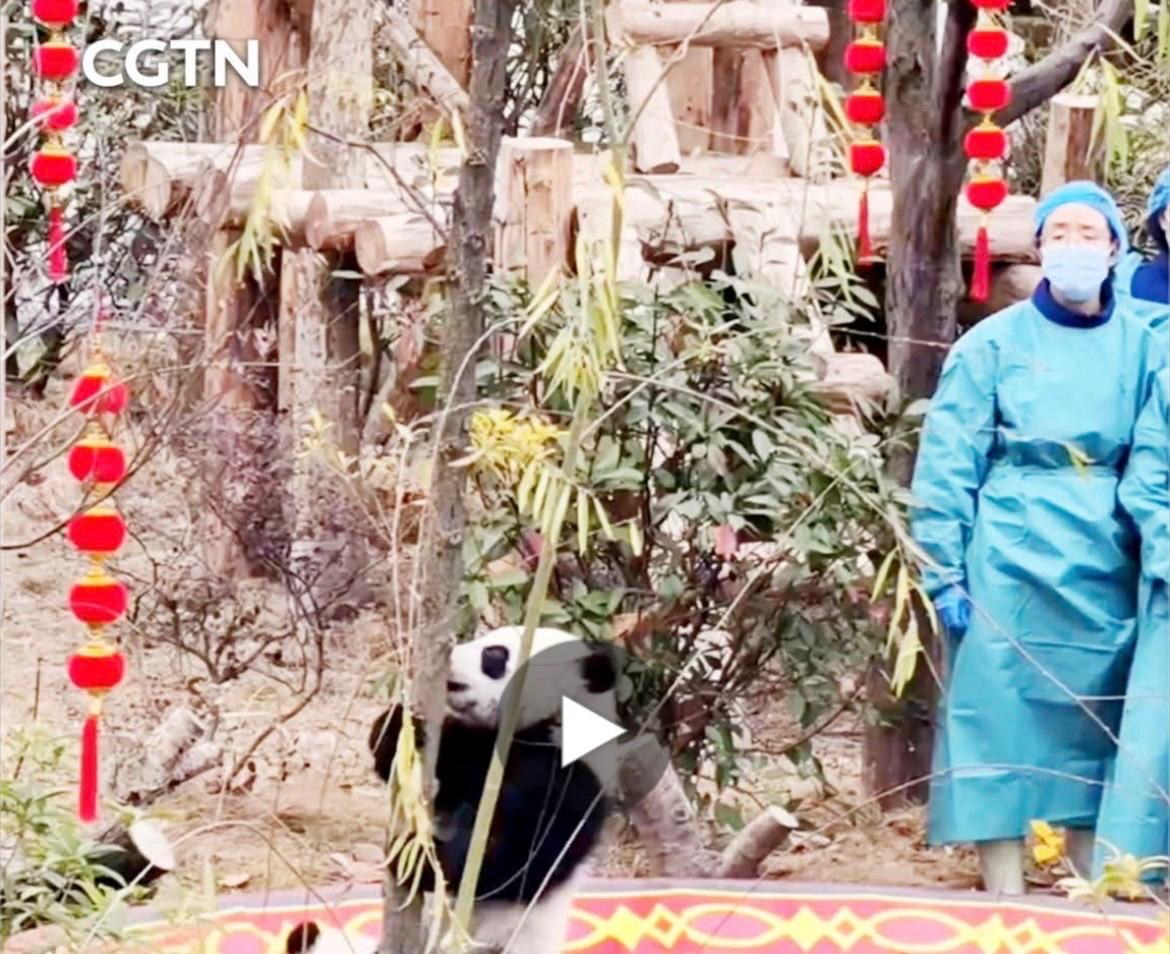
Seven giant panda cubs have made their public debut at the Chengdu Research Base of Giant Panda Breeding in southwest China to welcome the upcoming Spring Festival. CGTN reports, comparing the cubs to "rice dumplings boiling in a bowl" as they play and roll around their enclosure.
Seven panda cubs make their debut in Chengdu: Facebook post
CGTN's Facebook post specifies that these cubs were born at the Chengdu Research and Breeding Center, located in Panda City. As of the end of 2024, the center housed 244 members of the panda family, making it the world's largest panda breeding center. The debut coincides with the Chinese Spring Festival, attracting visitors from around the world, captivated by the beauty and vivacity of the little ones.
You may also be interested in:
30 giant panda cubs born in 2025 make their debut in Sichuan
The role of Chengdu Research Base
The Chengdu Base is the hub and center par excellence for the conservation of this protected species. Their meticulous and unwavering work for the giant panda is crucial globally. The seven giant panda cubs presented to the public, in fact, represent not only a moment of tenderness, but also an invitation to open our minds and reach a full understanding of the fundamental importance of biodiversity and the protection of the environment and habitat of the giant panda. Indeed, the giant panda is more than just a charismatic "ambassador" and symbol of friendship.
But it is an ecological engineer who, by selectively feeding on certain bamboo species, promotes their regeneration and sustains invisible food chains—insects, rodents, predators—that weave the health of entire Chinese mountain ecosystems. Preserving it means protecting not only an iconic species, but a fragile evolutionary balance forged over millions of years, where the loss of a "clumsy baby" reverberates like a domino effect across thousands of less conspicuous life forms.
The real revolution lies here. Conservation is not nostalgia for a lost Eden, but an act of strategic humility. By protecting the panda—with its slow pace and vast habitat requirements—we are investing in free ecosystem services that humanity still undervalues: local climate regulation, water purification, and inspiration for bio-based innovations. The policy is to reduce global deforestation by 10%, which would not only save the protected species, but the very preservation of the planet. Nature doesn't need us to exist; we, however, depend on it more than we admit.