






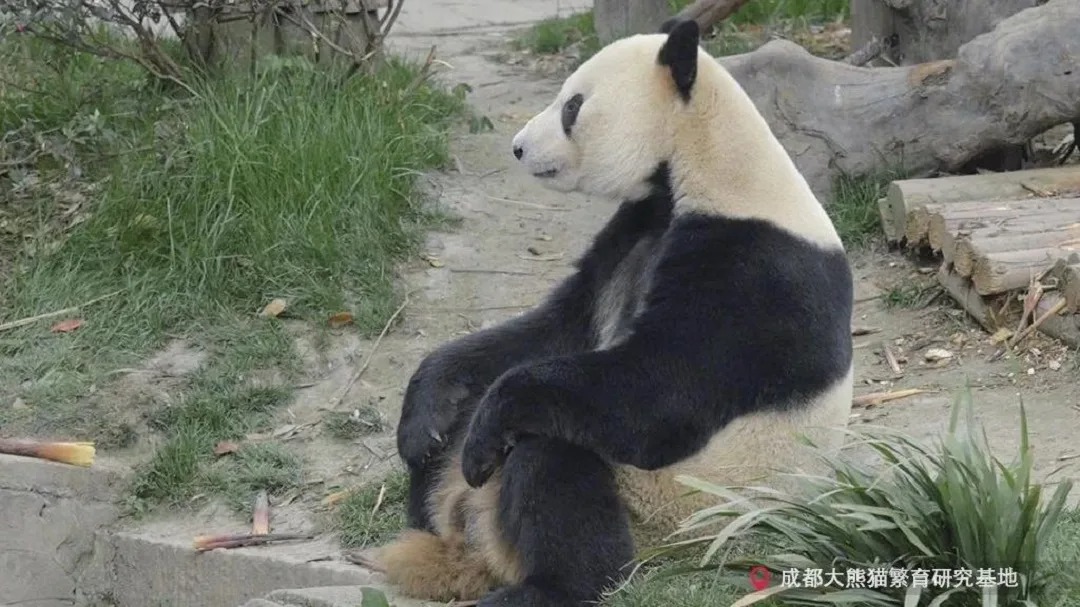
Behind the giant panda's iconic face lie extraordinary stories of resilience and adaptation. Among these, the tale of Xing Bang (幸浜, “the lucky one of the Bang family”), a male specimen born in Japan whose life is a fascinating study in personality and adaptability. Although he is not always in the spotlight, this bilingual giant panda He is a key figure in the Sino-Japanese conservation program.
Xing Bang, the bilingual panda: Bang family identity and legacy
Xing Bang, the bilingual panda, was born on August 23, 2005 at the renowned Shirahama Wildlife Park, Wakayama, Xing Bang carries with him a story of early loss and triumph. Born into the world with a twin who tragically passed away after only 40 hours, he thrived under the care of his mother, Mei Mei, within the prolific “Bang family,” the largest lineage of Japanese pandas who lived outside of China. His genealogy number is 614.
Disarming kindness and record adaptability
What distinguishes Xing Bang from his peers are not only his international origins, but a kind personality and curious, documented by the custodians themselves Chengdu Panda Base. In one well-known incident, when a stray peacock entered his enclosure, Xing Bang didn't display aggression like other specimens. Instead, he approached calmly and curiously, gently touching the bird, a gesture that reveals his placid, non-predatory nature.
Even more impressive is his strong adaptability. Most of the relocated pandas suffer adaptation stress, showing loss of appetite. Upon their return to China in March 2010, as part of the international cooperation agreement for breeding and panda conservation China, Xing Bang did not show any symptoms. On the contrary, he immediately developed a marked predilection for Sichuan bamboo leaves, devouring them with enthusiasm, a sign of extraordinary environmental resilience.
The secret of the bilingual panda
An intriguing detail is his communication skills. Born and raised in Japan, but regularly monitored by Chinese experts at the Chengdu Base, Xing Bang grew up absorbing stimuli from both environments. This early exposure made him one of the rare bilingual giant pandas, capable of understanding and responding positively to commands given both in Chinese that in Japanese, a fact that underlines the cognitive complexity of these animals.
After a period of quarantine and the official presentation to the public, Xing Bang now resides permanently at the Chengdu Base, leading a quieter and more private life in a non-exhibition area. His journey, from a "lucky" puppy in Japan to a mature, bilingual citizen in China, continues to offer valuable lessons on breeding, adaptation, and the incredible sensitivity of animals. giant pandas.