






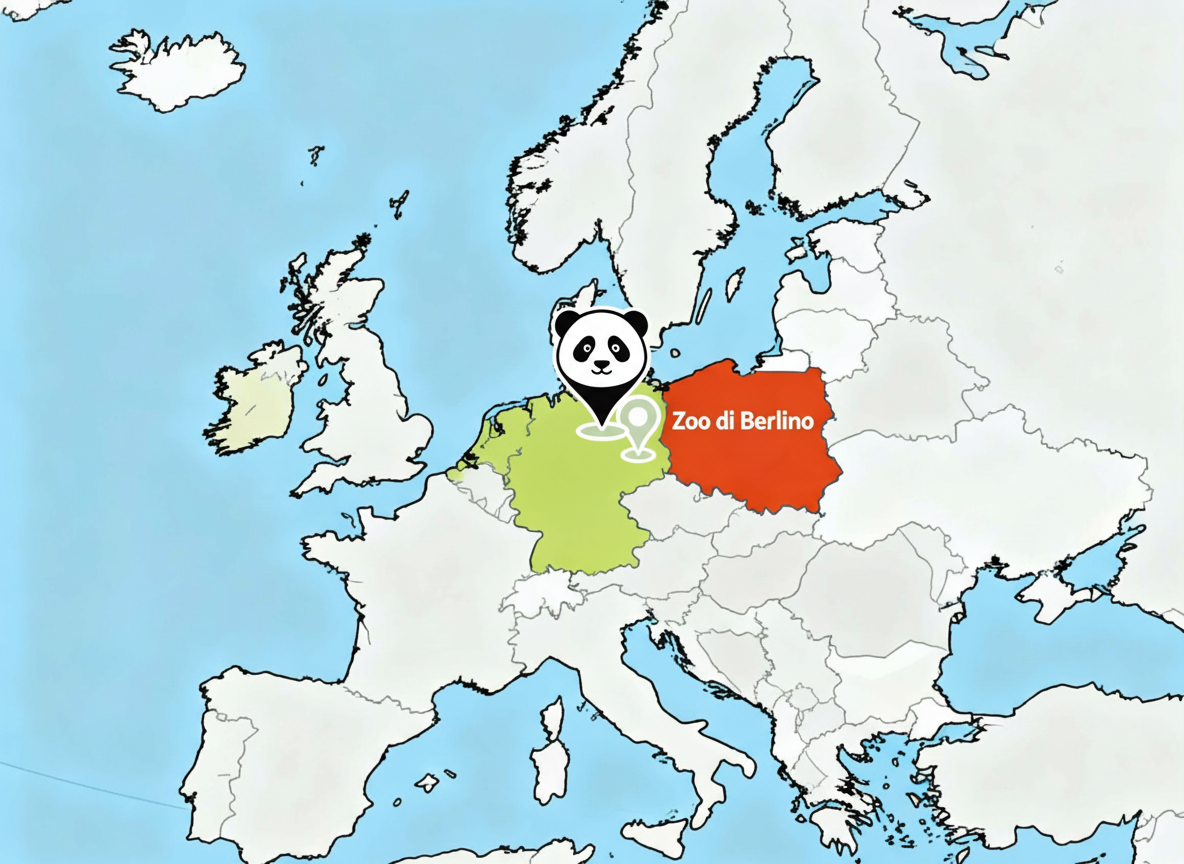
Berlin Zoo, founded in 1844, is one of the oldest and most renowned in Europe. Located in the heart of the German capital, it is a major cultural and scientific hub. It is home to over 20,000 animals from more than 1,400 different species, including the famous giant pandas Meng Meng and Jiao Qing, protagonists of international cooperation between Germany and China since 2017. Covering approximately 35 hectares, the zoo is nestled in a green and well-maintained environment, offering visitors an immersive experience of global biodiversity. It is easily accessible by public transportation: the U2 subway line takes you directly to the Zoologischer Garten station, located just steps from the main entrance.
Germany, how to get to the Berlin Zoo and the giant pandas
Berlin Zoo is located in the Charlottenburg-Wilmersdorf district, right in the city center, and can be easily reached by various means of transport.
- By underground (U-Bahn): The U2 line runs directly to the Zoologischer Garten station, located right next to the zoo's main entrance. It's the quickest and most convenient way to get there.
- By suburban train (S-Bahn): Several S-Bahn lines, including the S3, S5, S7, and S9, stop at Berlin Zoologischer Garten station, connecting the zoo with many areas of the city and other surrounding towns.
- By bus: Numerous bus lines, such as the 100, 200 and M45, serve the zoo area, providing frequent connections from different points of Berlin.
- By car: For those arriving by car, the zoo has parking nearby. However, it's advisable to use public transportation, especially during peak periods.
Thanks to these options, reaching Berlin Zoo is quick and easy, making the visit accessible to all tourists and residents.
For information visit the Berlin Zoo website.
You may also be interested in:
China-Monaco Agreement: Giant Panda Pair to Arrive by 2028
The timetables
Opening hours vary seasonally. Generally, the zoo is open from 9:00 am to 6:00 pm during the summer months, and until 5:00 pm during the winter months. It's always advisable to check the official website for updates and specific changes.
Ticket price
Entrance fees are around 15 euros for adults, with reduced rates for children, students, and groups. Annual passes are also available, allowing unlimited zoo visits, a convenient option for those wishing to explore this fascinating place multiple times.
In particular, the presence of giant pandas attracts thousands of visitors from around the world every year, fascinated by the beauty and symbolic value of these animals. In addition to visits to the specimens, Berlin Zoo offers special events, educational tours, and awareness programs on wildlife conservation.
Giant Panda Diplomacy: Here's Who They Are
The investment in the care, maintenance, and management of animals, including pandas, is reflected in ticket prices, which help fund conservation and research programs. For many visitors, a day at the zoo is not only an opportunity for recreation, but also for learning and reflecting on the importance of biodiversity. The renowned Berlin Zoo is an important hub of international Chinese-German cooperation in the field of giant panda conservation and diplomacy.
Since 2017, the arrival of the two resident specimens, Meng Meng e Jiao Qing, symbolized a true bridge between the two countries, strengthening diplomatic and cultural relations. This collaboration reached a historic moment in 2019, when Meng Meng gave birth to twin cubs, marking a significant success both for the conservation of the species and for the soft power strategy that characterizes panda diplomacy. The cubs' birth generated great public interest, increasing the zoo's visibility and strengthening the pandas' symbolic role in promoting cooperation between China and Germany.
The management and reproduction program
The management and care program for giant bears at Berlin Zoo follows rigorous shared protocols, ensuring optimal conditions and an unwavering commitment to species conservation. The arrival and breeding of Meng Meng and Jiao Qing demonstrate the effectiveness of international partnerships in protecting endangered animals and promoting cultural exchange. Since their union, two panda cubs have been born in August 2024: Meng Hao and Meng Tian (German names: Leni and Lotti).
Today, the presence of these pandas not only contributes to conservation success, but also represents a powerful tool for China's cultural diplomacy and soft power in Europe. Berlin's pandas continue to attract thousands of visitors each year, generating a positive impact on the local economy and focusing global attention on biodiversity protection.