






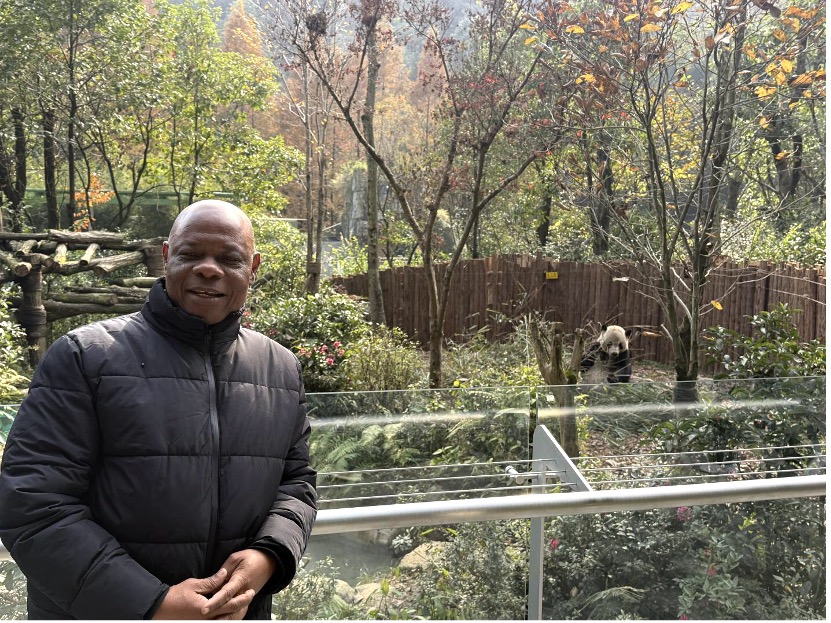
In the heart of the Southwest China, Chengdu, Sichuan Province, between bamboo forests and nature reserves, the giant panda becomes a symbol of biodiversity, of global commitment to life on Earth and of friendship between states.
Discovering Chengdu, a journey among giant pandas and the biodiversity of Sichuan: where nature meets culture.
Chengdu, a vibrant metropolis in Sichuan Province, represents a unique model of coexistence between ancient tradition and environmental commitment. Known as the "Land of Abundance," the city fascinates with its spicy cuisine and the central role it plays in protecting the giant panda., universal symbol of conservation. In November 2025, Martin Kabaluapa Kapinga visited two emblematic sites in the province: the Dujiangyan Panda Valley and the Longxi–Hongkou Nature Reserve. These places embody China's extraordinary commitment to protecting wildlife and mountain ecosystems.
Dujiangyan Panda Valley: A refuge for giant pandas
About 60 kilometers from Chengdu lies the Dujiangyan Panda Valley, a 50-hectare area dedicated to the rehabilitation and release of giant pandas into the wild. Here, the animals live in semi-natural habitats that faithfully reproduce their native environment, allowing visitors to observe them without disturbing them. During the visit, Kabaluapa Kapinga was able to admire both giant pandas (Ailuropoda melanoleuca), with approximately 1,900 remaining in the wild, and red pandas (Ailurus fulgens), a threatened arboreal species with fewer than 10,000 individuals. Both species depend on Sichuan's bamboo forests for their survival. WWF, which has been operating in China since 1980 as the first international environmental NGO invited by the government, continues to support these programs through scientific research, genetic monitoring, and the creation of ecological corridors.
Longxi–Hongkou: Guardians of the Forest
The Longxi–Hongkou National Nature Reserve extends over 31,000 hectares of mountains, rivers, and temperate forests. This ecosystem is home to rare species such as the golden snub-nosed monkey, the Sichuan takin, and stable populations of giant pandas. Kabaluapa Kapinga met the rangers who dedicate their lives to protecting this area. These professionals spend up to 22 consecutive days on patrol, braving rugged terrain and adverse weather conditions to monitor wildlife and prevent poaching. The reserve also promotes educational programs that engage local communities, transforming former loggers into eco-guides and creating a virtuous model of shared sustainability between humanity and nature.
A global conservation model
Experiences in Chengdu and its nature reserves underscore how protecting the giant panda is just the beginning of a broader commitment. Safeguarding their habitat means preserving ecosystems that are crucial to air, water, and soil quality.
The collaboration between WWF, the Chinese government, and local communities delivers a universal message: conservation knows no borders. Chengdu demonstrates that economic development and environmental protection can coexist, offering a valuable lesson for the entire world.