






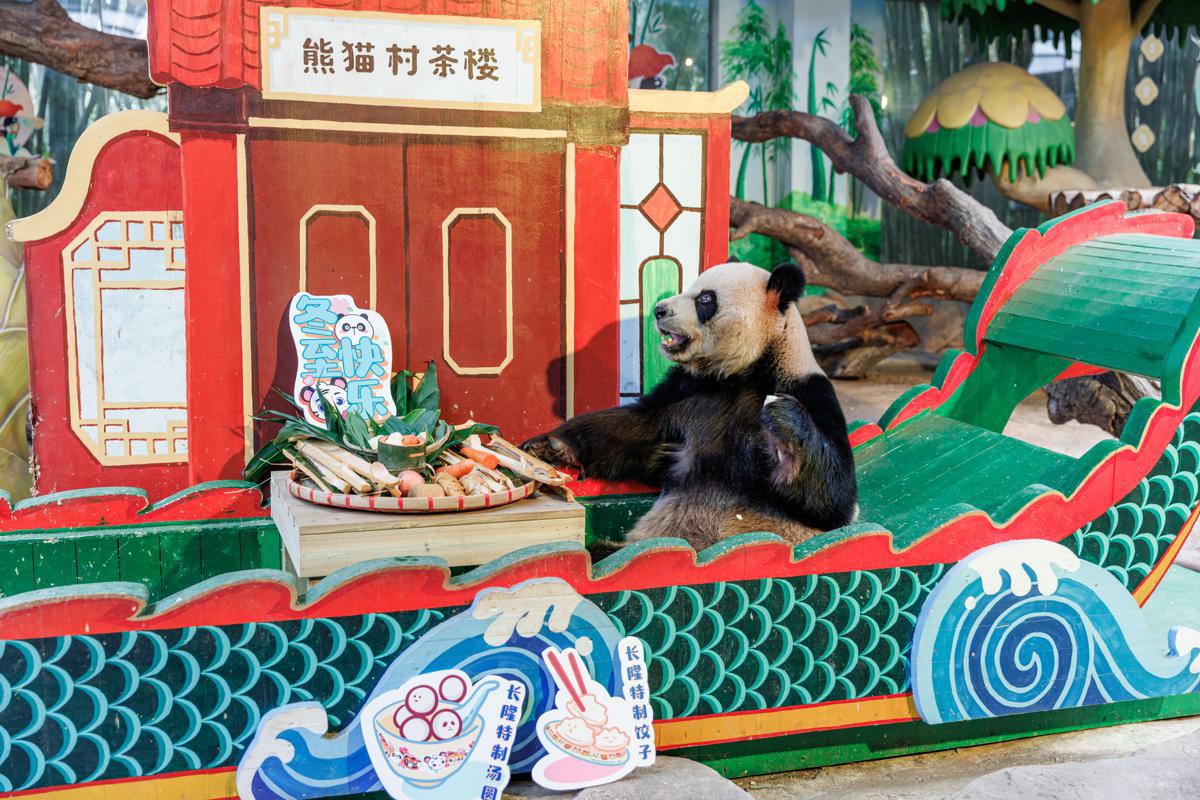
The history of Guangzhou Chimelong Safari Park is incredible. The facility is home to the most prestigious giant panda sanctuary in Southern China: the China Conservation and Research Center for Giant Pandas (Guangdong Site), approved in 2016 by the National Forestry and Grassland Administration. This facility integrates scientific conservation, innovative breeding, and tourism education, elevating the park to a global hub for this endangered species.
Guangdong, Guangzhou Chimelong Safari Park: history
The Guangzhou Chimelong Safari Park has been conserving and breeding giant pandas since 1997, currently housing 34 individuals with 10 successful cubs, overcoming subtropical climate challenges thanks to the support of the China Conservation and Research Center for Giant Pandas. The Guangdong Site, inaugurated in April 2016, represents a milestone in the southern expansion of conservation, adapting Chengdu's protocols to low altitude, high humidity, and high temperatures. The Chimelong Wildlife Academy, part of the group, conducts research on subtropical nutrition and habitats, with official publications attesting to its impact.
Scientific successes and world records
Between 2013 and 2016, the sanctuary produced four consecutive litters of seven cubs, a rare feat in captivity. The highlight came in 2014 with the triplets Meng Meng, Shuai Shuai, and Ku Ku. They are the world's first giant pandas to survive thanks to artificial insemination and intensive care, a breakthrough that provided the technical basis for subtropical relocations. These results, documented by the Chimelong Foundation, have influenced national protocols, contributing to over 600 pandas in captivity globally and anti-extinction efforts. Another key birth for the renowned sanctuary is undoubtedly that of the little Mei Zhu. She is the daughter of panda Meng Meng and Jia He. The cub was born on June 18, 2024 in the early hours of the morning and, to date, is one of the most social giant pandas in the world.
Structure of the oasis and experiences for visitors
The oasis occupies dedicated areas with nature enclosures. The main Panda Pavilion displays adults and cubs during morning feedings (11:00 a.m.). Adjacent areas simulate bamboo forests for close-up observation. Visitors feed giraffes nearby and access them via safari train, integrating the oasis into an ecosystem of 500 species. Hours are 9:30 a.m. to 6:00 p.m. A visit to the oasis lasts 1-2 hours, with audio guides in Chinese/English and educational panels on breeding.
Tickets for 2026: Prices and How to Get There
Park tickets range from 300 RMB (40€) on weekdays to 350 RMB on weekends. The oasis is included in the basic ticket, with a VIP panda upgrade (100 RMB extra) for proximity viewing. Of course, you can also purchase a Tickets online at chimelong.com or Klook for skip-the-line; family/hotel packages (from 800 RMB/night) include transfers from Guangzhou city center (1 hour by car, Metro Line 3). Tips: Book weekend-free, bring IDs for groups; no drones, limited outside food.