






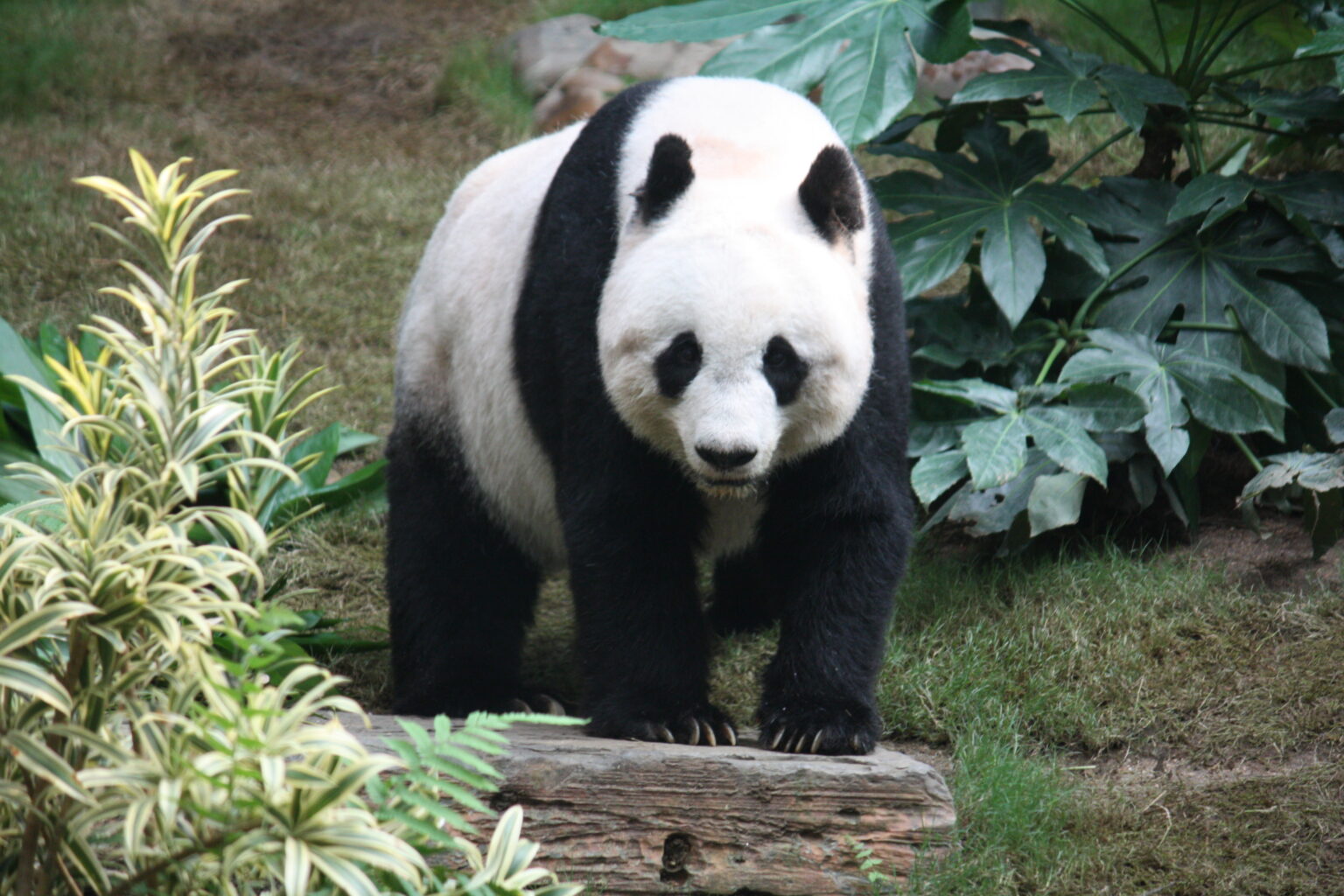
Giant pandas in the wild and in captivity they present some differences. In the wild, giant pandas dwell in dense temperate forests of bamboo Located in the mountains of Sichuan, Shaanxi, and Gansu, between 1,200 and 3,100 meters above sea level, they face habitats fragmented by deforestation and human infrastructure, as well as variable climates, forced migrations in search of food, and threats from predators such as snow leopards, especially to their cubs. In contrast, captive giant pandas live in specialized facilities like the Chengdu Research Base, where environments are rigorously controlled, with stable temperatures and no natural hazards. This setup greatly reduces stress, but can make pandas more lethargic, especially if exposed to the wrong latitude or excessive heat, disrupting their circadian rhythms. But be careful: giant pandas don't hibernate!
Pandas in captivity and pandas in the wild: the differences: diet and body weight
Giant pandas in the wild base their diet almost exclusively on bamboo and dedicate 10-16 hours a day They are highly dependent on their diet, consuming between 12 and 20 kg of it per day, including protein-rich shoots. Their low metabolism compensates for the low energy content of their food, keeping them at a weight of between 60 and 110 kg. They spend 10 to 12 hours a day foraging for food and defecate up to 40 to 50 times a day. Their inefficient digestive system only assimilates the 17-20% from the bamboo they ingest, producing up to 10 to 20 kg of stringy feces every 24 hours.
In captivity, however, time is reduced to 8-14 hours a day, as they receive regular portions of fresh bamboo, fruit, and grains without having to search for food, making them less active in feeding but more efficient. In fact, they reach higher weights, between 80 and 150 kilos, thanks to regularly supplied bamboo and nutritional supplements. They spend less time feeding—about 33% a day compared to 49% in the wild—which reduces effort but increases the risk of obesity, while still ensuring constant access to food. In captivity, pandas can defecate up to 20-40 times a day, producing up to 28 kilos of stringy feces similar to nature but often less frequent thanks to supplemented diets and monitoring that reduces the raw quantity ingested.
| I wait | In nature | In captivity |
|---|---|---|
| Average weight | 60-110 kg | 80-150 kg |
| Bamboo consumption | 9-14 kg/day | Provided, less effort |
| Feeding time | 49% of the day | 33% of the day |
Life expectancy and health
Among the differences between giant pandas in the wild and those in captivity is related to life expectancy. The latter, in fact, is between 15 and 20 years, limited by predators, illnesses and periods of famine during synchronous bamboo blooms. The cuddly bears are also exposed to specific parasites such as Baylisascaris schroederi, which exacerbate the risks.
In captivity, however, giant pandas easily live past 30 years of age in some cases, even reaching 38-40, thanks to advanced veterinary care, vaccinations, and constant monitoring, which drastically reduce cub mortality. However, they can develop stereotyped behaviors such as pacing, due to boredom or suboptimal environments (this involves repeatedly pacing back and forth along the same path in the enclosure, often obsessively and without any apparent purpose).
Behavior and activity
Pandas in the wild are solitary and territorial creatures, active primarily at dawn and dusk. They climb trees, swim to escape danger, and communicate through scents and vocalizations, covering large territories in search of resources.
In zoos, they appear more sedentary and playful—think of their iconic rolling—but their overall activity is reduced, with multiple daily peaks only in ideal weather conditions. The lack of natural social interactions often accentuates their perceived laziness.
You may also be interested in:
The giant panda is the most underrated animal in the world.
March 16, World Panda Day 2026
The panda is the most underrated animal in the world.
Reproduction in nature
Giant pandas reach sexual maturity between 4 and 8 years old (females come into estrus before males). Females enter estrus once a year, for only 2-3 days (24-72 hours of fertility), between March and May, emitting odors and vocalizations to attract males. Mating is brief and chaotic. Males compete and court with rolling and chasing, but males often lack libido or effective anatomy (e.g., a retractable penis). Pregnancy lasts 83–187 days thanks to an "embryonic diapause" (fertilized egg in a stall for up to 6 months). Panda mothers give birth to one or two pink, blind, and naked cubs (90–130 g), usually at night from July to September. The mother cares for only one if twins (she abandons the other). Weaning occurs at 9 months, and independence occurs at 18–24 months. The success rate is low: <50% survival of wild cubs.
Captive breeding
Pandas in captivity follow the same biological cycles as their wild counterparts, but reproductive problems are amplified. Males appear lazy, females are often stressed, and compatibility between pairs is low. In fact, keepers, to try to curb potential problems of laziness during mating, show pandas porn videos or give them Viagra. The natural success rate was lower than 10% until the 1990s.
Modern techniques:
- Artificial insemination (AI): Semen collected from males (manually or electro-ejaculate), frozen; inseminated during estrus, detected by hormones/urine. 9/12 births in 2004 via AI.
- Behavioral stimuli: “Panda-porn” videos to arouse (tested at Chiang Mai Zoo), pheromone smells, free choice of partner (increases birth rate of 81%).
- Intensive careIncubators for twins (one mother cares for one, the other is cared for by humans), 24/7 monitoring. Zoo population: 808 in 2025, doubled in 10 years.
- Enrichment: Simulated habitat environments, Viagra for males (experimental).