






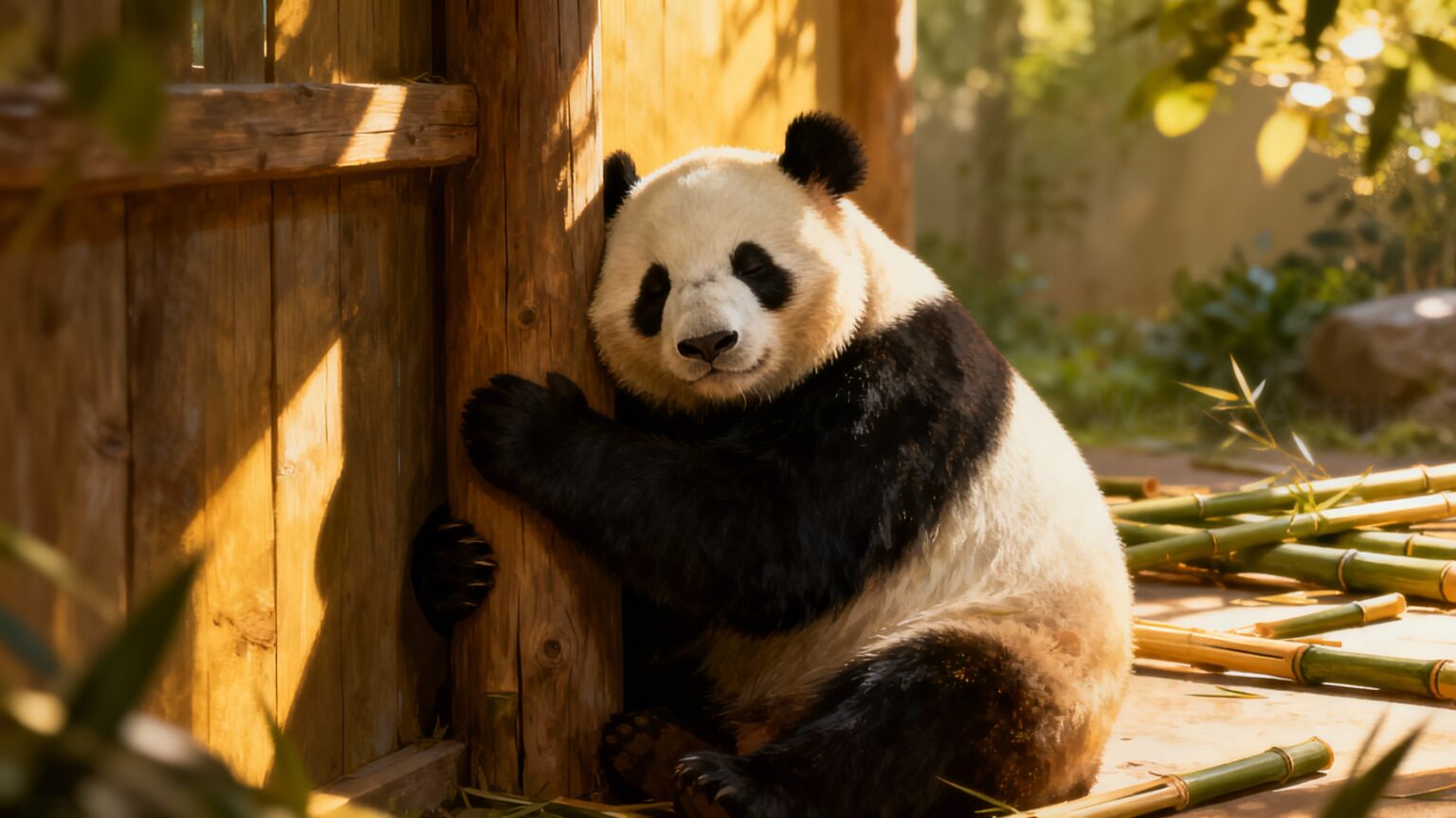
I bet no one knows that giant pandas also need psychological care. Giant pandas can suffer from stress and behavioral disorders, especially when exposed to unstimulating activities or environments. Like humans, their mental health depends on their environment, social relationships, and the ability to express their natural behaviors.
Giant pandas need psychological care: why mental well-being matters
In modern zoos, welfare is evaluated not only in terms of the animals' physical health, but also their emotional and behavioral balance. A panda experiencing chronic stress may eat less, get sick more easily, and exhibit abnormal behaviors that compromise its quality of life.
How does stress manifest itself in giant pandas?
Stress in giant pandas can appear after sudden changes, loud noises, lack of privacy, excessive visitors, or prolonged isolation. Typical signs include decreased appetite, apathy, unusual aggression, repetitive vocalizations, incessant movement along the same path, and other stereotyped behaviors.
The role of keepers as "psychological support"“
The specialized keepers they learn to recognize the panda body language and adapt daily management to reduce stress. They spend more time with more sensitive individuals, offering companionship, predictable routines, gentle contact when appropriate, and reassuring vocalizations, becoming an emotional reference point for the animal.
Environmental Enrichment: The Panda's Mental Landscape
To protect the pandas' psychological health, "environmental enrichment" is designed, consisting of climbing logs, hiding places, olfactory toys, and puzzle feeders that force the animals to forage for food. This physical and cognitive therapy reduces boredom, limits repetitive behaviors, and brings their active life closer to that of the panda in the wild.