






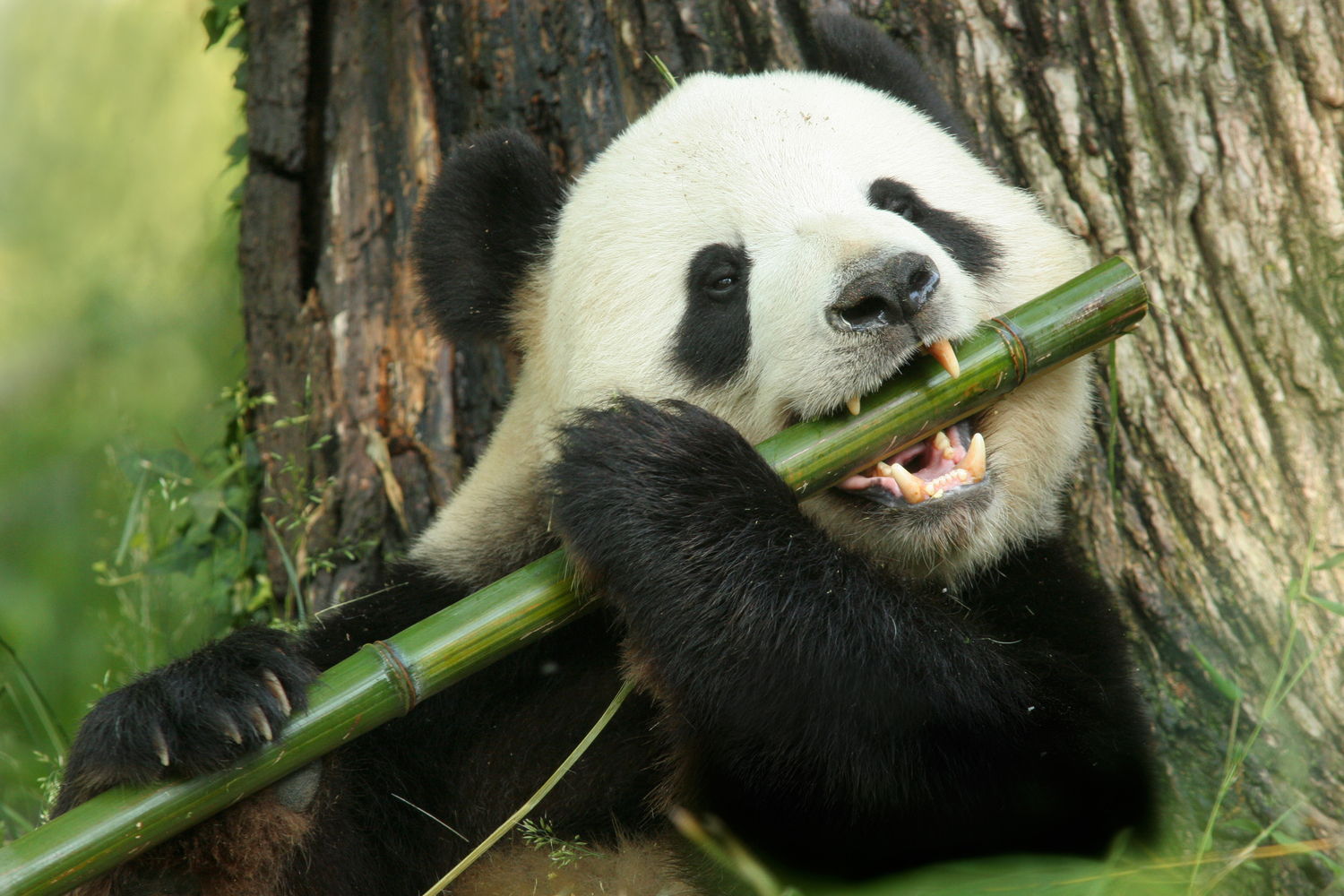
A comprehensive, science-based analysis of the parts of bamboos most loved by giant pandas: shoots, leaves and culms – to understand how, when and why they choose them.
Giant Pandas' Favorite Parts of Bamboo to Eat: Selection
When a giant panda chooses a bamboo stalk, it doesn't eat "a little bit of everything." Quite the opposite. The little bear selects the right piece with extreme precision, at the right time of year. In spring, it can focus almost exclusively on the tender shoots; in summer and autumn, it switches to the leaves; and in winter, it focuses on the more energy-rich stems, changing parts of the plant to survive in a harsh habitat with a diet composed of over 99% bamboo. Understanding the preferred parts of bamboo and why they are chosen is key to truly telling the story of pandas' lives. This allows us to improve conservation strategies and create online content that responds to the most frequent user searches.
The Parts of Bamboo That Pandas Actually Eat
Giant pandas mainly consume three parts of bamboo: shoots, stems, or poles, and leaves. Both in the wild and in captivity It has been observed that they can eat any part of the plant. But not in equal quantities and not in every season.
- Shoots (bamboo shoots): these are the young shoots that emerge from the ground in spring and early summer, soft, rich in water and nutrients, with relatively little fiber.
- Culms: These are the woody stems, richer in fiber, but also contain a significant amount of structural carbohydrates that become more readily usable during certain periods.
- Leaves: These are the part with more proteins, fats and minerals than the stems, and are a key resource when shoots are not available.
Overall, A giant panda can consume between 10 and 40 kg of bamboo. fresh daily, modulating the quantity and type of part chosen to cover energy needs despite a carnivore's digestive system.
Favorite parts: shoots, leaves, or stems?
Nutritional studies show that shoots are the most palatable part of the plant in terms of growth and health. Pandas that eat mostly shoots have better protein absorption and a higher rate of body mass growth than those that eat mostly leaves or stems. Therefore, during shoot season, pandas switch to a diet almost exclusively based on shoots when they are available in large quantities.
While leaves are richer in protein, fat, and minerals than stems, they don't provide the same energy efficiency as shoots, especially when their nutritional quality declines in winter. Stems, on the other hand, despite having less protein and more fiber, become preferred at specific times because their carbohydrate composition changes and provides a strategic energy boost. This dynamic preference indicates that pandas don't simply eat whatever they find. They choose the part of the bamboo that offers the best balance of energy, nutrients, and digestibility at that time.
How the choice of bamboo parts changes with the seasons
The selection of bamboo parts by giant pandas follows a very specific seasonal cycle. This cycle is linked to the phenology of bamboo, that is, the changes in growth and composition of the plant throughout the year.
- Spring – season of sprouts
In spring, pandas eat almost exclusively shoots, which have a higher available energy and nutrient content than mature leaves and stems. This phase often coincides with the breeding season. The extra energy from shoots supports mate searching, social interactions, and increased physical activity. - Summer and Autumn – dominion of the leaves
When the sprouting season ends, pandas switch primarily to leaves, which become the most consumed part in the following months. Leaves provide a good balance of protein, fat, and minerals and help maintain body mass when sprouts are absent. - Winter – back to the peaks
In winter, when the bamboo is in its "rest" phase and its leaves are less nutrient-rich, the culms become the relatively more advantageous part, as they have the most favorable nutrient composition compared to other available parts. Although fiber remains high, pandas appear to be able to better utilize the carbohydrates contained in the culms at this time of year, even though they must increase their feeding time to meet their caloric needs.
This seasonal rotation between shoots, leaves and culms has been observed both in nature and in controlled contexts and represents an essential feeding strategy for the survival of the species.
You may also be interested in:
The giant panda is the most underrated animal in the world.
The giant panda is the most underrated animal in the world.
Anatomia zampe posteriori e anteriori del panda gigante
Why Pandas Choose Different Parts: Energy, Digestion, and Microbiota
The choice of the preferred parts of bamboo depends not only on taste and availability, but also on the combination of the panda's energy needs, the structure of the bamboo, and the intestinal microbiota.
- Energy and fast fuel
Sprouts are richer in readily usable energy and allow for better body growth than a diet based solely on leaves or stems. In spring, when energy needs increase, focusing feeding on sprouts is a form of "natural energy loading.". - Fiber, Protein, and Digestive System Limitations
The leaves contain more protein, fat, and minerals, but also a fiber content that becomes particularly high in midsummer. The stems are even more fibrous, but during some months the fiber is slightly less "hard" and the structural carbohydrate content becomes more accessible. The panda's digestive tract, however, remains similar to that of a carnivore, with a limited capacity to digest cellulose, so they must compensate by eating large quantities and carefully selecting the most nutritious parts. - Microbiota and digestion of different parts
Recent studies have shown that a preference for certain parts of bamboo alters the composition of the gut microbiota, affecting the efficiency of digesting fiber and other nutrients. A diet based on shoots, leaves, or stems induces different gut bacterial profiles, with implications for long-term health, especially in older individuals.
These elements explain why pandas do not always eat the same part of bamboo, but change in an almost “programmed” way throughout the year to maximize nutritional benefits despite a digestive system that is not well suited to plants.
Individual preferences and captive management
In addition to seasonal cycles, individual differences exist among pandas. Some consume more stems, while others show a marked preference for leaves or shoots, even when the food supply is similar. In studies conducted on pandas in zoos, individuals have been observed eating significantly more stems than leaves and shoots, suggesting that personality, age, and physiological state may influence choice.
To ensure well-being and health, panda facilities offer a mix of multiple bamboo species and different parts (stems, leaves, and, when possible, shoots), striving to replicate the seasonal diversity found in nature. Some research has shown that carefully managing the age of the bamboo (young leaves, more mature stems) and the time since cutting improves food intake. Interest significantly declines if the bamboo is offered many hours after cutting. A diet varied in bamboo parts has been linked to better growth parameters and overall health, confirming that providing "generic bamboo" isn't enough: the species, plant part, season, and freshness matter.