







The majestic giant panda, symbol of China and friendship between nations, with its unmistakable black and white coat, always enchants the entire world. But where does this iconic creature come from? The history of the giant panda and the discovery of the first skull has deep roots in a distant past, dotted with fossil discoveries that reveal a truly astonishing evolution.
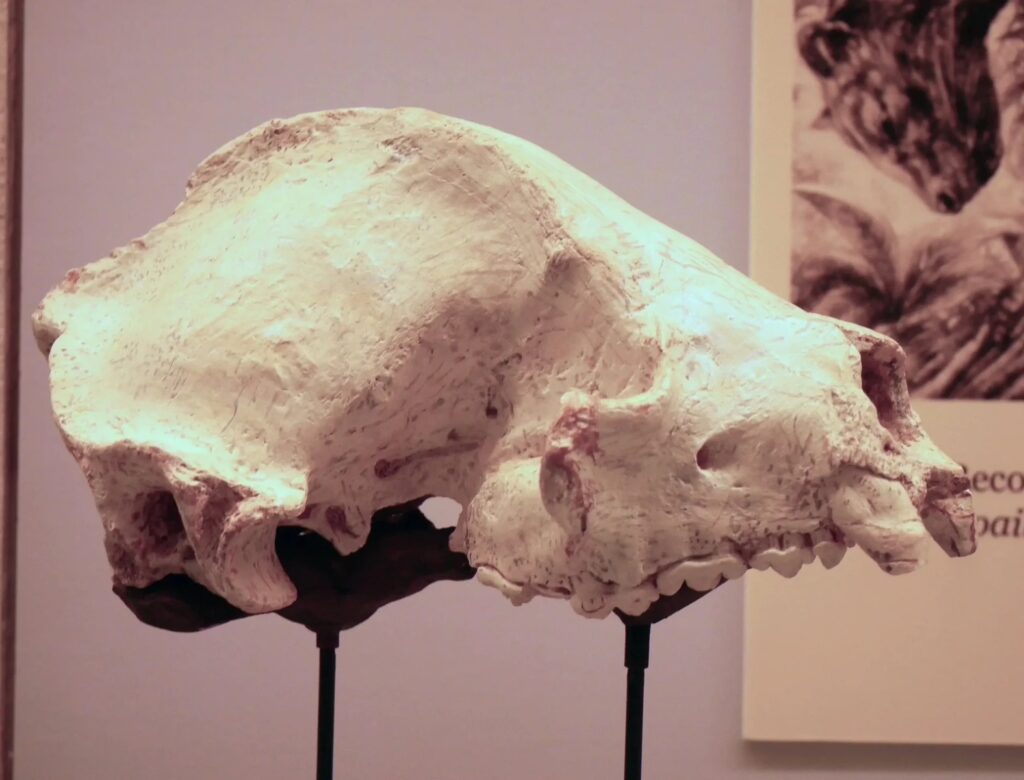
The Origins of the Giant Panda: The Discovery of the First Skull
The giant panda, an emblem of purity and vulnerability, captivates the entire world with its grace and charm. But what is its history and the discovery of the first giant panda skull? To find out, we must step back in time, retracing all the paleontological discoveries that reveal a truly surprising and rich evolutionary history, culminating in the discovery of an ancestral skull that has enlightened the brilliant minds of scientists, reported in a prestigious study now known worldwide. This fascinating journey begins in the distant Late Miocene, about 8 million years ago, in the lands of Yunnan, China. Here, the fossils of Ailurarctos lufengensis were discovered, marking the oldest trace yet identified of a possible ancestor of the giant panda.
In an era marked by profound environmental transformations, these ancient bears represent the precursors of a lineage that would defy extinction, evolving to become the "living fossil" we admire today. However, the birthplace of the panda lineage may not be exclusively Asia. The highlighted discoveries are truly sensational and come from the heart of Europe, shedding new light on the origins of this wonderful species. In Spain, in fact, two jaw fragments dating back approximately 11.6 million years, belonging to the species Kretzoiarctos beatrix, have been identified as the oldest "panda" fossil remains known to date. This find, published in Plos One, suggests that the giant panda's first evolutionary steps may have taken place on the Old Continent. Another key piece of evidence is represented by the remains of Agriarctos nikolovi, a European panda that lived about 6 million years ago in what is now Bulgaria.
You may also be interested in:
Who is Princess Fu Bao: curiosities, parents, health conditions
The Giant Panda Hospital: Here's How It Works
The Giant Panda's Diet: Here's What They Eat and Why
Chengdu, biodiversity and the protection of the giant panda
Giant Panda Population Growing, But Remains at Risk
Giant Panda and Bamboo: The Secret to Its 'False Thumb'‘
Giant Panda Skeleton in the Tomb of Wen of Han: The Archaeological Surprise
The red panda and the giant panda: distant cousins or simply namesakes?
Giant Panda Conservation in China: From Wolong to Chengdu, a Success Story
Why is the giant panda found only in China? Origins, history, and environment
Where Giant Pandas Sleep: Trees, Nests, and Survival Strategies
Three men tried for killing a giant panda
Why do giant pandas have black and white spots?
The giant panda is the most underrated animal in the world.
March 16, World Panda Day 2026
How to recognize a giant panda?
Il ghiaccio per i panda giganti
Panda giganti e alte temperature
Li Li, il panda al Muséum di Parigi: la storia
The paleontological investigation
These ancient bears, about the size of a polar bear but with smaller teeth, may have undertaken a migration towards Asia, perhaps in response to climate changes, then giving rise to the genus Ailuropoda. The focus of the paleontological investigation, however, is on a discovery that has provided a clearer picture of the modern panda's direct ancestor: the discovery of the first fossil skull. The skull was found in a limestone cave in southern China by a joint team of researchers from the University of Iowa and the Chinese Academy of Sciences in Beijing. This fossil skull, dated to approximately 2 million years ago and belonging to the Late Pliocene, was identified as that of the oldest known ancestor of the giant panda: the pygmy panda (Ailuropoda microta). The name "pygmy" is no coincidence.
This ancestral species was considerably smaller than its modern descendant, reaching a maximum length of about one meter—half the size of today's giant panda. The discovery of this meticulously analyzed skull represented a milestone in understanding panda evolution. For the first time, scientists had tangible evidence of a smaller direct ancestor. This evidence shed new light on the evolutionary trajectory that led to the majestic black-and-white bear we know today. Although the pygmy panda's coat color is not yet known, researchers do not rule out the possibility that it may have already exhibited distinctive features.
In any case, the journey to the origins of the giant panda is a paleontological epic that takes us across geological eras and continents. From the ancient Ailurarctos to the surprising revelations of European ancestors, up to the crucial discovery of the skull of Ailuropoda microta in China, documented in detail in the aforementioned journal. However, each fossil find adds a precious piece to the complex mosaic of the evolution of this extraordinary species.