






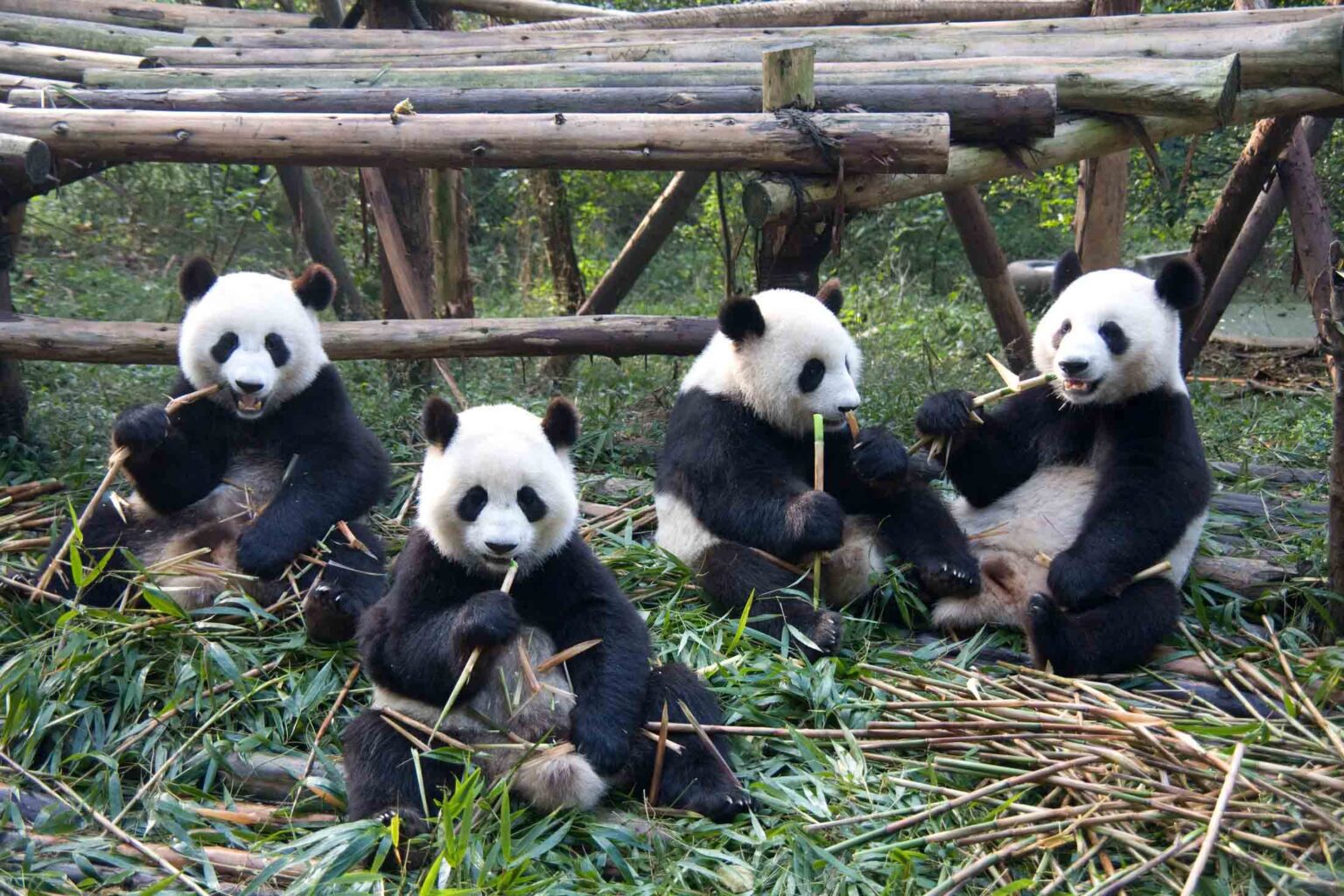
Have you ever thought that the giant panda can present some differences between nature and captivity? For example, how many hours does it eat and sleep? Subsequently, I prepared a clear and documented picture of the giant panda's daily habits, including feeding, rest, and the differences between its natural environment and zoo life. The giant panda It spends most of its day snoozing and snoozing among bamboo, but its rhythms vary depending on its environment. In the wild, it alternates long feeding periods with short rests; in captivity, however, it continues to eat for many hours, with sleep often broken up throughout the day.
How many hours does a giant panda eat and sleep in the wild?
According to the Smithsonian's National Zoo, the giant panda in the wild spends much of its day searching for and consuming bamboo because its digestive system isn't particularly efficient at extracting energy from its food. This is precisely why it's forced to compensate with truly enormous amounts of food. On average, it devotes 10-16 hours a day to forage and feed, alternating short movements, pauses and long periods spent eating. The same source also specifies that a panda can ingest 70-100 pounds of bamboo per day, a huge amount considering both its weight and the low energy value of this food. In other words, the giant panda eats so much not by choice, but by necessity: it must spend many hours feeding simply to sustain its body.
In nature, the giant panda does not sleep continuously and deeply like many other animals, but alternates rest with brief periods of activity throughout the day. Its rhythm is fragmented and adapts to its feeding needs: after eating, in fact, it tends to stop and rest for relatively short periods, which generally range from 2 to 4 hours at a time. During the summer months, however, when conditions permit and the panda can enjoy periods of greater tranquility, the moments of rest can become longer and even reach 6 hours or more. In practice, his sleep is never truly “stable,” but is part of a routine punctuated by small cycles of feeding and recovery.
In captivity: how much does the giant panda eat?
Even in captivity, the giant panda continues to spend many hours in front of food. The Smithsonian reports 10-16 hours a day of feeding, while the National Zoo specifies that pandas can reach about 12 hours a day dedicated to bamboo.
Zoo Atlanta reports even more precise data for its specimens: 14 hours a day of nutrition, distributed over several moments and not in a single session.
In captivity: How much does the giant panda eat and sleep?
Regarding rest, giant pandas in captivity do not sleep continuously, but tend to spread their rest periods throughout the day. According to Zoo Atlanta, these animals sleep on average about 10 hours a day, but not in a single block: their sleep is made up of small intervals, often in the form of naps. 1-2 each, alternating with phases of activity and feeding. Making the picture even more interesting is the fact that rest occupies a very significant part of their daily routine. A study cited in scientific and popular sources finds that pandas in captivity spend about 40% of the time sleeping. In other words, even when living in controlled environments, pandas remain slow-paced and fragmented animals, where sleep continues to represent an essential component of their daily balance.
Differences between nature and captivity
The most obvious difference lies not so much in the amount of time spent feeding, which remains high both in the wild and in captivity, but in how the giant panda distributes its activities throughout the day. In the wild, the panda primarily follows the rhythm dictated by the availability of bamboo and environmental conditions: it must move, search for food, and adapt its schedule to what the territory offers. In captivity, however, meals are scheduled and distributed regularly by the keepers, so the day is more orderly and designed to mimic, as much as possible, the natural behavior of the species.
Essential data to remember
So, to recap, there are some clear differences in how many hours the giant panda eats and sleeps, both in the wild and in captivity:
- In nature: eats 10-16 hours a day.
- In nature: sleeps in blocks of 2-4 hours between meals, with possible longer rests in summer.
- In captivity: eats 10-16 hours a day, with examples of 12-14 hours in some zoological facilities.
- In captivity: sleeps on average about 10 hours a day, often with short naps.