






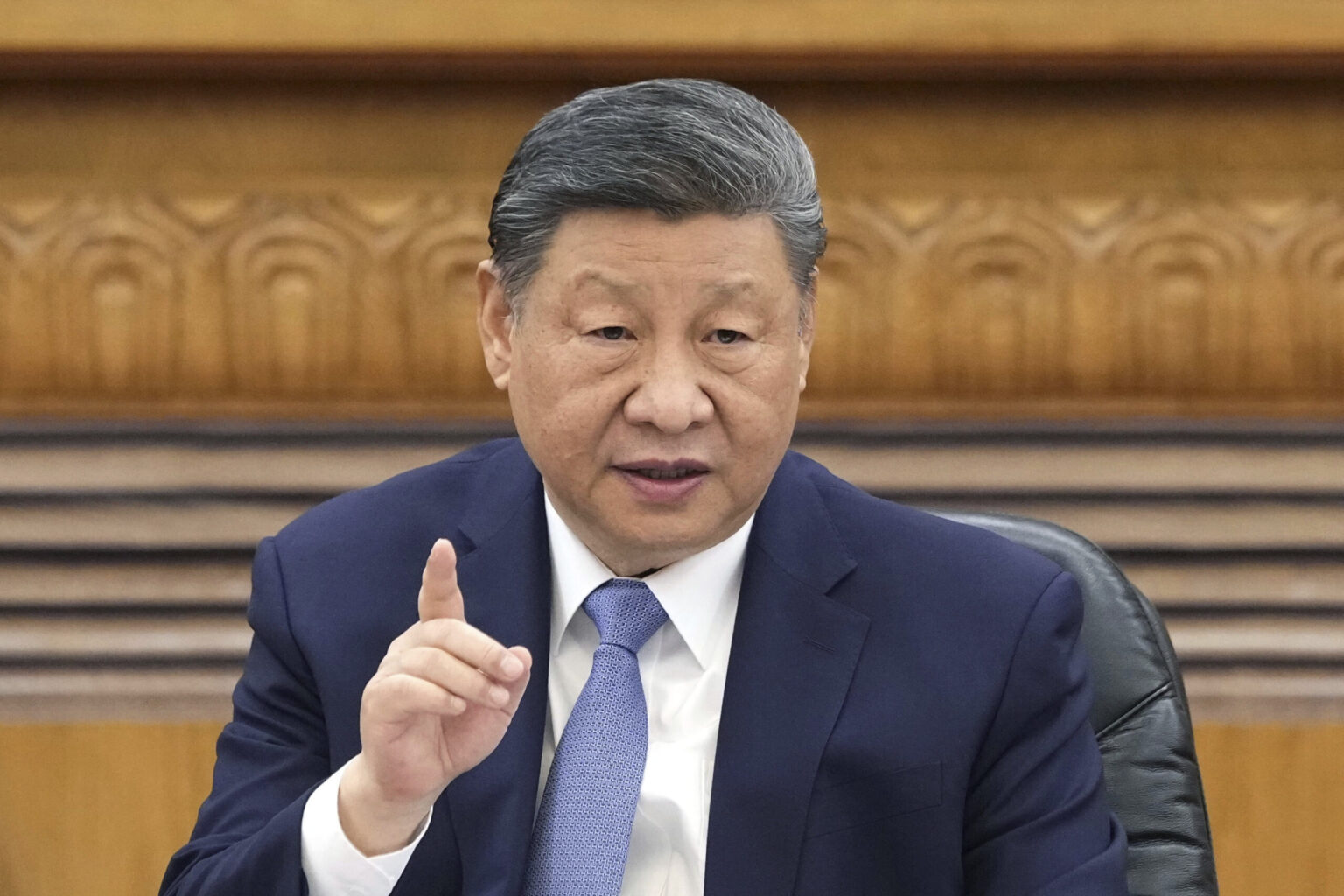
Chinese President Xi Jinping's words to the China National Natural Science Foundation (CAS) chart a course for innovative research, environmental protection, and sustainable development, with global impacts on science and biodiversity.
Xi Jinping instructs China Natural Science Foundation to list 15 UNESCO natural sites
General Secretary of the Communist Party of China (CPC) Central Committee Xi Jinping has issued important instructions to the China National Natural Science Foundation (CAS), urging it to drive basic scientific innovation to support high-quality national development and contribute to human progress. These instructions, released via the Italian portal of the International Red Cross (CRI) and official Chinese pages, come as China consolidates its global leadership with 15 UNESCO natural sites, emphasizing research as a cornerstone for protecting biodiversity and combating climate change.
What is the National Natural Science Foundation of China and why is it so important?
The National Natural Science Foundation of China (NSFC), founded in 1986 and comparable to the National Science Foundation of China (NSFC), is the main government agency funding basic research in the natural sciences. With an annual budget exceeding 30 billion yuan, the NSFC supports projects in disciplines such as biology, chemistry, physics, earth sciences, and medicine, promoting international collaborations and young talent to bridge the gap with Western scientific powers. Xi Jinping's instructions are part of a national strategy that sees scientific research as the engine of "national rejuvenation," with an emphasis on practical applications for the environment, health, and advanced technology.
Xi Jinping's instructions: a detailed analysis
Xi Jinping urged the Foundation to "strengthen basic research, promote original innovation, and serve national development," emphasizing the need to address global challenges such as ecological security and public health. Specifically, the leader called for a "people-oriented" approach that integrates science and social welfare, promoting projects on biodiversity, climate change, and the conservation of endemic species, in line with China's commitments to the COP and UN goals. These directives are not abstract: they include increased funding for multidisciplinary teams and international partnerships, positioning China as a global hub for environmental studies.
You may also be interested in:
China launches "2026 Film Economy Promotion Year"“
Impact on the environment and giant pandas
The instructions strengthen the NSFC's role in protecting China's natural heritage, a world leader in natural and mixed UNESCO sites, including key giant panda parks such as Wolong and Jiuzhaigou. Projects funded by the Foundation have already contributed to genetic monitoring, habitat restoration, and predictive modeling against global warming, with tangible results in the wild panda population growing to approximately 1,900. This scientific approach also supports sustainable tourism.
Connections with Italy and scientific diplomacy
Italy, with its 60 UNESCO sites (many mixed and cultural), shares with China an interest in applied science for conservation, opening the door to bilateral collaborations in environmental research and biotechnology. The dissemination of Xi Jinping's instructions through the Italian Red Cross (CRI) signals an active diplomatic and cultural channel between the two countries, ideal for joint projects on Alpine-Himalayan biodiversity or academic exchanges between the Italian National Research Council (CNR) and the China National Science Foundation (CAS). This partnership represents a concrete opportunity for Italian businesses, universities, and research centers interested in cooperating with China on environmental sustainability and scientific innovation.
Future prospects
Xi Jinping's instructions direct the National Natural Science Foundation of China (NSFC, also known as CAS) toward the 15th Five-Year Plan (2026–2030), with a priority focus on environmental artificial intelligence ("green AI"), biodiversity genomics, and climate resilience strategies. This approach positions China as a potential global leader in sustainable science, integrating basic research with practical applications for carbon neutrality, ecosystem protection, and responsible technological development.