






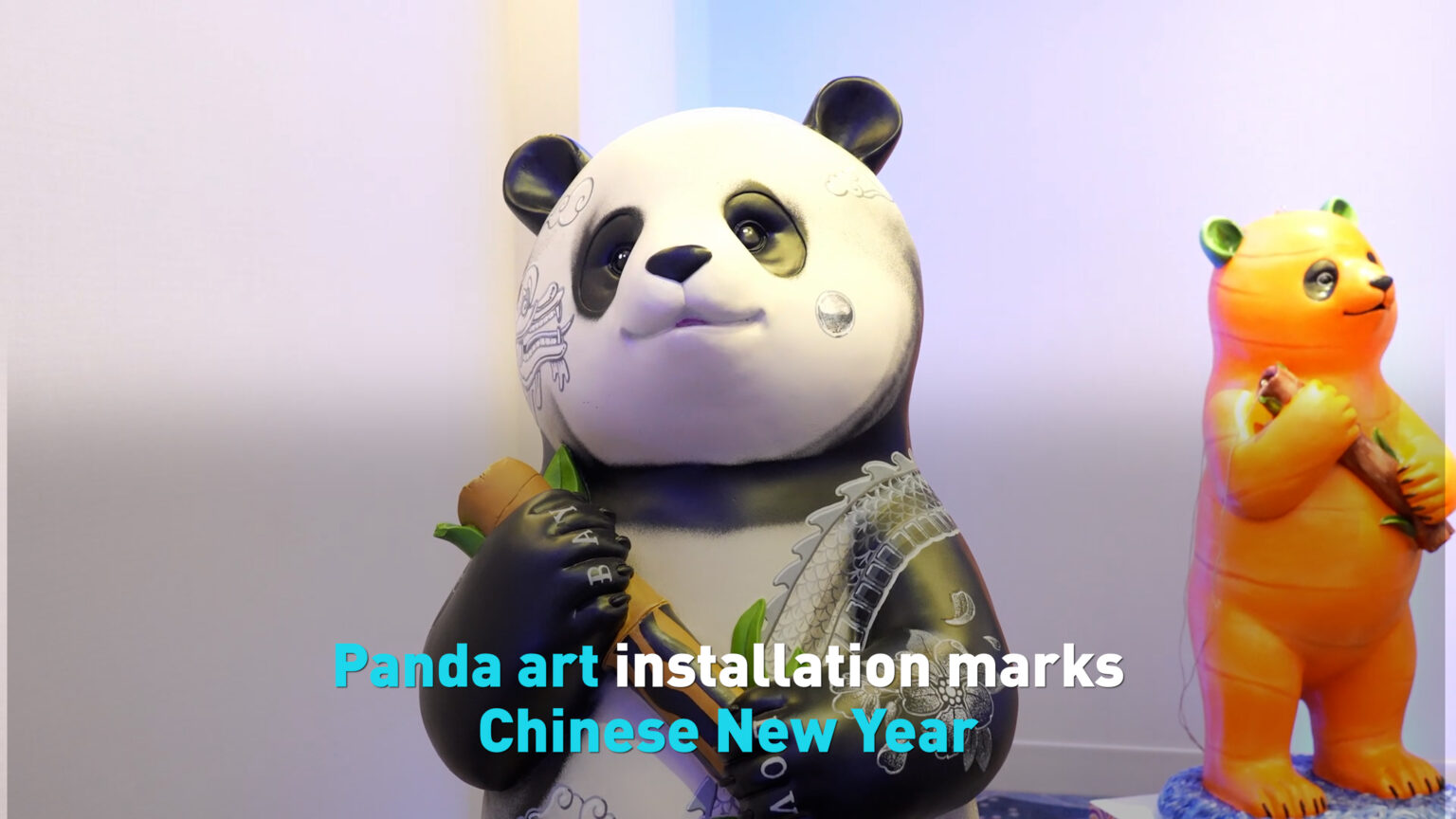
The Year of the Horse has begun, but it's not the only animal capturing attention in American cities during this Chinese New Year celebration. An art installation featuring the giant panda has been chosen to celebrate the Chinese New Year and Spring Festival and remind the public of the special bond between the United States and China.The work is part of a broader context of cultural and diplomatic initiatives that, through art, zodiac symbolism, and the presence of pandas, reinforce the positive perception of China and promote dialogue between the two nations. In this context, the panda—long a symbol of tenderness, nature, and conservation—becomes a key protagonist in the Chinese New Year narrative in America.
Panda art installation celebrates Chinese New Year: The species as a symbol of friendship between the United States and China
The giant panda is considered a true "ambassador" of China, used for decades as a symbol of friendship in relations with the United States. The recent cooperation on the loan of a new pair of pandas to the National Zoo in Washington, named Bao Li and Qing Bao, was explicitly presented as an important step in revitalizing bilateral relations. In this context, an artistic installation of the panda statue for Chinese New Year is not merely decorative. It also visually narrates this story of collaboration. The public encountering the sculptures in the urban space is invited to reflect on themes such as friendship between peoples, the protection of biodiversity, and the value of the Spring Festival as a cultural heritage recognized by UNESCO.
Public Art, Spring Festival, and Chinese Identity
The Spring Festival is the most important time in the traditional Chinese calendar. Increasingly, it is celebrated abroad with installations, exhibitions, and public art. Projects similar to the panda's include urban routes featuring zodiac statues, such as "Zodiac on Parade." These use animals from the Chinese horoscope to convey culture, traditions, and values to the general public.
In this context, the panda installation for Chinese New Year fits into an easily understandable visual language. Featuring monumental figures, traditional colors, and elements associated with luck and prosperity, the statues become photo opportunities, viral content for social media, and storytelling tools that extend the New Year experience well beyond the single day of celebration.
Why does the panda work in Chinese New Year communication?
The giant panda combines multiple layers of meaning, which explains its effectiveness as the subject of an installation on the Chinese New Year.
- It is an animal endemic to China, therefore immediately recognizable as a national symbol.
- It is involved in international cooperative programs on conservation and research, often in partnership with U.S. zoos and institutions.
- He is perceived by global audiences as tender, peaceful, and reassuring, qualities that facilitate empathy and engagement.
- His presence in official contexts, such as receptions and exhibitions, is interpreted as a sign of openness, dialogue, and the desire to strengthen bilateral ties.
Combining the panda with Chinese New Year therefore allows us to communicate, in a single glance, traditional festivity, cultural identity, soft power and international cooperation.
Panda installation becomes a soft power tool
The use of panda-themed art installations during Chinese New Year is part of China's soft power strategies abroad. Through events, official receptions, and public works, the festive message intertwines with those of friendship, cooperation, and a new phase in relations between Beijing and Washington.
These projects offer American audiences a firsthand experience of Chinese culture, not only through zodiac symbols but also through ritual elements such as lanterns, decorations, performances, and, of course, the presence of pandas. The result is a positive narrative of the Chinese New Year as a shared experience, in which the panda becomes the smiling face of contemporary cultural diplomacy.