






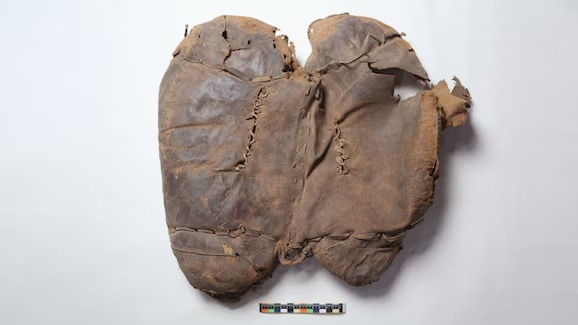
An exceptional archaeological find in China has brought to light the complete skeleton of an ancient giant panda, dating back to over 2000 years ago, at the time of Emperor Wen of Han. Chinese archaeologists have identified the remains inside a satellite tomb in the funerary complex of the’Emperor Wen near Xi'an, in the province of Shaanxi, China's historic capital.
Giant panda skeleton found in the tomb of Wen of Han, venerated in ancient China.
The discovery of the giant panda skeleton found in the tomb of Emperor Wen of Han confirms the central role of the giant panda in ancient Chinese culture, religion, and funerary beliefs. In the tomb, the panda skeleton was positioned directly toward the emperor's resting place, likely to accompany him into the afterlife as prestigious sacrificial animal. According to the Shaanxi Academy of Archaeology, this is the first complete giant panda skeleton ever found in a royal burial; previous excavations had only revealed parts of other pandas.
Read also:
iPSC stem cells and the giant panda: new frontiers for conservation
Ancient Giant Panda Fossils Discovered in Hanzhong: The Incredible Discovery
Rare species: the Qinling panda
Experts have identified the panda as belonging to the Qinling subspecies, native to the remote Qinling Mountains, is famous for its brown and white coat, round skull, and smaller molars than the giant pandas of Sichuan. The geographic isolation of this subspecies has given rise to specific morphological and genetic characteristics, and study of its bones offers new theories about the climatic and environmental conditions of the time.
Rare animals and imperial burial rituals
The archaeological site also yielded remains of rare animals such as tigers, tapirs, yaks, and buffalo, suggesting a belief in an afterlife rich in exotic and sacred species. These animals, originating from distant habitats, testify to the complex practices and value placed on sacrificial gifts in ancient Chinese society.
The historical and symbolic significance of the giant panda
Since the past, the giant panda It was a revered animal, a symbol of peace, friendship, and justice; often given as a precious offering to foreign dignitaries and celebrated as a "living relic" of the Chinese forest. In Han culture, the panda was the subject of legends that extolled its strength and courage, to the point of ceasing hostilities when its sacred flag was waved.
Archaeology and DNA: Studying the Past to Understand the Origins of Pandas
Researchers are now analyzing DNA from the remains found in the imperial tomb, hoping to uncover the evolutionary history of panda subspecies and their role in Chinese biodiversity and traditions.