






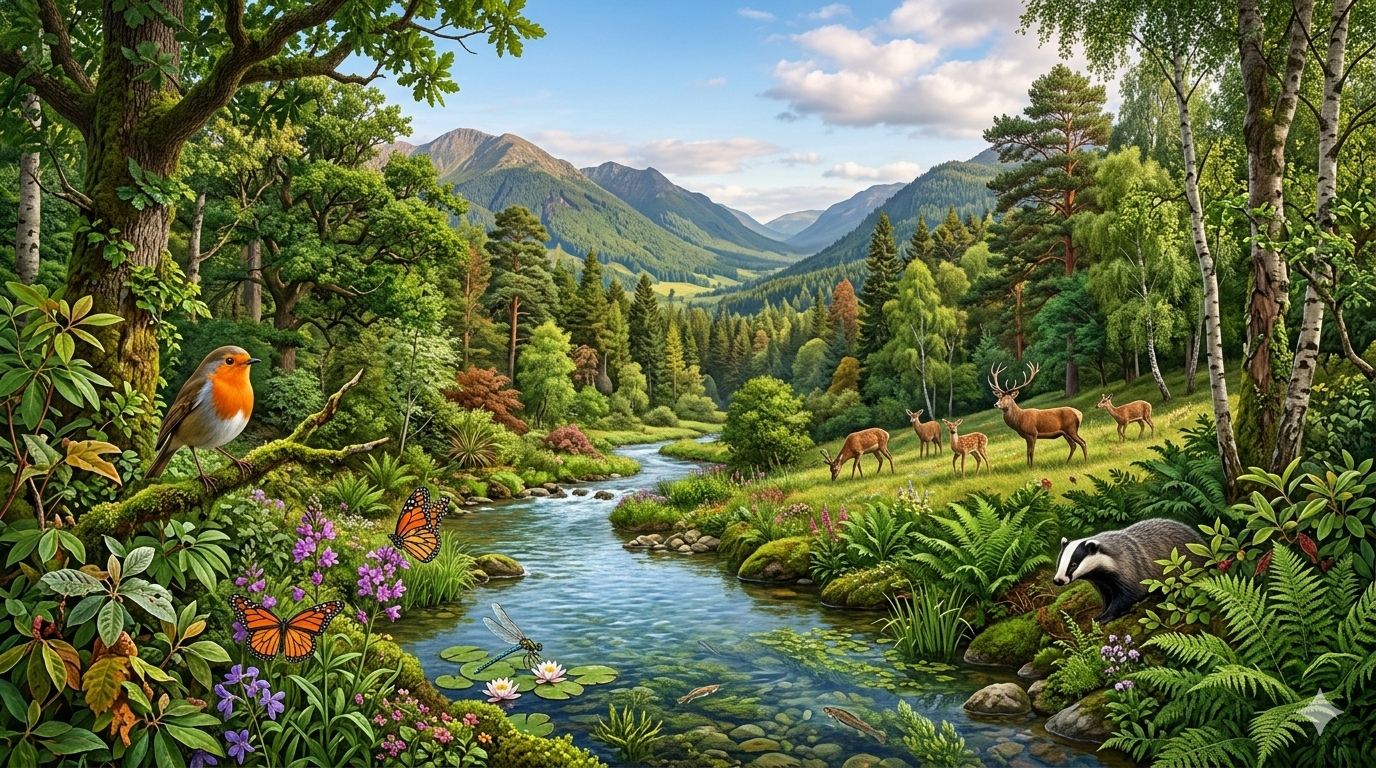
Etymology, ecological value, and impact on our daily lives. Why understanding biodiversity is the first concrete step to protecting the planet and our health.
Etymology of the word 'biodiversity': what does it mean?
Before discussing the topic of biodiversity, we should probably begin with its etymology. The word biodiversity has become a fixture in public debate. We find it in European climate plans, on the labels of "green" products, and in the guidelines of scientific institutions and governments. Yet, even as the term gains traction, real biodiversity is dwindling: ecosystems are degrading, species are disappearing into obscurity and deafening silence, and entire regions are losing biological complexity. Understanding what biodiversity really means, where this word comes from, and why its protection is a matter of collective survival, is no longer a theoretical exercise, but an urgent necessity.
Meaning of biodiversity: much more than a "variety of species"“
When ecologists talk about biodiversity, they don't simply count the number of species living in an area. Biodiversity is the richness of life on Earth in all its forms and at all levels of organization, from genes to ecosystems. It includes three fundamental dimensions: genetic diversity, the set of variations present within a single species; species diversity, the number and abundance of species sharing a space; and ecosystem diversity, the variety of natural environments—forests, oceans, grasslands, wetlands—and the relationships that exist between them. This seemingly technical definition has a simple and powerful consequence. Biodiversity is not an aesthetic luxury, made up of picturesque landscapes and charismatic, endearing animals, but rather the basic structure that allows ecosystems to function in absolute balance. Where biodiversity is high, natural systems are better able to withstand shocks, adapt to climate change, regenerate soil and water, and provide food and energy. Where biodiversity is depleted, nature becomes fragile, and with it, our societies. Just think of the environmental disasters that have occurred in recent years.
Etymology of Biodiversity: From the Greek "bios" to the Global Ecological Crisis
The term biodiversity is relatively recent, but it combines ancient roots with a contemporary urgency. It originated as a contraction of the English expression "biological diversity," used in the scientific field to describe the variety of life forms and later shortened to "biodiversity." In Italian, the calque "biodiversità" combines the prefix "bio-," from the Greek "bios," meaning life, with "diversità," from the Latin "diversitas," meaning difference or variety. The literal meaning is therefore "variety of life." This word is not neutral. It gained popularity in the 1980s, in parallel with growing concern over the accelerating loss of species and habitats. Its popularity reflects a shift in perspective. It is no longer simply a matter of studying individual species, but of understanding the entirety of the relationships that bind them to each other and to the environment. In other words, etymology tells us that speaking of biodiversity means recognizing that life—our life—exists only as a web of differences.
Why biodiversity is essential for life on the planet
The first reason biodiversity is crucial is functional. Ecosystems rich in species and genetic diversity provide essential services without which no human society could survive. These ecosystem services include oxygen production, regulation of the water cycle, soil fertility, crop pollination, natural purification of air and water, and mitigation of extreme events. Where the mosaic of species declines, these processes become unstable, more vulnerable to climate change and human pressures.
Then there's the health dimension. High biodiversity helps maintain the balance between species, reducing the risk of pathogens and parasites finding "fast lanes" to spread. Simplified and stressed ecosystems, on the other hand, favor spillovers and zoonoses (infectious animal diseases transmissible to humans). Finally, biodiversity is also a reservoir of molecules, genes, and natural processes from which medicine, agriculture, and technology draw inspiration. Many drugs are derived from substances produced by wild organisms, and crop diversity is the primary insurance against food crises and emerging parasites.
An invisible natural capital: economy, food, health
Calling biodiversity "natural capital" helps us grasp its economic impact, but it risks making us forget that it's not a bank account from which we can draw endlessly. Agriculture, fishing, tourism, and the pharmaceutical and cosmetics industries rely, to varying degrees, on the stability of the ecosystems from which they draw resources and services. If that stability is compromised, the economic effects are not long in coming: plummeting agricultural yields, depleting the seas, and rising healthcare costs related to pollution and environmental diseases. Biodiversity is also what makes our daily diet possible. The breadth of crop genetics determines the ability to select varieties resistant to drought, emerging diseases, and heatwaves. Similarly, the diversity of soil microorganisms and pollinators supports crops that feed billions of people. Reducing this complexity to a few dominant species exposes the global food system to systemic risks.
An unprecedented biodiversity crisis
In recent decades, the scientific community has been talking about a "sixth mass extinction," describing a rate of species loss far exceeding the natural background rate. The main causes are well known: habitat destruction and fragmentation, conversion of forests to agricultural and urban land, pollution, massive pesticide use, introduction of invasive species, overexploitation of resources, and climate change. All factors have a common root: a development model that treats nature as an unlimited supply to be consumed. The biodiversity crisis is closely intertwined with the climate crisis. Intact natural ecosystems absorb and store enormous amounts of carbon; when destroyed or degraded, they not only cease to perform this function, but also release the stored carbon into the atmosphere. Protecting biodiversity therefore also means strengthening one of nature's most powerful allies in the fight against global warming.
Why it's crucial to become aware (and not just informed)
The point isn't to know in the abstract that biodiversity is important, but to recognize how profoundly the loss of biological diversity is already changing our daily lives. When a landscape loses pollinating insects, fruit and vegetable prices rise; when an urban area minimizes green spaces, heat islands and health risks increase; when a river is reduced to a polluted canal, a source of drinking water and cultural identity is lost. Biodiversity is not elsewhere, it is on our plates, in the air we breathe, in the water we drink.. Becoming aware also means questioning the idea that technology alone can remedy all ecological damage. Innovation and research are certainly crucial allies, but they cannot replace the complexity of an ancient forest or a coral reef. There is a level of biological richness that cannot be replicated in a laboratory: we can only safeguard it before it's too late.
You may also be interested in:
Third Sino-Italian Conference on Biodiversity in Naples
Why does saving the giant panda mean saving the ecosystem?
Raccolta differenziata: perché è fondamentale
Giornata Mondiale della Biodiversità: significato, origine e perché è importante
Fuzhou a piedi: giovani cinesi e americani scoprono la città
Protecting Biodiversity: What Institutions, Businesses, and Citizens Can Do
Protecting biodiversity requires ambitious public policies: well-managed protected areas, ecological corridors that allow species to migrate, coherent climate adaptation plans, and stringent regulations against land use and pollution. It means investing in the restoration of degraded ecosystems, from reforestation to the renaturalization of rivers and coastlines, and integrating biodiversity into every economic decision, from infrastructure to energy strategies. But responsibility doesn't just lie at the top. Individual choices also help reverse (or accelerate) the trend. Reduce food waste, favor products that respect habitats and seasonality, support sustainable agriculture and transparent supply chains, limit the consumption of single-use plastic, and care for urban and peri-urban green spaces. And then, stay informed, participate in public debate, and demand that biodiversity and climate be at the center of political agendas. Every small action is a piece of a larger change.
From Words to Choices: Linking Identity, Ethics, and Biodiversity
The etymology of biodiversity offers us a simple image: life as variety. But behind this simplicity lies an uncomfortable question. How much variety are we willing to sacrifice to maintain our current lifestyle? Accepting the centrality of biodiversity means recognizing that lasting well-being, a stable economy, or technological progress cannot exist on an impoverished planet. In this sense, becoming aware of the need to protect the planet is neither a fad nor an abstract moral obligation, but an exercise in clarity. Understanding that protecting biological diversity ultimately means protecting ourselves. Every ecosystem saved, every species saved from extinction, every fragment of landscape restored to life is not just a gesture in favor of nature, but an investment in the future of our communities. Therefore, starting from the etymology of the word "biodiversity," we can further understand its importance.