






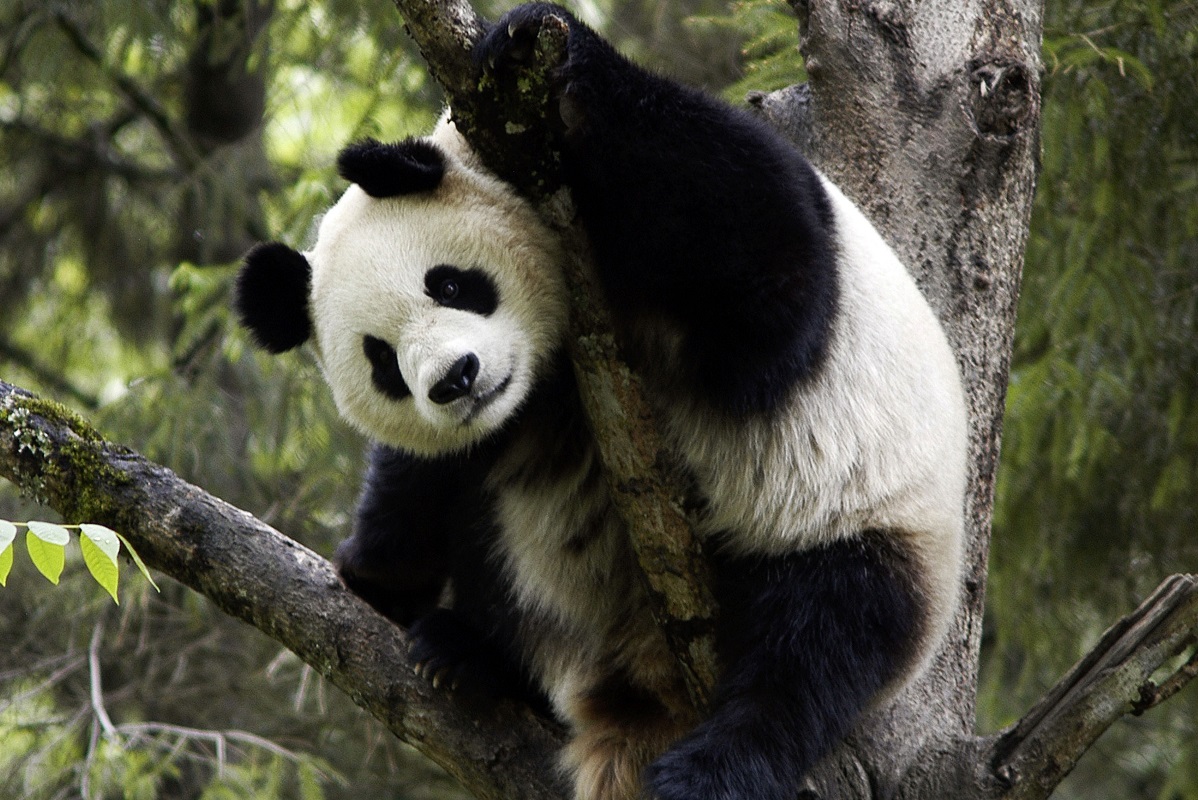
Have you ever thought about why the giant panda holds such a special place in the heart of China and has become a true symbol for the country? It's not just for its irresistible sweetness, but because it represents a profound intertwining of historical, spiritual, and cultural meanings. This extraordinary animal, the official symbol of the People's Republic of China, is considered a true national treasure, an icon that embodies the soul of the nation.
The Secret of the Giant Panda, Why It Is the True Symbol of China: A Rare Treasure in the Mountains of China
Giant pandas live exclusively in the mountainous forests of Sichuan, Gansu, and Shaanxi, amidst dense stands of bamboo that constitute nearly their entire diet. Fewer than 2,000 individuals survive in the wild, a figure that underscores their fragility but also their extraordinary uniqueness. This rarity makes them one of the most precious symbols of China's biodiversity and an emblem of the power of environmental conservation.
The legacy of a “living fossil”
Defined by scientists as a living fossil, The giant panda is one of the world's oldest species. Its ancestors date back millions of years, and over time, they have made an incredible transition from carnivores to almost pure herbivores, feeding primarily on bamboo. This evolutionary transformation demonstrates the species' incredible ability to adapt, made even more fascinating by its extremely rare reproductive cycles, studied for decades by biologists around the world.
The panda as an ambassador of friendship between nations
Besides being a natural symbol, the panda is also a powerful tool of cultural diplomacy. Since the 1970s, China has adopted the so-called panda diplomacy, sending pairs of pandas to different countries as a sign of friendship. The gift of the pandas "Ling-Ling" and "Hsing-Hsing" to the United States in 1972 ushered in an era of international cooperation that continues today with joint programs between China and countries such as Japan, France, and Germany. These black and white ambassadors represent harmony and collaboration between different cultures.
An emblem of balance and harmony
The panda's coat, half white and half black, is not just an aesthetic trait: it recalls the symbol of the Yin and Yang, a cardinal principle of Chinese philosophy that represents universal balance. In classical texts such as the Book of Songs and the Memoirs of the Great Historian, The panda appears as a symbol of peace and harmony with nature. It is a living example of how Chinese spirituality and culture are reflected in the natural world.
From China to the World: A Global Cultural Icon
Today, the giant panda is not only a national symbol, but a bridge between peoples and cultures. Wherever it goes, it captivates audiences with its peaceful expression and playful nature. Museums, research institutes, and conservation campaigns around the world promote it as an ambassador of biodiversity and the need to live in harmony with the environment. It's impossible to think of China without thinking of the panda: its gaze reflects the history of a country that has preserved its most tender and powerful legacy.