






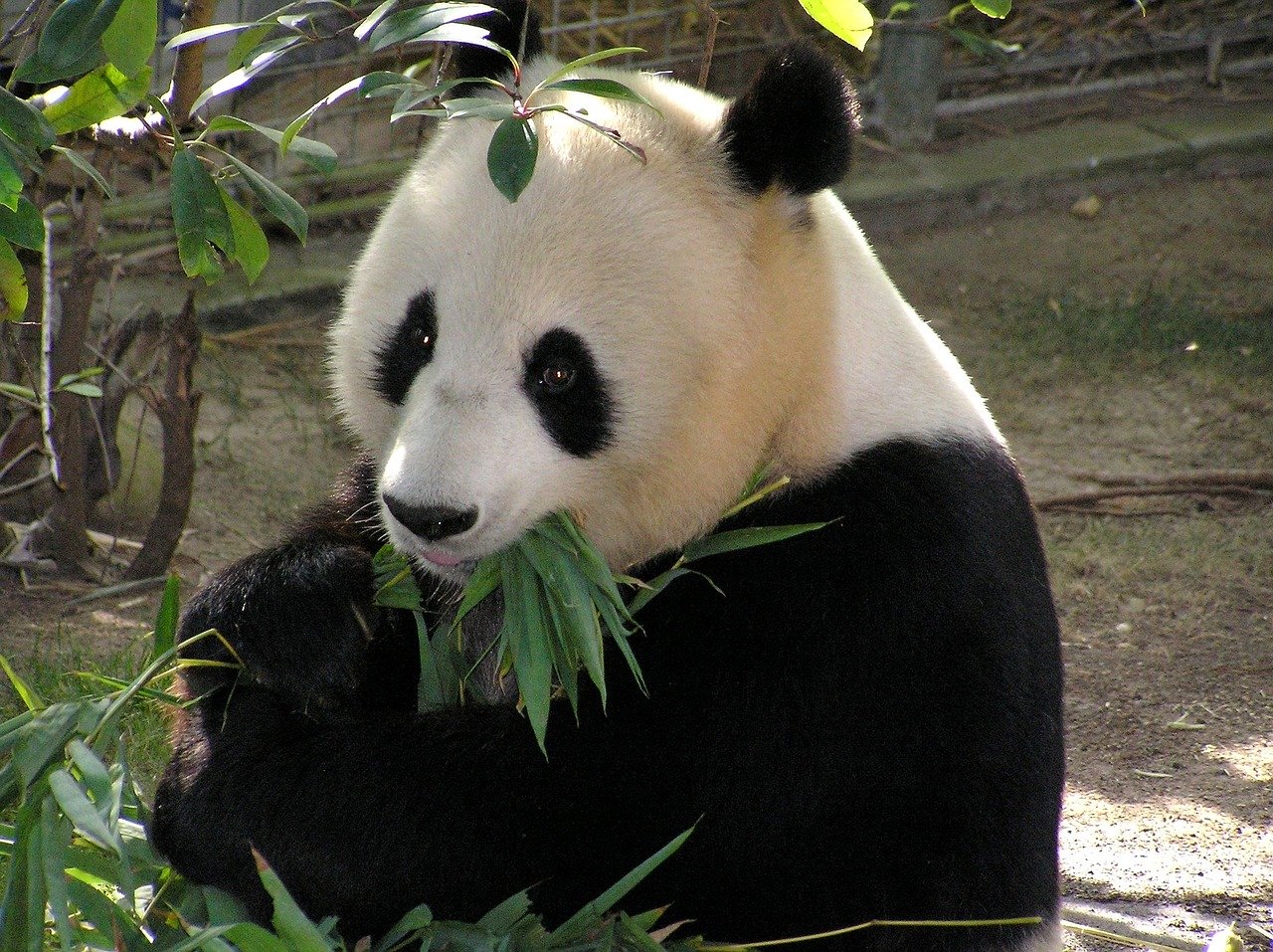
China's giant panda Ai Hin went viral by faking a pregnancy to get more food and attention. What does this behavior reveal about fake pregnancies and the conservation of the species?
The panda Ai Hin who faked her pregnancy to get more food: the "phantom belly"“
A giant panda at the Chengdu Research Base in China hit the headlines when experts suspected she had faked her pregnancy to get more food, with a private, air-conditioned room and round-the-clock care. The protagonist, Ai Hin, is about six years old and has a "phantom belly." She forced the center to cancel at the last minute what was supposed to be the world's first live broadcast of a panda birth. But can a panda really be so clever as to fool biologists? Or are we humans projecting intentions onto pseudopregnancies? A documented and very common phenomenon in the species? Understanding what happened in Ai Hin's case means delving into the heart of the daily challenges of those trying to make a difference. to birth and raise new panda cubs giant in captivity. An episode has already happened with the famous panda, Fu Bao.
Ai Hin's Story: From "Live Mom" to Smart Panda
Ai Hin lives at the Chengdu Research Base of Giant Panda Breeding, one of China's leading centers dedicated to giant panda breeding and conservation. In the summer of 2014, keepers noticed all the typical signs of pregnancy in her: a decreased appetite, less activity, hormonal changes, and behaviors of a mother-to-be. For this reason, Ai Hin was chosen to star in the world's first live broadcast of a panda birth. The event was widely publicized by Chinese and international media.
After a few weeks, however, the situation suddenly changes. Physiological tests return to normal, and Ai Hin's behavior returns to normal, with no sign of a cub on the way. Experts speak of "phantom pregnancy." But an observation by one of the center's specialists sparks the imagination of the press. Females showing signs of pregnancy are moved to individual rooms. These rooms are air-conditioned, offer more bamboo, bread, and fruit, and receive constant attention from the keepers. According to this interpretation, some pandas "learned" to maintain certain behaviors to prolong the benefits, turning a biological condition into a potential advantage.
False pregnancies in pandas: between biology and "cunning"“
Pseudopregnancies in giant pandas are a well-documented and very common phenomenon. Females ovulate spontaneously and, even if they don't become pregnant, they can develop the same hormone levels (such as progesterone) as a true pregnancy for weeks, with lethargy, nesting, and decreased appetite. Precisely because of this hormonal overlap, many diagnostic tests used in other species don't work well in pandas. This makes it extremely difficult to determine with certainty whether a cub is actually growing in the womb.
In Ai Hin's case, experts have described a pseudopregnancy, but they can't "read the panda's mind," so the idea that she deliberately "faked" the pregnancy remains a behavioral hypothesis, not proof. Some researchers point out that the line between learned behavior and human projection is thin. An animal can associate certain signals with better treatment without necessarily planning a humane deception. In fact, however, the combination of pregnancy-mimicking hormones and potential learning makes false pregnancies a daily challenge for those who manage captive pandas.
Why it pays for "fake mothers" to appear pregnant
In research centers and zoos, a female showing signs of pregnancy is immediately treated like a VIP patient. She is moved to a separate, quieter room, often air-conditioned, and under constant observation. In these controlled environments, potential mothers also receive more high-quality food, including selected bamboo shoots, buns, and fresh fruit, and are less likely to have to move or work to obtain food.
It's understandable that, once these advantages have been experienced, some females continue to exhibit "pregnant" behaviors for longer, unknowingly perpetuating a kind of "trick" that confuses keepers. Ai Hin's case has become emblematic precisely because it condenses all these elements into a single story: biological pseudopregnancy, learning of advantageous behaviors, and the media narrative of a "smart panda" to capture the public's attention.
The impact on giant panda conservation
Behind the viral story of the panda faking a pregnancy lies a very serious issue: the conservation of a species still considered vulnerable and difficult to reproduce. In breeding centers, every possible pregnancy is monitored with extreme care, because a successful gestation and the growth of the cubs are essential to strengthening the population in captivity and in the wild. Precisely for this reason, false pregnancies "fool" not only the media, but also the resources of the centers, which prepare facilities, staff, and protocols for cubs that sometimes never arrive.
In some facilities, such as Chengdu, treatment has resulted in captive pup survival rates around 90%, much higher than in the wild, where mothers can typically raise only one pup at a time. However, precisely because every pup matters, scientists have been working for years to develop more accurate methods to distinguish a true pregnancy from a pseudopregnancy, combining hormonal monitoring, behavioral observation, and imaging techniques such as ultrasound. Reducing errors means optimizing the time, energy, and costs of breeding programs, without sacrificing animal welfare.
The complex dynamics of the story of the giant panda Ai Hin
The story of Ai Hin, the "smart" panda who faked her pregnancy to eat more, is a perfect example of how a single episode can illuminate the complex dynamics between biology, animal behavior, captive management, and media narratives. For panda lovers, learning about pseudopregnancies, how reproductive hormones work, and the challenges biologists face in diagnosing a real pregnancy helps understand how much work goes into every baby born in a specialized center. For those involved in outreach or environmental education, cases like this demonstrate how important it is to look beyond the viral headline and clearly explain the scientific reality behind the "panda faking her pregnancy to get more food.".