






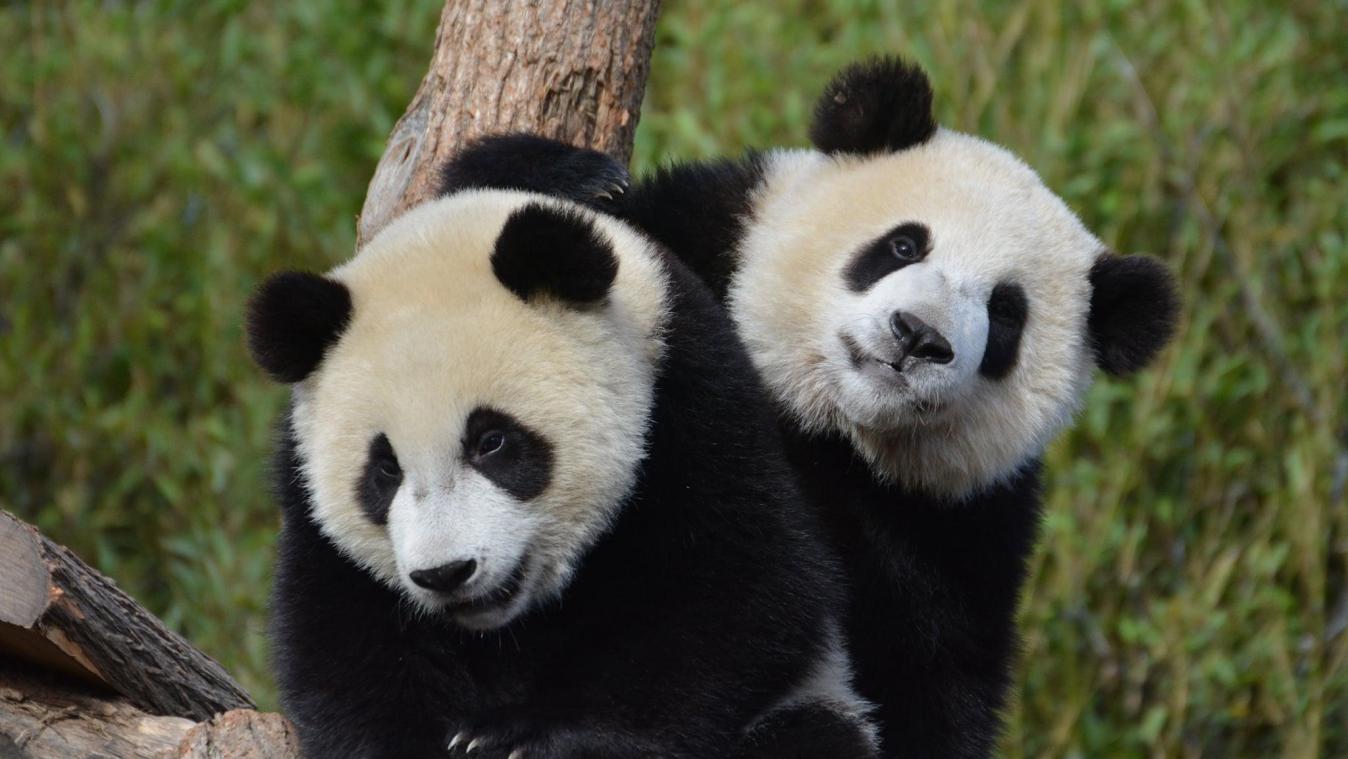
Bao Di and Bao Mei, the panda twins were born in Pairi Daiza In 2019, the brothers left Europe to move to the Wenzhou Zoo. What does this journey mean for them, for scientific research, and for the future of the species? Both have been moved to a new home in eastern China, and millions of fans are ready to follow them online. Bao Di and Bao Mei are much more than just two "cute" animals. They are a living symbol of how international cooperation can change the fate of an endangered species. Their arrival at the Wenzhou Zoo, after years spent at Pairi Daiza, tells a story of travel, technology, and habitat protection that is worth exploring in its entirety.
Belgium: Who are the panda twins Bao Di and Bao Mei?
Bao Di and Bao Mei are twin giant pandas born on August 8, 2019, at Pairi Daiza Zoo in Belgium, to Hao Hao and Xing Hui, a panda couple on loan from China for a conservation program. Their birth was considered a scientific and media success, as twin births in pandas are rare and require highly advanced veterinary expertise.
From their first months of life, the two cubs have become ambassadors of biodiversity. They have always attracted visitors from all over Europe, helping to fund research projects on the giant panda and the species that share its mountain habitat. Thanks to the park's social media, thousands of people have been able to follow their growth almost in real time, creating an international community of enthusiasts.
Why were they transferred to China?
As per the agreement between Pairi Daiza and the China Wildlife Conservation Association, pandas born in Europe are transferred to China as young adults to enter their country's breeding and research programs. In 2024, it was announced that Bao Di and Bao Mei would leave Belgium to return to China along with their older brother Tian Bao.
After a period of preparation and quarantine, the twins traveled to the Chinese research base. They were subsequently assigned to the Wenzhou Zoo in Zhejiang Province, where a new enclosure was built specifically for them. This move allows Chinese experts to monitor their health, study their behavior, and, in the future, include them in breeding projects aimed at maintaining a genetically diverse population.
The new panda pavilion in Wenzhou
Wenzhou Zoo has built a dedicated facility that replicates, as closely as possible, the climatic and environmental conditions of Sichuan's bamboo forests. The complex includes air-conditioned indoor areas, outdoor enrichment spaces, pools and shaded areas, as well as separate walkways for veterinarians and keepers.
This type of “custom-made” pavilion is designed to reduce the stress of pandas as they adapt to a new environment. This modus operandi It offers visitors an educational experience, with panels and activities explaining the species' biology, diet, and conservation status. The presence of Bao Di and Bao Mei also contributes to the city's tourism development, placing it on the Chinese map of giant panda destinations.
What they represent for conservation
The case of Bao Di and Bao Mei shows how panda loan programs aren't just a diplomatic operation. They're also a concrete tool for funding research centers, cutting-edge veterinary care, and habitat protection projects in China. Every ticket sold and every partnership linked to their image contributes, directly or indirectly, to supporting field initiatives in the mountains of Sichuan and Qinling.
According to official data, the giant panda population in the wild is slowly growing, but remains vulnerable to habitat fragmentation and climate change. Introducing individuals like Bao Di and Bao Mei into targeted breeding programs, with careful genetic control, is essential to ensure the species' long-term survival.
Why their story is conquering the web
The story of two cubs born in Europe "coming home" to China combines emotion, scientific curiosity, and highly shareable images—all perfect for social media and artificial intelligence platforms. Hashtags like #HiPanda and videos showing the twins playing or flying to their new destination have generated thousands of interactions and shares.
For content creators, the story of Bao Di and Bao Mei offers ongoing inspiration. From behind-the-scenes footage of the journey to interviews with keepers, to insights into the role of modern zoos in conservation. The global interest in these two pandas demonstrates how the combination of storytelling, accessible scientific data, and quality imagery can transform a zoological relocation into a tale that lingers in the public's memory.