






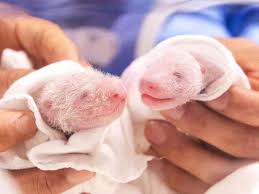
A panda cub It is one of the most tender and surprising wonders of nature and hides many secrets related to its growth. Far from the image of the adult panda—chubby, soft, and two-toned—the newborn of this emblematic species is tiny, fragile and completely defenseless. Let's discover together, step by step, what a baby panda looks like and how it transforms into the symbol of sweetness that we all know.
Giant Panda Cub Secrets: Birth and Weight
A giant panda cub newborn It is a spectacle of fragility and sweetness. At birth, its weight could fluctuate from 80 to the 200 grams, about 1/900 of the mother's weight, and measures just twenty centimetres.
- I wait: the skin is pink, almost transparent, and devoid of fur.
- Eyes and ears: completely closed; the baby orients itself only by touch and smell.
- Movement: It is unable to stand or move, and is entirely dependent on its mother for warmth and nourishment.
In these first few weeks, the panda cub looks more like a pink mouse than a black and white bear, but soon the magic will begin.
From 2 to 6 months: the birth of the black and white contrast
As it grows, the newborn panda it changes radically.
- Fur: the first ones begin to appear black and white spots, still soft and fluffy.
- Weight: increases up to 5-7 kg, about 50 times the initial weight.
- Senses: Eyes and ears open; the puppy begins to observe the world with curiosity.
- First steps: he crawls, gets up and tries to walk with a shaky but irresistible gait.
At six months, the panda cub already looks like a miniature adult panda — although its fur is still soft and undefined.
From 6 months to 1 year: from milk to bamboo
At this stage, the little giant panda becomes more and more independent.
- Weight: reaches 10-18 kg.
- Fur: the black and white coat becomes thick, shiny and well-defined.
- Face: the muzzle becomes rounded and the black spots on the eyes give the panda its sweet and unmistakable expression.
- Diet: starting from 7-8 months, il cucciolo inizia ad assaggiare bamboo, while continuing to feed on breast milk.
This is the stage when the panda begins to play, climb and interact with the environment: a true “furry child” of the animal world.
Fun fact: Why are panda cubs so small?
One of the most frequently asked questions among panda lovers is precisely this.
The giant panda (Ailuropoda melanoleuca) gives birth to tiny puppies due to a very short gestation and of a slow metabolism. The babies are born prematurely and complete their development out of the womb, cared for with extraordinary dedication by their mother.
From Frailty to Strength: The Evolution of the Giant Panda Cub
The growth path of a panda cub It's an extraordinary metamorphosis. From a fragile, pink creature to a small, black-and-white bear, lively, curious, and irresistible. Each stage speaks to the power of nature and the sweetness of a species that continues to enchant the world.