







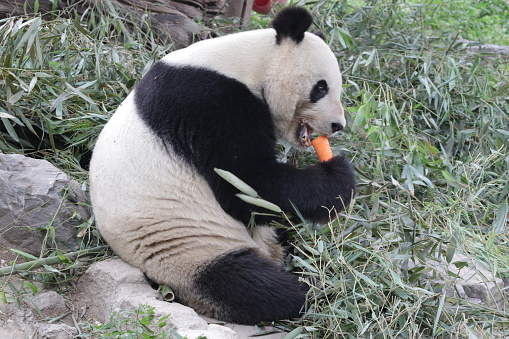
You know that the giant panda Does he follow a diet, a diet that, according to 99%, consists of bamboo? There's an iconic image that we all have in mind when we think of the wonderful little bear. A peaceful creature, sitting blissfully while munching on a bamboo pole. But have you ever wondered why? It's a fascinating story of evolution, adaptation, and almost total dependence on a seemingly nutrient-poor resource.
The Giant Panda's Diet: The Properties of Bamboo
Although it belongs to the order of carnivores and still possess sharp canine teeth and‘digestive system of a carnivore, the giant panda has undertaken a surprising evolutionary path, becoming a specialized herbivore. About 4.2 million years ago, a genetic mutationmade him lose the ability to perceive human flavor, typical of meat, directing it towards other food sources. And bamboo, abundant in the habitats where it lived, became its main, if not almost exclusive, source of sustenance. But how much bamboo does a panda have to eat to survive? Considering the low nutritional value of bamboo, an adult panda needs to ingest an impressive amount, on average dagli 14-16 kg al giorno, ma che può arrivare fino a 38-40 kg. This incessant chewing activity takes up most of their day, trying to integrate even the mineral salts.
Not all bamboo is the same, and pandas know this well. Their diet includes different parts of the plant: leaves, stems and shoots. I bamboo shoots, available especially in spring, are particularly appreciated for their high protein content. Stems and leaves, consumed mainly in autumn and winter, provide carbohydrates and fiber. Pandas are also very selective, choosing the most nutritious parts and, in some regions, favoring specific bamboo species. For example, pandas at Singapore's River Safari love Siamese bamboo and hedge bamboo. In captivity, their bamboo-based diet is often supplemented with concentrated feeds made from grains, fruits, and vegetables to ensure a balanced nutritional intake.
To cope with this fibrous, leathery diet, pandas have developed unique physical adaptations. They own powerful jaw muscles and large, flat molar teeth, perfect for crushing and grinding bamboo. But the real “secret weapon” is their “false thumb”, a modified extension of the wrist bone that acts as a sixth finger, allowing them to effectively grasp and manipulate bamboo stalks.
Despite these adaptations, the The panda's digestive system remains that of a carnivore, with a relatively short intestinal tract. Consequently, the’bamboo's digestion efficiency is limited, and much of the ingested plant material is expelled incompletely digested. To compensate for this inefficiency, pandas must devote more than 12 hours a day to eating.
You may also be interested in:
Giant pandas, fruit and vegetable popsicles: the health benefits
5 Fun Facts About Giant Pandas You Didn't Know
Perché i keeper danno il latte ai panda giganti adulti
Panda giganti e alte temperature
Zampe anteriori e posteriori del panda gigante
Perché i panda giganti vengono accuditi come bambini
I panda giganti sono pericolosi? Cos’è il contatto protetto
Quando i cuccioli di panda assaggiano il bambù? Lo svezzamento mese per mese
The Foundation of Bamboo in the Giant Panda Diet: An Evolutionary and Nutritious Choice
Giant pandas consume a large amount of bamboo daily, equivalent to eating over 200 hamburgers a day. But what makes bamboo so crucial to their diet? The answer lies in their evolution and their natural habitat. Pandas evolved in the bamboo forests of central China, where this plant grew abundantly and was available year-round. To survive, they developed unique adaptations, such as pseudo-thumbs to grasp the stems and powerful muscles to chew the tough bamboo, while maintaining a carnivorous digestive system that was inefficient at processing plants. This explains their need to eat for 12–16 hours a day to absorb enough nutrients.
The Panda's Seasonal Menu: Variety and Dietary Adaptations
As the seasons change, the panda's diet also varies:
Spring: Pandas take advantage of the tender bamboo shoots, which are easier to digest, and supplement their diet with wild onions, garlic, fresh grass shoots, and bark.
Summer: Their diet becomes more diverse, including wild fruits such as cherries, mountain berries, apples, and rosehips. Surprisingly, they can also consume animal proteins such as small fish, bird eggs, insects, and, in rare cases, rodents.
Fall: In preparation for winter, they select the most nutritious bamboo varieties to store energy.
Winter: In the cold months, they rely on less common foods such as vitamin C-rich pine needles and tree roots, also consuming their accumulated fat reserves.
Pandas in captivity: a controlled and rich diet
Zoos provide a balanced diet, going beyond just bamboo, with fresh fruit, vegetables, special biscuits, honey, and fruit ice cream. Vitamin, mineral, and probiotic supplements are also administered to ensure optimal health, contributing to the longevity of these animals compared to their wild counterparts.
Digestive Challenges: A Carnivorous System for a Plant-Based Diet
The short digestive tract typical of carnivores limits the efficiency with which pandas digest bamboo, digesting only 17%. This leads to near-constant hunger and the need to supplement their diet with more nutritious foods to avoid deficiencies.
Curiosities and surprising facts about the panda's diet
- Pandas' ancestors were carnivores and retain genes for digesting meat.
- Pandas have lost their sense of sweet taste, but they retain their sensitivity to umami, which explains their occasional craving for animal protein.
- Wild pandas can gain about 18 kg in weight in the summer and lose it in the winter.
- Giant pandas have the hiccup.
Implications for conservation and research
Panda conservation requires safeguarding diverse forest ecosystems, as their diet is not limited to bamboo. Climate change could alter the seasonal availability of food resources, impacting their survival. Zoos also exploit dietary diversity as a behavioral stimulus in breeding programs.
The panda, a bamboo eater and more
Although bamboo remains the staple of their diet, pandas show remarkable adaptability and a more varied diet than previously thought, demonstrating that their feeding ecology is complex and multifaceted.
What does deforestation destroy?
In the wild, the availability of bamboo is crucial to the survival of pandas, directly impacting their distribution. The loss of bamboo habitat due to deforestation and climate change poses a serious threat to the species. The cyclical flowering of bamboo can also create problems, especially in fragmented habitats where pandas may not have access to other edible species. Occasionally, giant pandas may supplement their diet with small amounts of other foods such as wildflowers, vines, weeds, honey, and even some meat. However, these constitute a minimal portion of their overall diet.
In any case, the giant panda's almost exclusive bamboo diet is the result of a long evolutionary journey, characterized by unique physical and behavioral adaptations. Although bamboo is a low-energy food source, pandas have developed strategies to consume large quantities and select the most nutritious parts. This strict dependence on bamboo highlights the crucial importance of habitat conservation to ensure the survival of this fascinating and iconic species.