






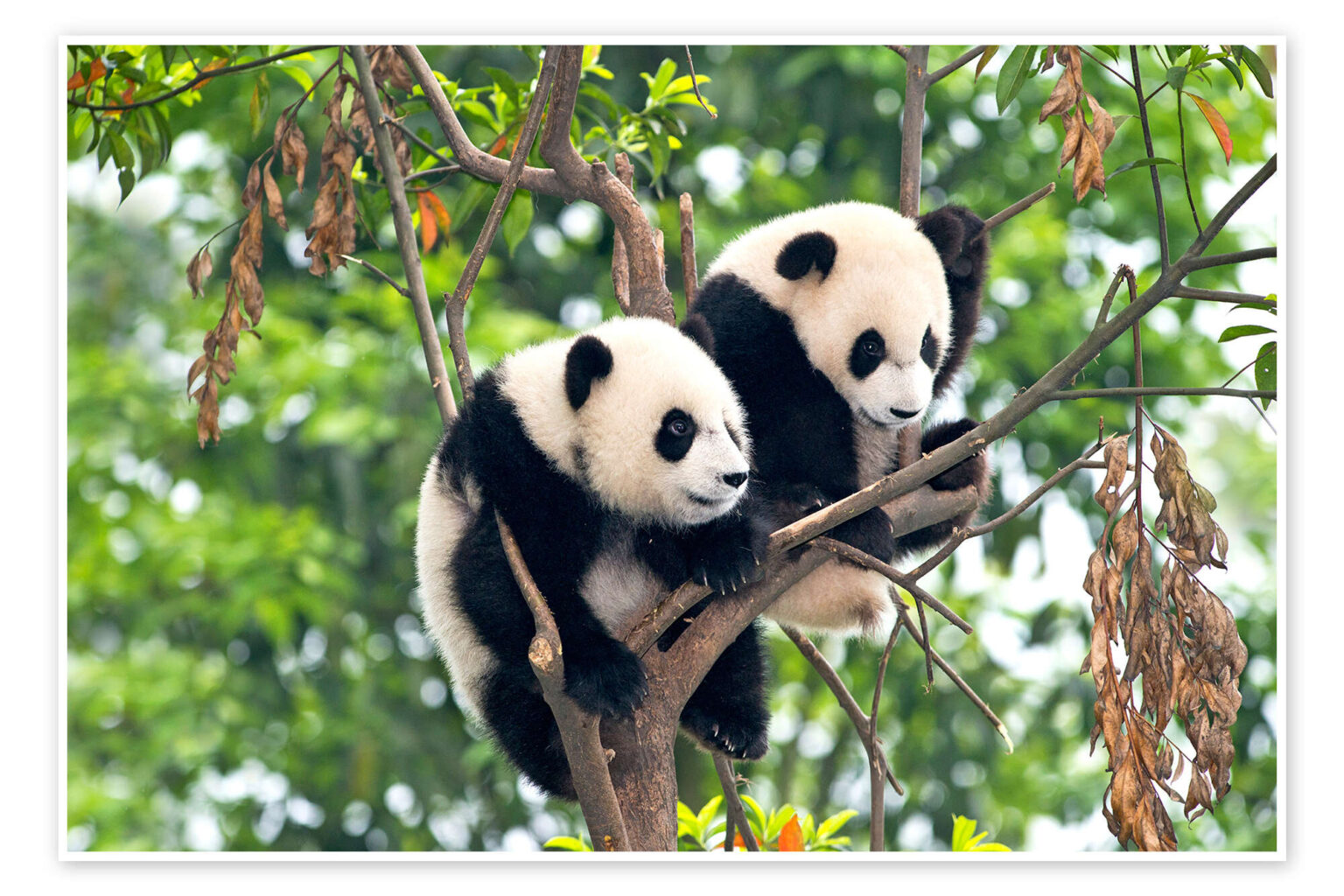
I giant pandas, universal symbols of environmental conservation and icons of the Chinese fauna, are among the most fascinating animals in the world. Known for their diet of bamboo and their peaceful nature, they inhabit the temperate montane forests of southwestern China, between Sichuan, Shaanxi, and Gansu. But many wonder: Do giant pandas really live in trees? The answer is not simple. Although they are not completely animals arboreal, pandas entertain a deep and vital relationship with trees, essential for their survival, nutrition and protection.
Giant pandas live in trees, climbing skills: the hidden side of the protected species
From an early age, pandas learn to climb trees with surprising agility. The cubs spend a lot of time among the branches, playing and learning about their habitat. This activity strengthens their muscles, improves their balance, and hones their survival skills. Even adult pandas, despite their size, move adeptly among the tree trunks and can reach heights of over ten meters in a matter of seconds. This ability is essential, especially in situations of danger or environmental stress.
Resting at High Altitude: Trees as the Perfect Refuge
I giant pandas They spend most of the day sleeping or resting, to digest the large quantities of bamboo that they consume. The trees offer them a safe and quiet place, away from the ground and possible disturbances. Sturdy branches and natural cavities become suspended beds, ideal for deep sleep. In mountain forests, it is common to see pandas lounging among the branches, completely at ease in the green heart of the forest.
Natural protection: trees as a shield from predators
Although the adult pandas they don't have many natural predators, puppies are vulnerable to leopards, wild dogs and wild boars. In these cases, the ability to to quickly climb a tree It's a vital defense mechanism. From above, pandas can observe their surroundings and wait for danger to pass, taking advantage of the protection of the foliage. It's an instinctive behavior that has contributed to the survival of the species over the millennia.
When bamboo is scarce: trees as an alternative food source
The bamboo constitutes approximately the 99% of the giant panda diet, but in times of food scarcity the trees become a secondary nutritional resource. Pandas can feed on leaves, bark, fruits and shoots, thus obtaining precious nutrients and additional hydration. While they are no substitute for bamboo, these food sources demonstrate the ecological flexibility of the panda and its ability to adapt to environmental changes.
Does the giant panda have a skeletal structure? The truth
Giant Panda Falls: Why They Don't Get Hurt
Communication and Territory: Trees as "Natural Noticeboards"“
I giant pandas they are animals solitary, they trees play a crucial role in their olfactory language. Through markings with urine or glandular secretions, pandas communicate their presence, reproductive status and territory boundaries. In practice, trees become natural information boards, where every olfactory signal contributes to reducing conflicts and maintaining social balance between individuals.
A profound connection between giant pandas and Chinese forests
While not living in trees in the strict sense of the word, the giant pandas owe much of their survival e well being to the trees that populate the forests of China. The trees offer shelter, safety, food resources and communication tools, making them indispensable elements of the ecosystem in which the panda thrives.
Protecting these forests means guaranteeing a future not only for pandas, but for the entire mountain biodiversity which depends on them.