






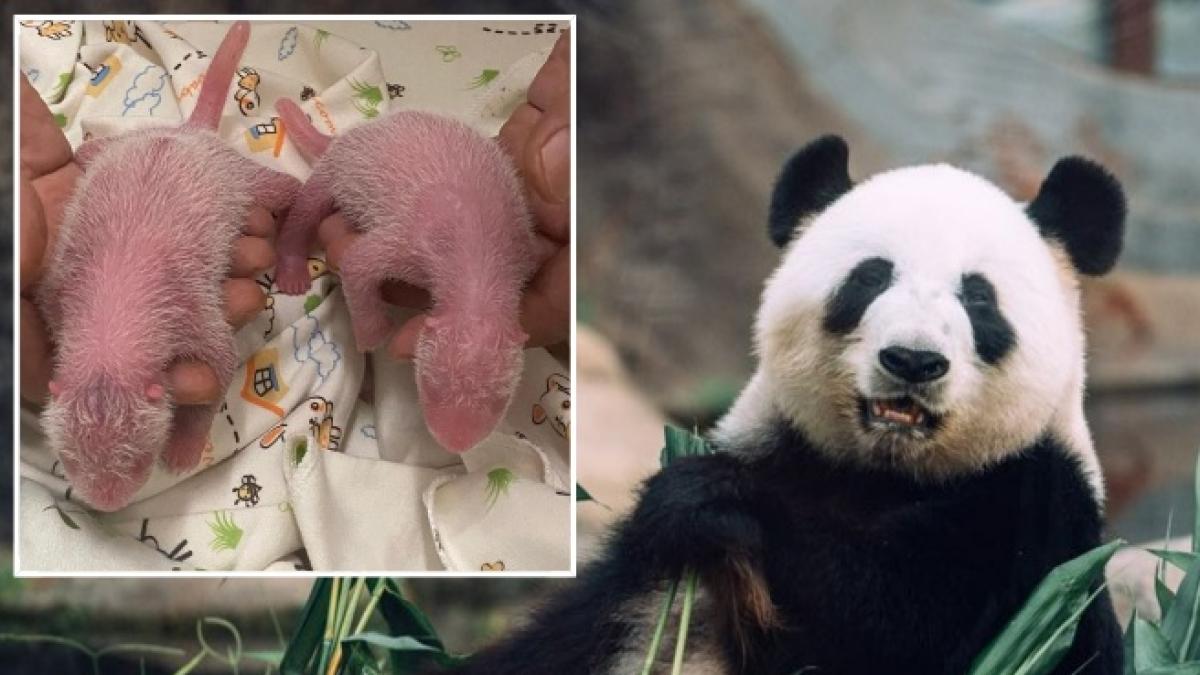
In the’Hong Kong Ocean Park two twin pandas were born in August 2024, a male and a female who will then be called Jia Jia and De De. The extremely rare twin birth has made Ying Ying the world's oldest panda mother giving birth to a first litter and has boosted international conservation programs for the species.
Hong Kong, 19-year-old panda Ying Ying gave birth to twin pandas: the birth
In the early hours of August 15, 2024, in the silent halls of Hong Kong's Ocean Park, a birth destined to become a zoology textbook took place. Giant panda Ying Ying gave birth to twin cubs, a 122-gram female and a 112-gram male. They came into the world within hours of each other and just one day after their mother's 19th birthday. With this birth, which occurred after more than five hours of carefully monitored labor, Ying Ying became the oldest first-time giant panda ever documented. She, in fact, transformed what for years had seemed like a dream long postponed into a scientific and media success story.
Abortions and hopes for the conservation program
The story of Ying Ying and her partner Le Le began in 2007, when the panda couple was donated to the city of Hong Kong by China as a symbol of friendship and cooperation. They have enriched and enhanced the Ocean Park's conservation program. For years, however, every attempt to carry a baby to term was met with miscarriages and false hopes, despite the ongoing work of experts at the China Conservation and Research Centre for the Giant Panda. For this reason, confirmation of the pregnancy—which arrived only a few days before the due date—was greeted with caution. After weeks of decreased appetite, increased fatigue, and hormonal fluctuations, the baby was greeted with caution, until the night the two cubs finally let out their first cries.
The birth of twins makes this event exceptional even in terms of the species' biology. Female giant pandas go into heat only once a year, with an estimated fertile period of about three days. In the wild, they live predominantly alone, further reducing the likelihood of successful mating. In captivity, the complexity increases. Detecting pregnancy is difficult because many of the symptoms mimic those of a pseudopregnancy, and the embryo can resorb in the early stages. The fact that a 19-year-old female, considered at the limit of reproductive age, managed not only to carry a pregnancy to term but also to give birth to two live, viable cubs is, for biologists, concrete proof of the effectiveness of modern protocols for managing panda welfare, nutrition, and stress in specialized facilities.
The puppies' conditions and ongoing care
Currently, the two cubs remain in an extremely delicate stage. At almost a year and four months old, they are still fragile and undergoing 24-hour intensive care. Both are constantly monitored for body temperature, growth, and feeding ability, with particular attention to the female. She initially showed a lower temperature and lower milk requirements than her brother. For several weeks, they are kept in protected environments, with carefully monitored contact with their mother until the team deems their health stable enough for a longer reunion. Only at a later date, after some time, will the public be able to admire them. For now, the best window into their growth remains through official updates released by the park and the experts involved.
Beyond the tenderness aroused by each new image of the cubs, Ying Ying's case holds strong symbolic value for the conservation of the giant panda, a species no longer classified as "critically endangered" but which remains vulnerable to habitat loss and the effects of climate change on bamboo forests. Every captive birth, especially when it occurs in contexts with structured education and research programs, contributes to maintaining a genetically healthy population and raises awareness among millions of people about the importance of protecting these animals and the mountain ecosystems on which they depend.
For Hong Kong, the Ying Ying twins are also a powerful driver of ecotourism and international reputation. Naming campaigns, educational activities for schools and families, and multimedia content dedicated to the two little ones reinforce the city's image as a global hub where science, culture, and nature can coexist. Meanwhile, their mother's personal story becomes an exemplary tale of resilience and hope for the entire planet.