






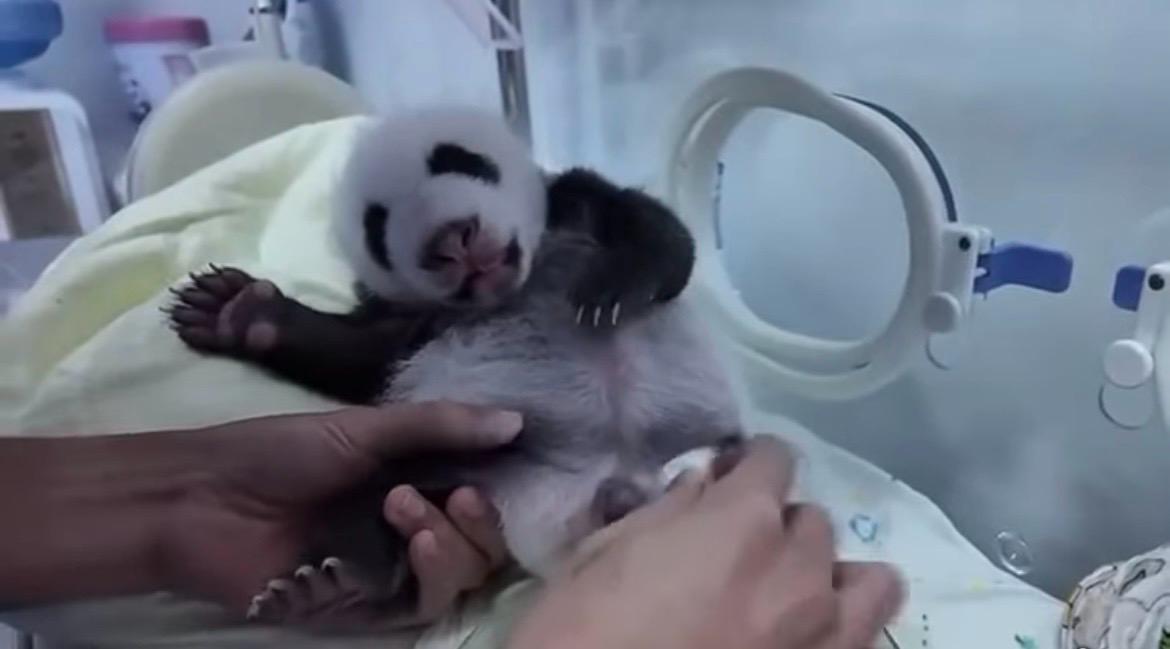
In some videos, giant panda keepers can be seen practicing a maneuver, patting the cubs' backs. But don't worry, don't be alarmed! Giant panda keepers in reserves like Chengdu and Wolong gently pat newborn cubs on their bottoms or lower backs to stimulate them to urinate and defecate. This daily practice, repeated several times a day, is essential because newborn cubs are too immature to expel waste on their own, risking fatal constipation. Without this assistance, many captive cubs died from intestinal complications, but today the survival rate exceeds 90% thanks to this simple technique.
Why do keepers pat panda cubs on the back? Natural behavior of panda mothers.
In the wild, a mother panda licks her cub's anus to stimulate the expulsion of urine and feces, an instinctive reflex common in altricial mammals like giant pandas. The newborns, born after a gestation of just five months, weigh just 100 grams, are blind, hairless, and unable to regulate their body temperature or control their bodily functions. This maternal licking isn't just for hygiene: it activates the nerves for defecation, preventing lethal blockages. In Chinese breeding centers, where mothers sometimes reject their cubs or give birth to twins (rare but possible), keepers intervene with gentle pats using gloved fingers or cotton balls, massaging the cubs' abdomens and rear areas. Viral videos show keepers "helping" cubs like Ya Wen with massages that culminate in adorable "farts" of relief, making the practice iconic on social media.
You may also be interested in:
Why keepers feed adult giant pandas milk
Giant Panda Keepers: How They Interact and Care for the Animals
From theory to practice: step by step
So, to sum up, the keepers provide the giant panda cub with correct nutrition and artificial defecation, putting into practice some fundamental "moves":
- Keepers check the puppy between meals, after formula is given every 2-3 hours.
- Place the newborn supine or prone, gently patting the bottom with circular motions for 1-2 minutes.
- Once the waste has been expelled, they clean and measure their weight and temperature in incubators at 31-32°C to mimic the maternal warmth.
This routine, learned from observing wild mothers, has transformed neonatal care. Since 2000, hundreds of cubs have survived thanks to it.
Impact on giant panda conservation
Giant pandas, a vulnerable species with over 1,800 wild individuals, benefit greatly from these practices, such as those at the Chengdu Research Base. Tapping has reduced neonatal mortality from an initial 50% in captivity to less than 10%, enabling reintroduction programs. Experienced keepers, often dressed up in a panda costume To avoid scaring the cubs, they combine this technique with twin swapping to maximize residual maternal care. Experts at the Smithsonian National Zoo confirm:
“Puppies don’t urinate or defecate on their own in the first few weeks; stimulation is vital.”.
In China, centers like Wolong train generations of keepers, making "lifesaving nudges" a cornerstone of panda diplomacy.