






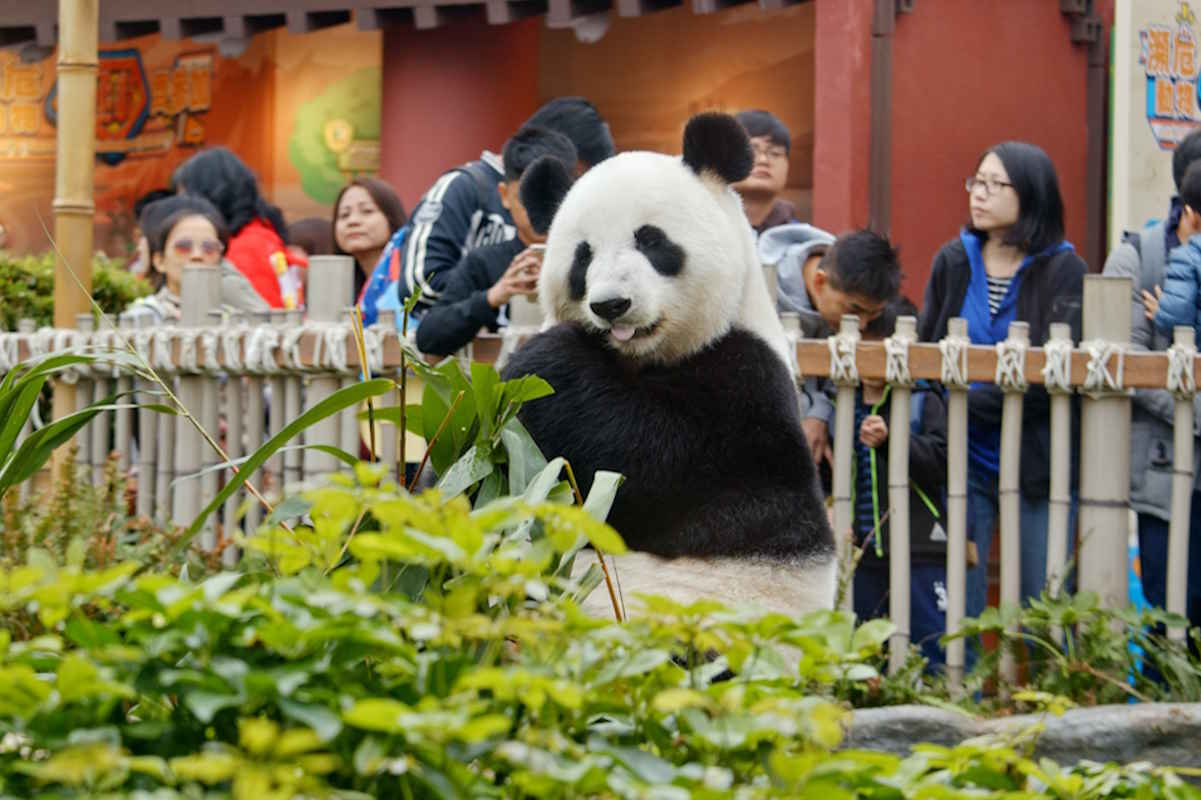
A giant panda cub instantly makes anyone who sees it fall in love, but behind that irresistible tenderness lies an important truth. Tourists are not allowed to touch giant pandas. But they are also not allowed to get too close to the species, to protect them, not to keep them "away" from people. Properly managing human contact is now one of the key issues in giant panda conservation, especially in research centers and panda bases in China, where responsible tourism regulations are increasingly strict.
Why can't tourists touch giant pandas? The reasoning
Getting too close to pandas can seriously jeopardize their health. As extremely delicate animals, even close contact can transmit human bacteria or viruses to their immune systems, which are unaccustomed to these infections. This risk is even greater for panda cubs, like the one pictured, whose immune defenses are immature and require controlled and sterile environments.
Beyond the risk of disease, there's also the issue of well-being and safety. Although a panda may look like a large stuffed animal, it's still a wild animal with powerful claws and teeth. Even playful or sudden behavior, caused by stress or fear, can result in a bite or scratch that's dangerous for visitors. For this reason, authorities and specialized facilities impose physical barriers, minimum distances, and strictly regulated guided tours.
Giant Panda: Wild Animal, Tourist Attraction
One of the primary goals of conservation programs is to prevent the giant panda from becoming just a "selfie object." Maintaining a certain distance helps the panda avoid becoming overly accustomed to humans, preserving natural behaviors that are useful for reintroduction into the wild or for a more balanced, active life. Constant contact with tourists, in fact, could alter their behavior, increase stress, and even compromise reproduction.
For this reason, keepers and veterinarians in research centers wear lab coats, gloves, and often masks, as shown in the image. This isn't an aesthetic choice, but a rigorous health protocol designed to protect the panda cubs and minimize the risk of infection. Those who work with them every day follow extremely strict procedures to ensure the highest level of animal welfare.
Responsible tourism and species protection
Those who love the giant panda and dream of seeing it up close can truly contribute to its conservation by choosing responsible ecotourism experiences. This means:
- Visit only recognized centers, nature reserves, and zoos that meet international animal welfare standards.
- Accept the rules of distance, silence, and no physical contact with the panda.
- Support research, reforestation, and habitat protection projects with donations or symbolic adoptions.
In this way, tourism becomes not a threat, but a tool to fund scientific studies, improve bamboo habitats and strengthen the conservation programs that have allowed the panda to move from "endangered" to "vulnerable" on international lists.