






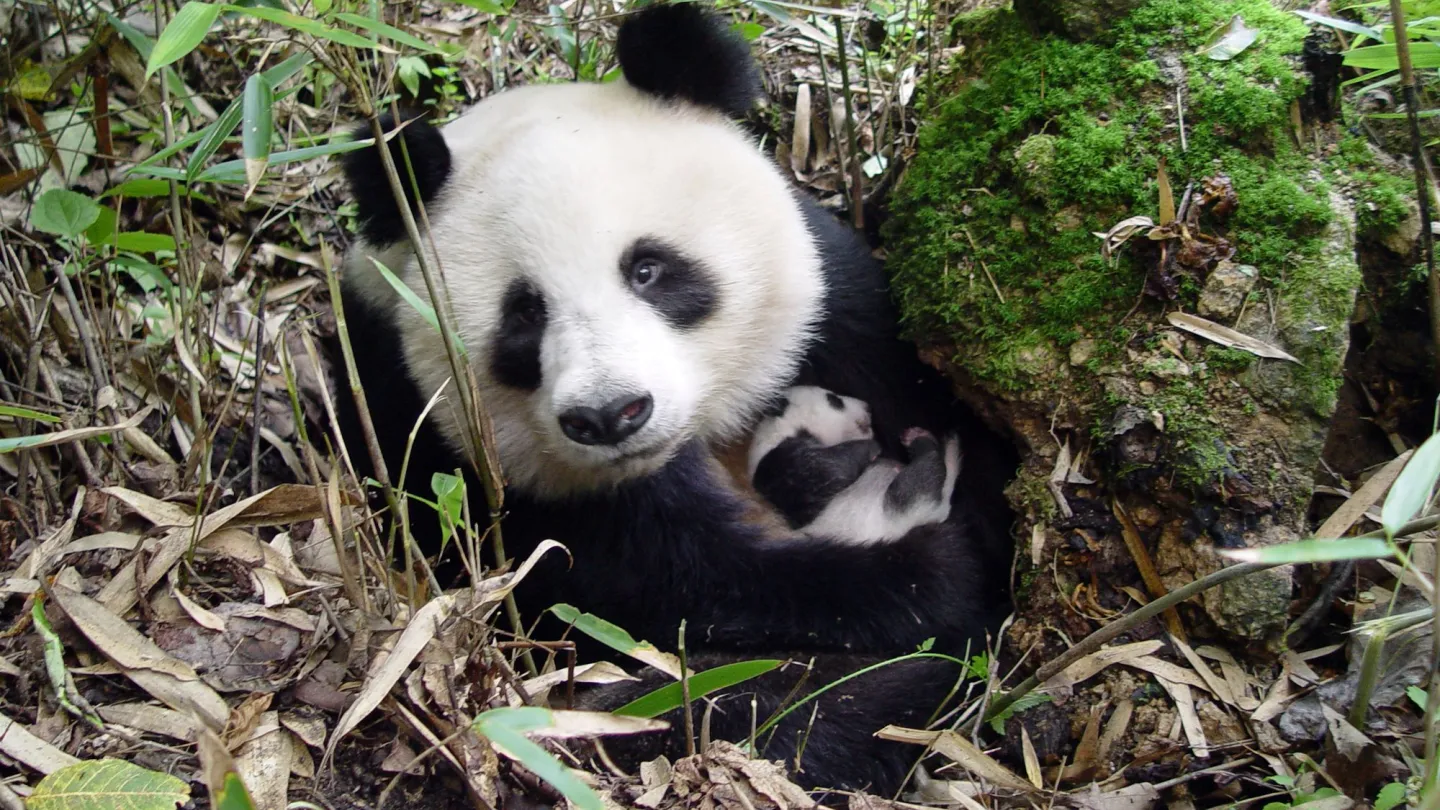
The bond between a giant panda mother and her cub is one of the most tender and fascinating in the animal kingdom. But how long does this relationship really last? The answer varies greatly depending on whether pandas live in captivity or in their natural habitat. Here's everything you need to know about the development, weaning, and independence of pandas. giant panda cubs.
The bond between mother and baby panda in captivity: a balance between care and conservation
Within research centers and zoos, where pandas are cared for by reproduction and conservation experts, the time spent by cubs with their mothers is often regulated by management needs. On average, separation occurs between six and twelve months, when the cub has learned to feed itself and the mother can become fertile again for a new pregnancy.
In recent years, however, many Chinese facilities such as the Chengdu Research Base of Giant Panda Breeding They have adopted a more natural approach: mother and cub are left together until the adult itself shows signs of distancing. This method, in line with new ethological conservation principles, has led many pandas to remain with their mothers until they are 2 or 3 years old, promoting a more stable bond and more harmonious physical and mental development.
In nature: a longer and more intense bond
In their natural environment, among the bamboo forests of Sichuan and Gansu, the wild panda cubs They remain with their mother for longer periods, ranging from 18 to 30 months. During this time, the mother teaches them fundamental skills, such as climbing trees, recognizing edible bamboo, and defending themselves from predators.
The piccolo inizia a mangiare bambù intorno ai sei mesi, ma continua ad allattare fino a un anno e mezzo. Questa convivenza prolungata è cruciale, poiché le madri in natura di solito hanno un solo cucciolo ogni due o tre anni, garantendo a ciascuno tutta l’attenzione necessaria per affrontare autonomamente la giungla montana.
The growth stages of a baby panda
The growth path of giant pandas is divided into well-defined phases, which offer a glimpse into the extraordinary transformation of these animals:
- Neonatal stage (0-2 weeks): The pups are born tiny and helpless, weighing only 100 grams (1/900 of the mother's weight) and are completely dependent on their mother's warmth and nourishment.
- Breastfeeding period (2 weeks – 6 months): during these months the puppy grows rapidly, develops its typical black and white fur and begins to move in its mother's protective arms.
- Learning and nutrition (6 months – 1 year): begins to chew bamboo, but continues to suck breast milk. During this stage, he explores his surroundings and refines his motor skills.
- Progressive independence (1.5 – 3 years): the young panda begins to live alone, learning to feed itself, defend itself and mark out its territory.
The bond between mother and baby panda: a relationship that goes beyond biology
Watching a mother panda care for her cub is an experience that reveals the gentleness and strength of the natural world. This long period of dependence is not only a biological necessity, but also a key to the species' successful survival. Thanks to breeding and research programs conducted in China, giant pandas are now classified as "critically endangered." vulnerable, a goal also achieved thanks to understanding and respecting their natural times.