






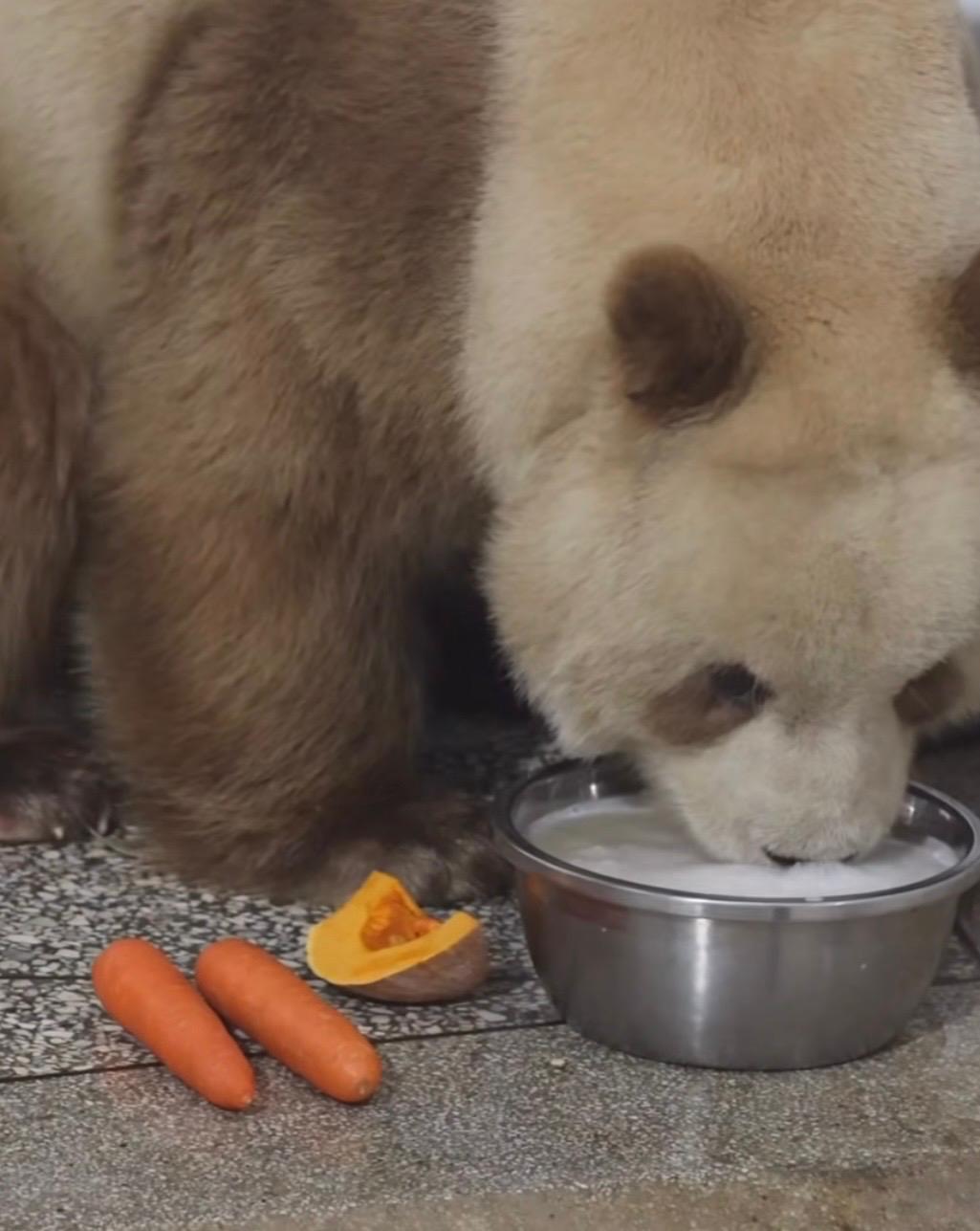
Adult giant pandas are known for their bamboo diet, but in certain cases the keeper They resort to formula or breast milk for nourishment. This practice, far from being a whim, responds to medical, recovery, or nutritional support needs in controlled breeding settings.
Why do keepers feed adult giant pandas milk? The main reasons
Keepers feed milk to adults primarily during periods of illness, post-surgery, or weakness, when the panda refuses bamboo or requires easily digestible calories. For example, after surgery or infections, milk provides essential proteins and fats without overloading the digestive system, which is still that of a carnivore despite the herbivorous diet. In captivity, especially in Chinese centers such as Chengdu base, This supplementation is used to prevent malnutrition in pandas stressed by relocation or seasonal changes. Documented cases show adult pandas being hand-fed by their keepers to stimulate their appetite and aid recovery. This is a standard protocol used to increase the survival chances of this vulnerable species.
Specific cases and treatment protocols
Among the most common reasons is food refusal. An adult panda can lose weight rapidly if it doesn't eat its 12–38 kg of bamboo a day, and milk becomes a crucial nutritional bridge. In breeding programs, mothers nursing twins receive milk supplements to maintain their fitness, but single adults are treated with post-traumatic rehabilitation. In European and Asian zoos, keepers use adapted artificial formulas—free of excessive lactose to avoid intestinal problems—administered via bottle or bowl. One example is Shu Qing (谱系号480), where human care included milk for struggling adult mothers, extending the benefit to all their offspring.
You may also be interested in:
Quando i cuccioli di panda iniziano a mangiare bambù? Lo svezzamento mese per mese
Milk composition and nutritional benefits
The milk fed to adult giant pandas is designed to closely resemble breast milk, which in its early stages is highly concentrated in fats—up to 30%—and immunoglobulins, the true sentinels of the immune system. Unlike colostrum, typical of cubs and available only for 30-40 days, formulas enriched with oligosaccharides are used for adults. These complex sugars nourish the intestinal flora, which is essential for digesting bamboo despite a gut that remains essentially carnivorous. Studies confirm that these preparations differ from common cow's milk, avoiding problems such as excess lactose, which would trigger unpleasant diarrhea. Furthermore, they carry plant-derived microRNAs, absorbed through the milk, which help regulate the sense of smell and taste, facilitating a more natural transition to a daily diet of leaves and shoots.
Impact on conservation and well-being
This practice has increased survival rates in breeding centers to 98%, a vital achievement for a species struggling to reproduce in the wild. Keepers monitor key parameters such as body weight and feces volume—which can reach up to 28 kilograms per day—and also use milk to accustom the pandas to human care, making their eventual release into the wild easier. Experts, however, warn: artificial milk cannot replace natural milk, and using it too early with cubs—separated from their mothers between 3 and 6 months—risks damaging their development. For adults, however, it remains a precise and effective tool, combining centuries-old Chinese tradition with the most advanced modern science.