






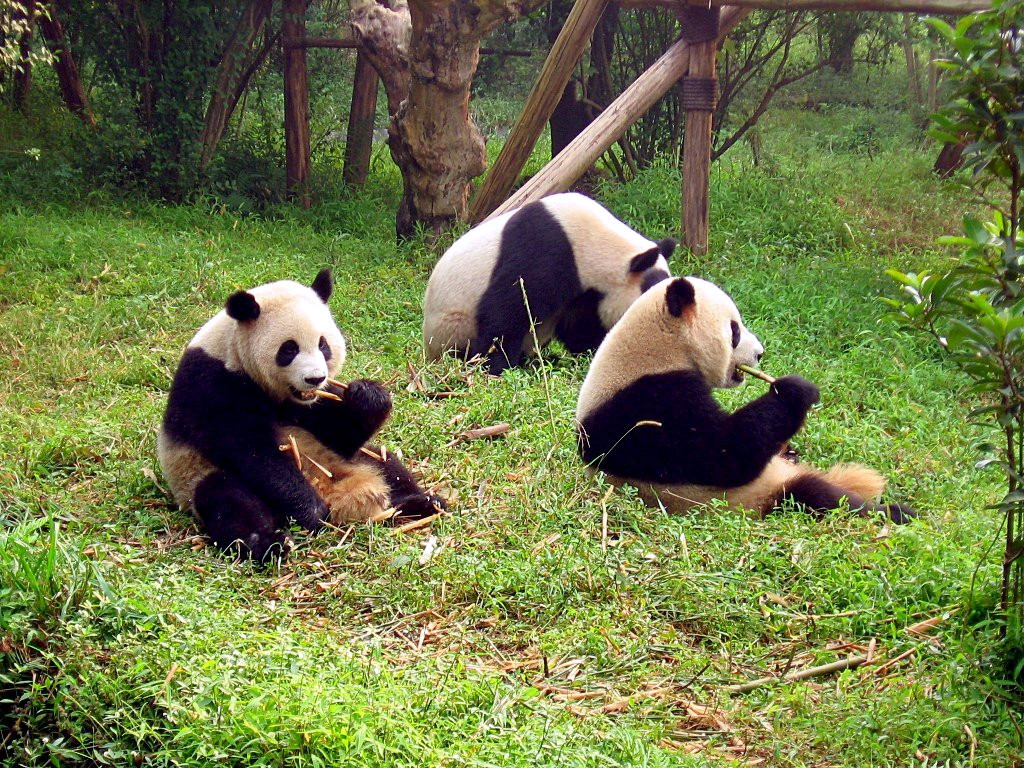
The giant panda's fur It's not just aesthetics; it hides unknown evolutionary functions. An outer layer of long, coarse, and water-repellent hairs combines with a dense, soft undercoat. This creates a thermal barrier like a natural down jacket—perfect for high-altitude bamboo forests, where it regulates temperature and reflects UV rays. The black-and-white pattern? Ingenious camouflage in shadows and snow, while protecting the skin from bamboo scratches, fights, and insects. The black spots around the eyes and ears amplify facial expressions, helping pandas recognize each other from afar for essential social communication.
Why does my fur turn yellow or look dirty?
You've probably seen a panda blissfully lying down to munch on its bamboo, its back and bottom rubbing against the ground, flattening its pure white fur until it slowly turns yellow. It's a completely natural process, with no health risks—just the daily routine of these clumsy giants. Then the rain comes, and off they go, rolling, playing, or wrestling in the mud: grass, earth, and dirt stick to it without a problem, normal for wild animals. Certainly not evidence of abuse or blood sampling as some false myths preach. Keepers know this well and don't routinely bathe them. That precious natural oil in their fur protects them from humidity and cold, while the trays in their enclosures leave them free to cool off on their own. Contact with the earth is their world, it doesn't hurt, and true well-being is measured by lively behavior, not by a glossy blanket coat.
Hair Loss in Pandas: Common Causes and When to Concern
Consider seasonal shedding, that natural ritual that affects pandas in spring and early summer, just like dogs, bears, or foxes. Old fur sheds to make way for new, fresh fur ready for a new season. But that's not the only reason they might end up with a few patches: parasitic, fungal, or bacterial infections can play tricks on them, as can skyrocketing humidity, sweltering heat, frequent bathing, or simply rubbing against trees and rocks to relieve itching—all of which break the hair, leaving those irregular patches that untrained eyes often mistake for open wounds. Sometimes, nutritional deficiencies or medication side effects play a role. But in the vast majority of cases, the fur grows back on its own without any drama; only if there's a real pathology does veterinary intervention be called.