






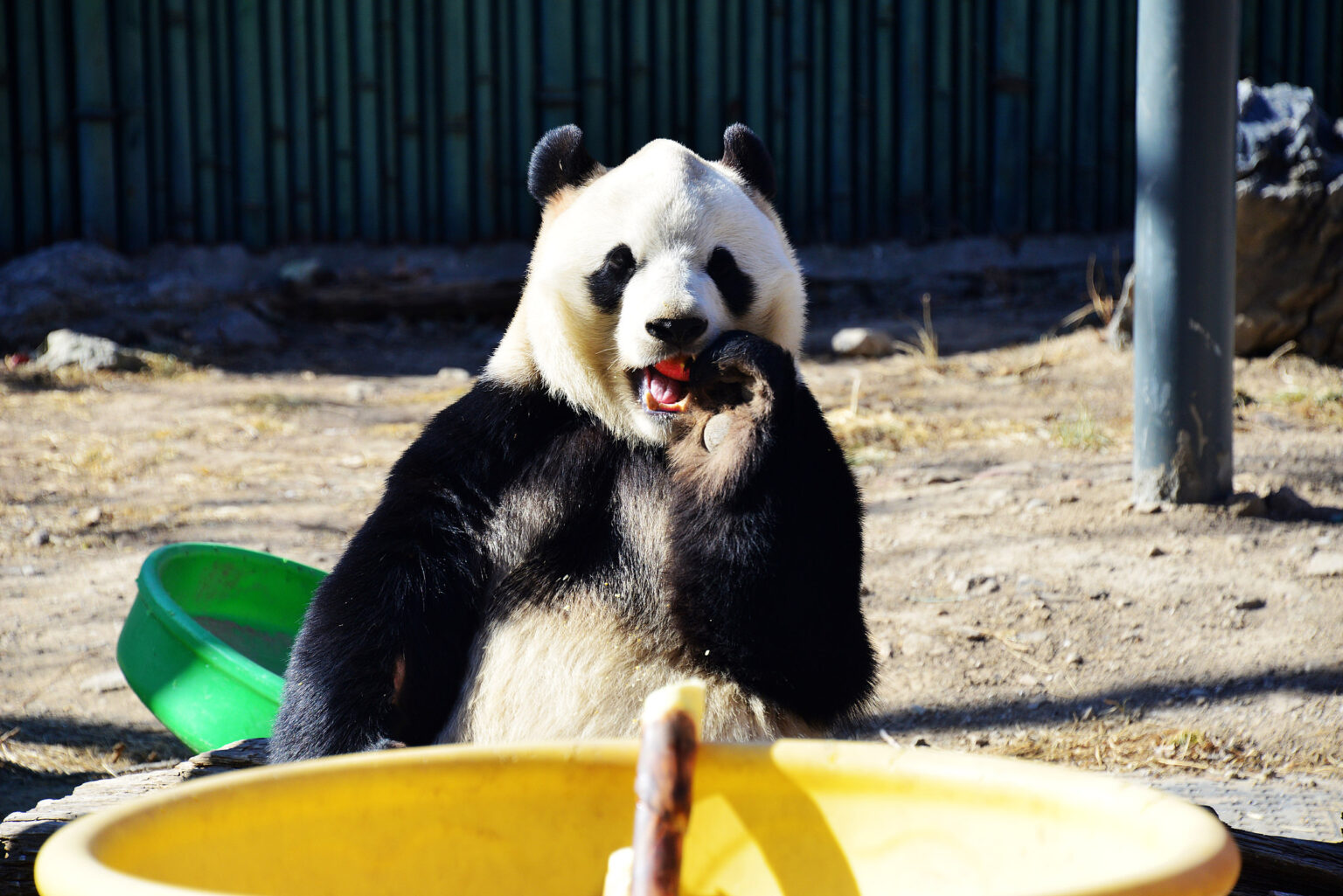
From his nickname “Pang Da Hai” to his most bizarre behaviors: why has Fuxing become one of the world’s most beloved pandas?
Who is Pang Da Hai (Fuxing)?
- Name: Fuxing (福星)
- Meaning of the name: Lucky star
- Nicknames: Pang Da Hai (胖大海), Xizhimen Fourth Prince (西直门四少)
- Type: Male
- Date of birth: June 25, 2017
- Place of birth: Ya'an Bifengxia, the base of the China Giant Panda Research and Conservation Center.
- Current residence: Beijing Zoo Panda House
- Lineage Number: 1072
- Mother: Ying Hua (瑛华)
- Father: Lu Lu (芦芦)
- Brothers: Da Bai Tu (大白兔), Fu Lu (福禄), Dian Dian (点点)
Anyone who visits the Beijing Zoo's Panda House is unlikely to forget Fuxing, the charming Pang Da Hai. Born on June 25, 2017, at the Ya'an Bifengxia Zoo, this male giant panda has become a true icon in just a few years, drawing crowds and dominating social media with his playful and unpredictable nature. His name means "lucky star," but among fans and visitors, he's best known as "Pang Da Hai." A nickname that says a lot about his appearance. It refers to a traditional Chinese medicine that expands in water, just like his soft, rounded body, which has become one of his most beloved traits.
An irresistible looking panda
Fuxing perfectly embodies the idea of sweetness: chubby cheeks, bright eyes, and a posture that always seems ready to elicit a smile. His expressive face, with a slightly upturned nose and close-set ears, helps make him instantly recognizable. But it's his facial expressions that really make the difference. His expressions seem almost human, capable of conveying surprise, curiosity, and even a kind of natural irony.
The barking panda: a unique talent
Among Fuxing's many peculiarities, one stands out above all others: his ability to imitate a dog's bark. His "bark" surprises anyone who hears it for the first time, creating moments as unexpected as they are hilarious. This rare behavior has helped him go viral, fueling videos and content shared by millions of users. He's not just a panda: he's a true natural entertainer. Fuxing's fame also stems from his unconventional behavior. From an early age, he displayed marked independence, inventing games and simulating typical adult activities, such as gathering bamboo or building little "shelters." Among his most discussed habits is playing with his own poop, a behavior that, while it may seem strange, is part of his exploratory nature. His reactions, often accompanied by almost "guilty" expressions, have captivated the online audience, transforming these moments into viral content.
The special bond with Meng Lan
Another factor that has contributed to Fuxing's popularity is his relationship with his cousin Meng Lan, one of China's most famous pandas. The two share moments of play and interaction that attract visitors' attention every day. While Meng Lan is the more experienced guide, Fuxing brings lightheartedness and spontaneity to the relationship. Their play sessions, involving climbing and tug-of-war, offer an authentic glimpse into panda social behavior.
The “Fat Fish”: the toy of the heart
Among all the objects that accompany Fuxing, one holds a special value: his stuffed animal called "Fat Fish." Made in his hometown in Sichuan, this toy follows him everywhere. It's not uncommon to see him playing with it even in winter, chasing it through the snow. More than a simple object, it represents a source of comfort and continuity, a symbolic link to his origins.
Why did Fuxing go viral?
Fuxing's success is no accident. His combination of endearing looks, unpredictable behavior, and almost "human" traits makes him perfect for digital content. In an age where audiences seek authenticity and spontaneous entertainment, Fuxing embodies everything that makes an animal memorable. He's not just a panda to watch, but a character with whom it's easy to empathize.