






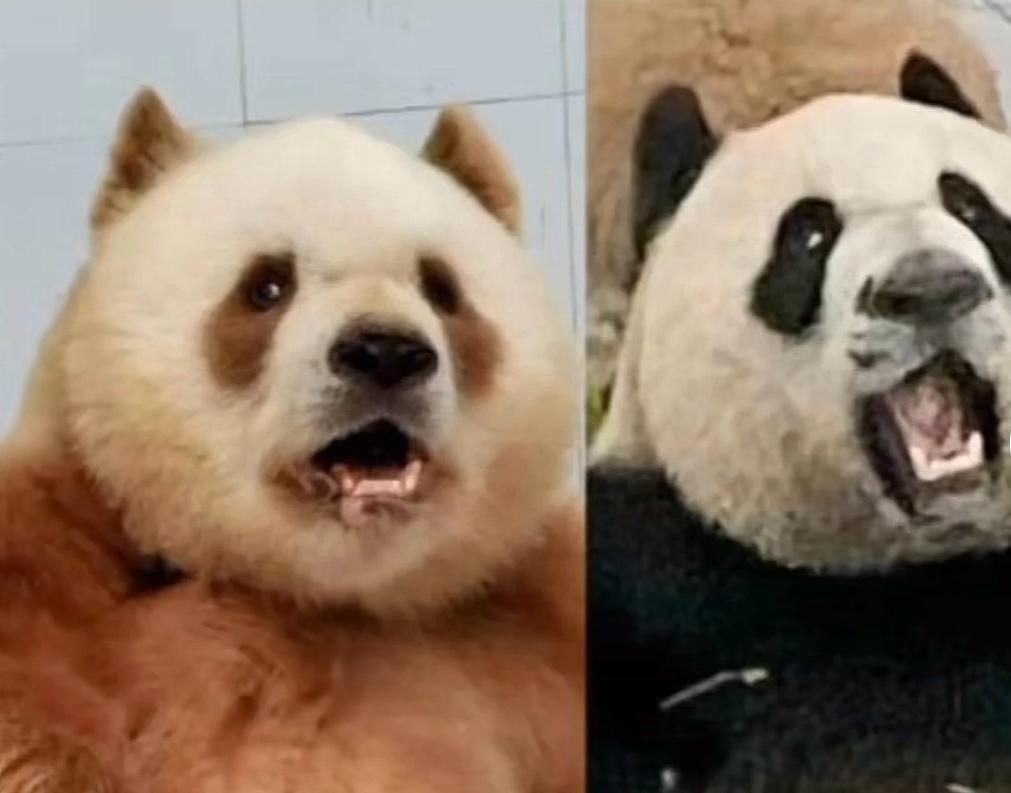
The young man QinHua panda, son of Qizai and originally from the Qinling Mountains in China. The beautiful giant panda, born on October 11, 2020, has become a true global star. His tender and sweet appearance, with the black spots on his face, make him even more special. His fame, in fact, has exploded thanks to viral videos on social media, where he appeared at events such as the famous morning mukbang of the center of Hanzhong. On that occasion, her eating routine was shown to the world with irresistible naturalness.
Who is Qizai's son, QinHua: an ambassador for giant panda conservation?
From 2024, QinHua has intensified his public appearances, especially at Locajoy Animal Theme Park Of Chongqing. Here, under the watchful eye of experts and visitors, the panda has attracted enormous media attention, becoming a symbol of China's giant panda conservation programs. Her sweet and curious image is now associated with campaigns for the biodiversity protection in China. An increasingly central theme in the international environmental landscape.
You may also be interested in:
How many cubs do giant pandas have? All the curiosities
Mei Zhu, the little rebel of Chimelong Safari Park: the star of China's giant pandas
Rong Rong, Qi Zai's mischievous third son: life, adoption, and friendships
Qizai and Qin Hua: The Rare Genetic Line of Brown Pandas
What makes Qin Hua even more special is her genetic kinship with Qizai, the only one brown and white panda known to the world. Qizai, found in the Qinling Mountains in 2009 after being abandoned by his mother, he is famous for his genetic variation of the Bace2 gene, responsible for its unique coloration.
Scientists are studying the Qin Hua's DNA to understand whether the rare mutation was inherited, thus opening new perspectives on the genetics of rare giant pandas.
The “son of Qizai” dominates Weibo and TikTok
On Chinese social media, from Weibo a TikTok, Qin Hua is now a true star. Videos of him playing, eating, and interacting with his keepers have garnered millions of views.
Often affectionately called the “son of Qizai”, Qin Hua became a viral symbol of tenderness and genetic rarity, helping to spread knowledge about pandas and the importance of their protection.
A symbol of biodiversity and research
The story of Qin Hua goes beyond celebrity. It represents a new chapter in the history of giant panda conservation, combining science, pop culture and digital communication. Thanks to its genetic uniqueness and growing popularity, Qin Hua embodies the perfect synergy between scientific research e environmental awareness, consolidating China's role as a global reference point in protection of rare species.